
What Hurricane Home Protection Looks Like Before, During, and After a Storm
Hurricane home protection starts with water, not wind. Compare barriers for doors and perimeters, plus a prep timeline for the week before landfall.
FEMA puts the damage from one inch of water inside a home at roughly $25,000. A roof can be repaired. Drywall, flooring, wiring, cabinetry, and everything stored at ground level go in a dumpster once floodwater reaches them.
Hurricane home protection splits into two categories of work. One takes months and happens off-season. The other takes hours and happens when a hurricane appears on the map. Most homeowners only do the second kind, which is why the week before landfall turns into a scramble for materials that sold out three days earlier.
Where Hurricane Water Comes From
Three sources put water in a house during a hurricane, and each calls for different responses.
Storm surge is ocean water pushed inland by wind and pressure. It arrives with force, stays for hours, and reaches farther than most coastal homeowners expect. Surge is why elevation and perimeter barriers matter more than door seals on waterfront property.
Rainfall flooding happens well inland. A slow-moving tropical system can sit over a county for days and drop more rain than the drainage there was built to carry, at which point streets become the channel. Homes miles from any coast flood this way every season.
Backup and seepage comes from below. Storm drains reverse, sump pumps lose power, and saturated ground pushes water through foundation cracks and floor drains. A barrier at the door does nothing about any of it.
FEMA reports that nearly one third of NFIP flood insurance claims filed between 2014 and 2024 came from properties outside high-risk flood areas. Being off the coast and out of the mapped floodplain is not the same as being out of range.
Off-Season Work That Cannot Be Rushed
These measures take weeks or months to complete. Start them during calm weather so they’re finished well before a storm is headed your way, since contractor availability and material supply tighten fast once one is named.
Buy Flood Insurance Early
Most homeowner policies exclude flood damage. National Flood Insurance Program policies carry a 30-day waiting period before coverage starts, which means a policy purchased when the forecast turns does nothing for that storm. Photograph the interior of the house, including inside closets, cabinets, and drawers, and store the photos somewhere off-site.
Fix Grading and Drainage
Ground should slope away from the foundation on all sides. Downspouts should discharge far enough out that water does not circle back to the wall. Pervious driveway materials and absorbent plantings give rainfall somewhere to go before it pools against the house.
Raise Mechanical Equipment
Air conditioning condensers, heat pumps, generators, and electrical panels belong at least a foot above the expected flood elevation for your property. Fuel tanks need anchoring to their pads so they do not float and tear loose. Local floodproofing codes usually set the minimum, and the minimum is worth exceeding on the coast.
Seal the Envelope and Measure the Openings
Patch foundation cracks, cover basement window wells, and check that sump pumps have battery or generator backup. Then measure every ground-level opening: garage doors, entry doors, sliders, and walk-out basement doors. Width, height, and the surface condition of the apron in front of each one determine which barrier fits and how well it seals. Doing this in February takes an afternoon. Doing it during a watch takes time you do not have.
Barriers That Hold Water at a House
Water-Filled Barriers
TrapBag® Water-Filled Barriers are 54-inch modular units that fill with water on site and link end to end. Each unit holds back up to 16 inches (0.4 m) of water when set up correctly. Empty, they fold flat and store on a shelf, and one person can carry a unit.
These are the option for homeowners who need something deployable the day before landfall and movable as conditions change. They handle static and low-velocity water: street flooding, rainfall pooling, and rising water around the foundation. Run through a setup once on a dry weekend so the first deployment is not happening in the dark with water in the driveway.
Aluminum Plank Systems
The Aluminum Plank System is a permanent installation engineered around one opening. Side channels mount to the jambs and stay year-round. When a storm is forecast, structural planks stack into the channels and compress against seals. Protection height depends on the measured width, height, and structural condition of the opening rather than a fixed spec.
This suits properties that flood more than once a season and wide openings that a modular barrier cannot seal cleanly. For residential installations, TrapBag® partners with Emerald Green for install, seasonal removal, and pre-storm readiness. A garage door is the widest opening on most houses, and flood barriers for garage doors can make a difference in protecting that gap.
Perimeter TrapBag® Barriers
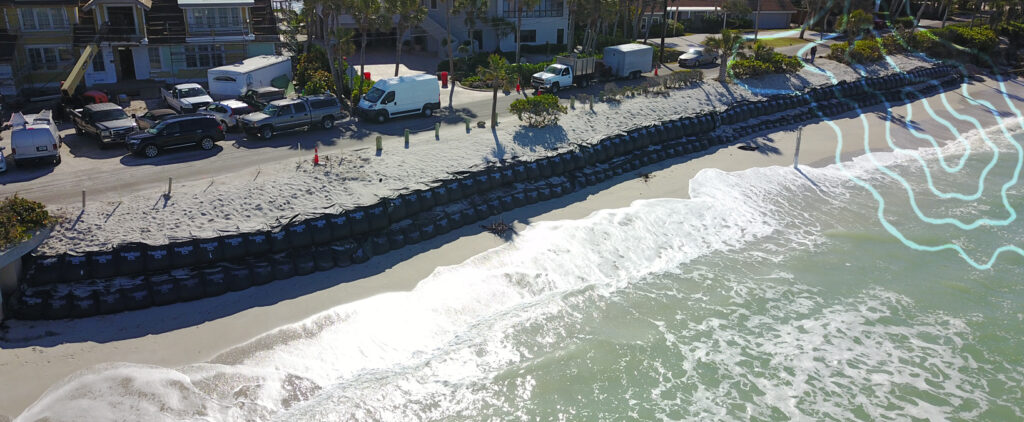
For larger properties, waterfront lots, and situations where water needs to be turned before it reaches the structure, standard TrapBag® flood barriers build a continuous wall of interlocking cells filled with sand or gravel. Barriers start at 4 feet and stack higher. Each cell is self-contained, so a compromised cell does not take the wall with it. Coastal installations facing wave action call for at least two rows back to back.
Why Sandbags Struggle in a Hurricane
Sandbags are the default because hardware stores stock them and neighbors hand them out. They also perform worst under exactly the conditions a hurricane creates.
Water finds the seams between bags. Wave action shreds burlap and polypropylene, and one failed bag can collapse a section of wall. Covering the perimeter of a house means filling, hauling, and stacking by hand for hours, usually once it has already started raining. Afterward the bags are saturated, contaminated by floodwater, and costly to dispose of.
They work once, poorly. For a look at what else is available at each price point, see sandbag alternatives for flooding.
The Week of Landfall
72 hours out. Confirm the forecast track and your evacuation zone. Fuel vehicles and generators, refill prescriptions, and check that go-bags are stocked for every person and pet. Stage barriers where you can reach them.
48 hours out. Deploy perimeter barriers and set water-filled units at ground-level openings. Clear gutters and storm drains near the property. Bring in patio furniture, grills, and anything that becomes a projectile.
24 hours out. Stack aluminum planks. Move valuables, documents, and electronics upstairs, and raise what cannot be moved above the expected water level on blocks. If flooding looks likely, cut power at the breaker panel before you leave, which de-energizes the circuits that may end up underwater and lowers the shock risk when service comes back on. Never stand in water while doing it, and if water is expected to reach the electrical entrance panel, call your utility to disconnect service instead.
When an evacuation order comes. Leave. Barriers protect property, and property is replaceable.
What Hurricane Barriers Will Not Do
Water-Filled Barriers and plank systems are built for static and low-velocity water. Neither is designed for fast-moving flow, river diversion, or permanent dam work. For those conditions, TrapBag®’s engineered barrier systems are the better fit.
No barrier addresses wind. Impact-rated windows, shutters, roof strapping, and garage door bracing are separate work with separate contractors. A sealed door does nothing if the roof comes off.
And nothing stops water arriving from below through drains and foundation walls. Barriers are one layer over grading, drainage, raised mechanicals, and working pumps, which together make up the longer job of flood-proofing a house before a season starts.
After the Water Drops
Wait for authorities to clear your area before returning. Photograph and video everything before moving or cleaning anything, then file with your insurer. Keep utilities off until an inspection clears them, ventilate affected rooms to slow mold growth, and disinfect every surface floodwater reached.
Rinse and dry barriers before storage. Water-filled units drain and fold flat. Plank channels stay mounted, and the planks go back to storage until the next watch.
Questions?
Not sure which system fits your property? Contact our team to talk through opening dimensions, expected water height, and site conditions. We can help you work out the right configuration before the season starts.
Frequently Asked Questions
What is the best way to protect a house from hurricane flooding?
Layers, in this order: grading and drainage that move water away from the foundation, raised mechanical equipment, flood insurance bought at least 30 days ahead, and barriers at ground-level openings or around the perimeter. Any one of those alone leaves a gap.
How much water can home flood barriers hold back?
Each TrapBag® Water-Filled Barrier unit holds back up to 16 inches (0.4 m) when set up correctly. Aluminum Plank Systems are engineered per opening, so height depends on the measured width, expected water level, and structural conditions. Standard TrapBag® perimeter barriers start at 4 feet and stack for more.
When should I set up flood barriers before a hurricane?
Deploy perimeter barriers and water-filled units around 48 hours out, and stack planks in the final 24. Working in wind and rain slows everything down, and seals set poorly when you are rushing.
Do I need flood barriers if my home is not in a flood zone?
Possibly. FEMA reports that nearly one third of NFIP claims filed between 2014 and 2024 came from outside high-risk flood areas, and inland rainfall flooding from tropical systems regularly reaches homes that have never taken water before.
Are flood barriers better than sandbags for hurricanes?
They hold a straighter line, go up faster, and come back down without disposal costs. Sandbags leak at the seams, tear under wave action, and take hours of filling and stacking to cover a house perimeter.
Will flood barriers protect my home from hurricane wind damage?
No. Barriers handle water. Wind protection means impact-rated windows, shutters, roof strapping, and garage door bracing, all of which are separate projects.
Can I install home flood barriers myself?
Water-Filled Barriers can be deployed by a homeowner, and sealing the liner correctly during setup determines how they perform. Aluminum Plank Systems need professional installation. TrapBag® partners with Emerald Green for residential install, seasonal removal, and pre-storm readiness.
Tell Us About Your Project
We are happy to answer your questions and help you find the right setup for your situation. For immediate assistance, please call (239) 674-6611. We are available 24/7.
Get the Dirt Before the Flood Hits
Stay ahead of flooding, erosion, and disaster response challenges. The Dirt, TrapBag’s monthly newsletter, delivers field-tested tips, real-world case studies, and the latest in barrier technology straight to your inbox.