
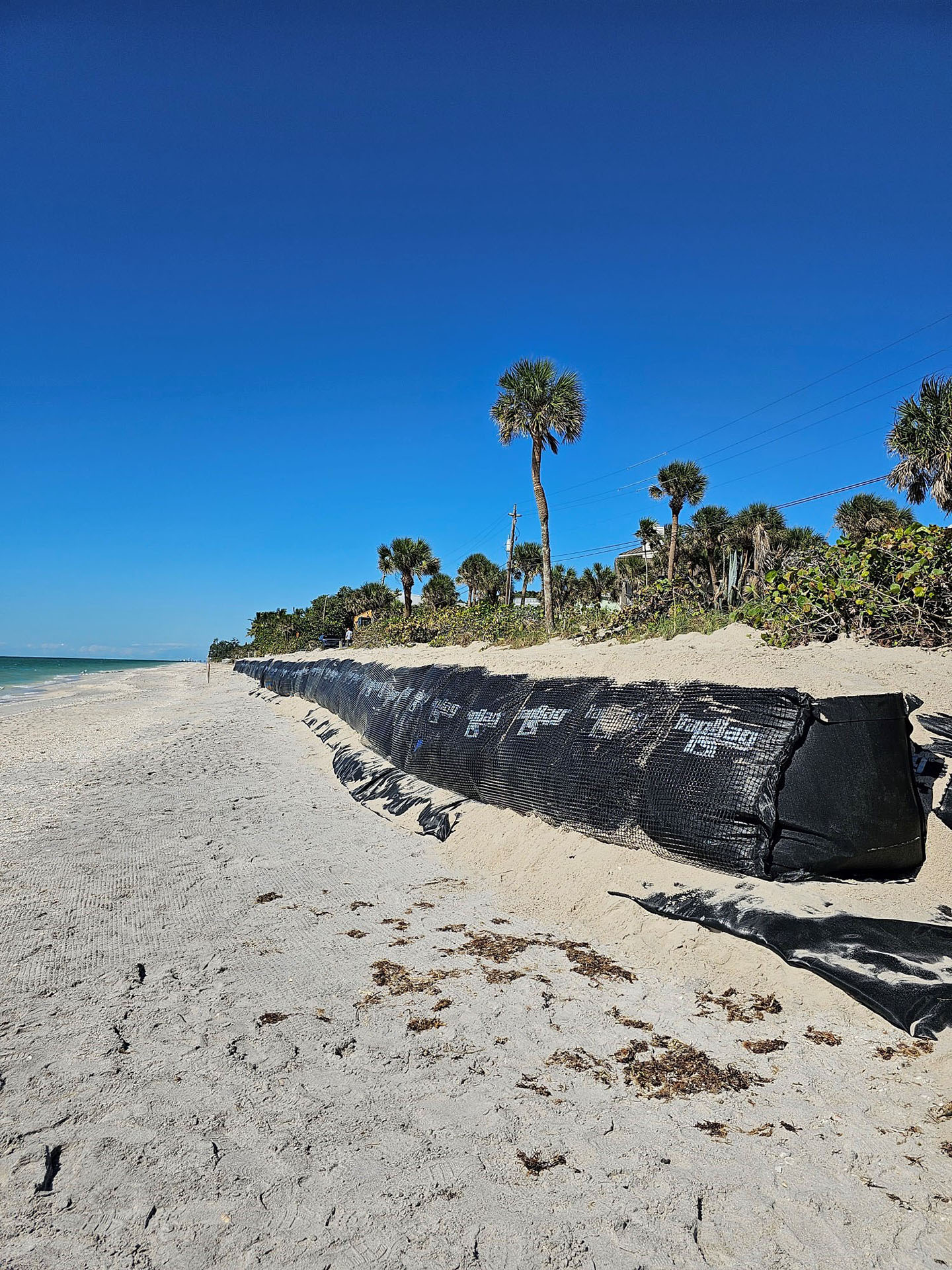
TrapBag® erosion control barriers give municipalities, state agencies, and engineering contractors a heavy cellular wall that holds shorelines, riverbanks, and dunes in place against waves and storm surge. Crews fill the barrier with sand or gravel for temporary and interim protection, or pump concrete into the cells for a permanent structure.
Using TrapBag Erosion Control Barriers
Erosion usually starts at the edge. Waves and current undercut the toe of a beach or bank, the face slumps, and each storm carries more soil away until the water reaches the roads and buildings behind it. Development near the water speeds the process up.
TrapBag takes the force of the waves and current before it reaches the bank. Each barrier is a chain of interlocking pentagonal cells that spreads its weight across the whole wall, and 60% of that mass sits in the bottom half, so the barrier resists tipping. TrapBag started as a faster, cheaper alternative to sandbags, and it does the same job with far less labor.

How Erosion Control Bags Are Deployed
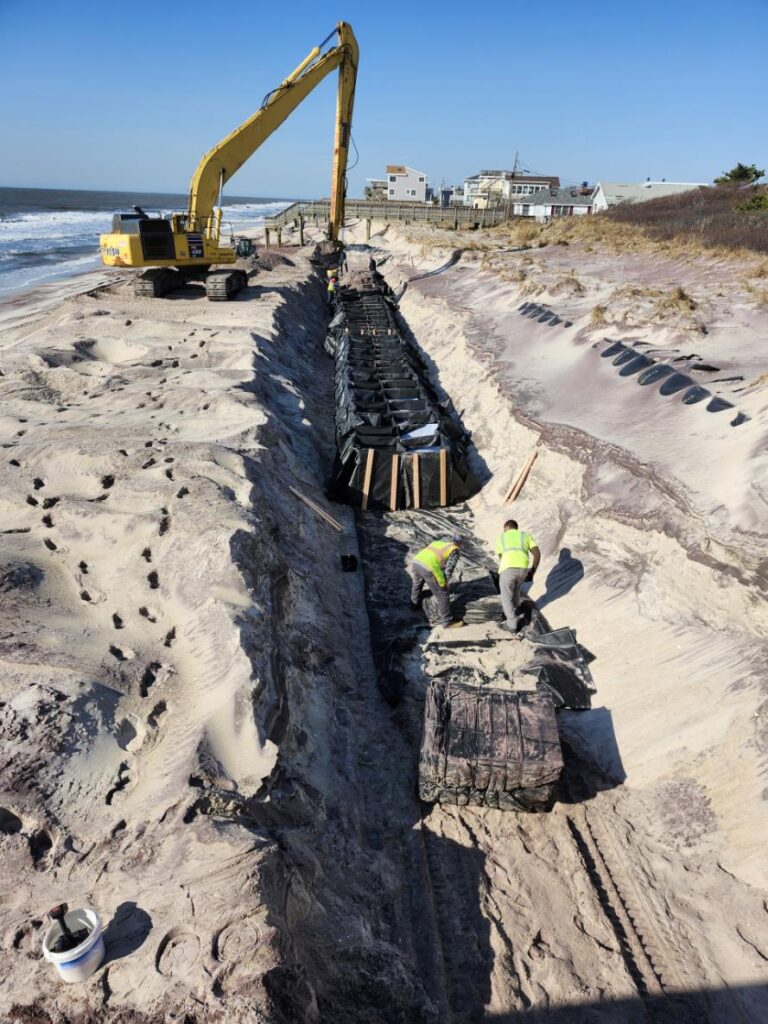 Watch the install
-
1
Open the packaging
TrapBag barriers arrive folded on a pallet. Pull each unit open like an accordion to its full 50-foot length, and connect sections end to end for longer lines. -
2
Place or stack the barrier
Set the barrier along the shoreline, bank, or slope you need to protect. For higher ground or bigger waves, stack a second row on the filled first row or place two rows back to back. -
3
Fill the cells
Two people and a third person operating an excavator or skid steer can fill a TrapBag barrier with sand or gravel in minutes. For permanent structures, crews pump concrete into the cells. Contact TrapBag for concrete fill instructions.
Who We Serve
TrapBag supports flood control, mudslide protection, and spill containment across many industries. Erosion control buyers most often come from four groups:
Municipalities & county governments
Public works and coastal management departments use TrapBag to protect highways, subdivisions, wastewater treatment plants, and water and sewer lines from shoreline and riverbank erosion. Learn More »Coastal & civil engineering
Coastal and civil engineering firms specify TrapBag for shoreline armoring, bank repair, and dune cores. They use sand fill for interim protection and concrete fill where the design calls for a permanent structure. Learn More »Environmental protection
State resource agencies and conservation groups use TrapBag to protect dunes, coastal wetlands, and nesting habitat from erosion, including projects scheduled around sea turtle nesting season. Learn More »Marine services
Marinas, port operators, and waterfront property managers on the coasts and the Great Lakes use TrapBag to keep waves from eroding bulkheads, parking lots, and access roads. Learn More »Projects
See All Our Past Projects »Fire Island, New York — Erosion Control
May 28, 2024 Read More » about Fire Island, New York — Erosion Control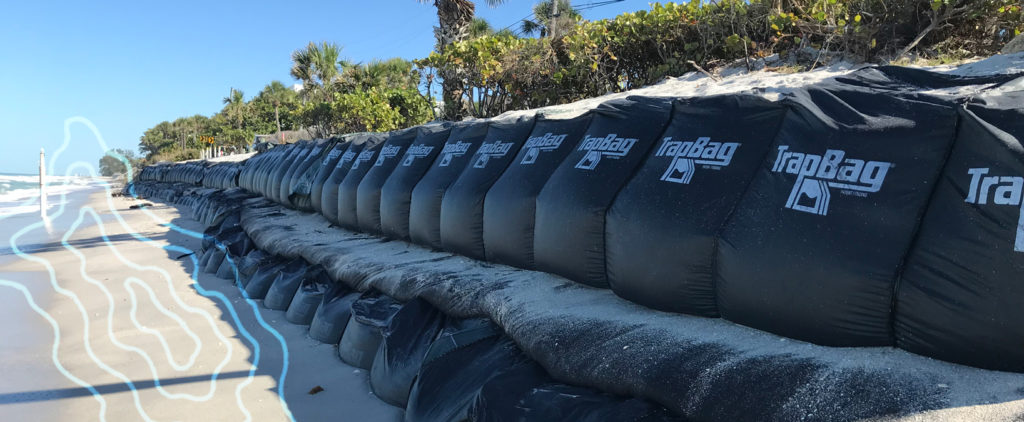
Erosion Control in Sarasota, Florida
May 24, 2018 Read More » about Erosion Control in Sarasota, Florida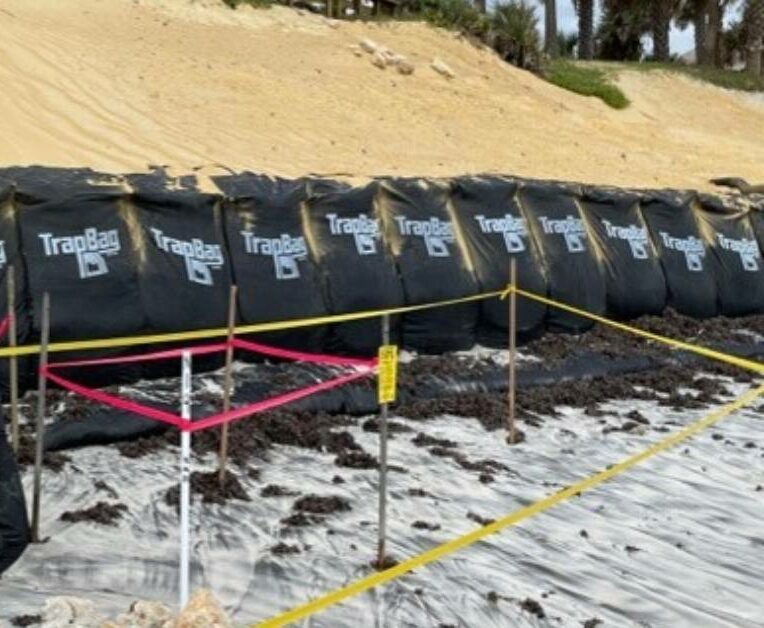
Erosion Mitigation During Sea Turtle Season – Volusia County, Florida
May 9, 2023 Read More » about Erosion Mitigation During Sea Turtle Season – Volusia County, Florida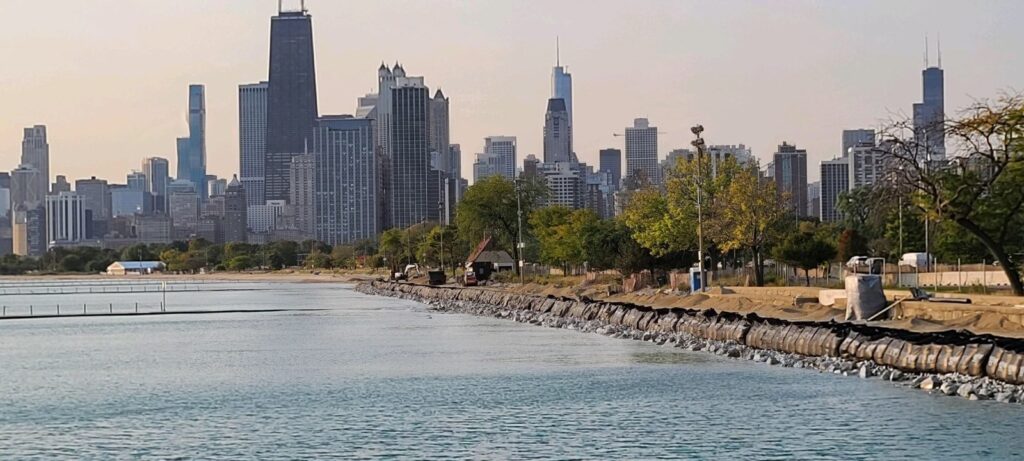
Shoreline Erosion on Lake Michigan – Chicago, IL
January 25, 2021 Read More » about Shoreline Erosion on Lake Michigan – Chicago, ILTrapBags vs. Other Erosion Control Solutions
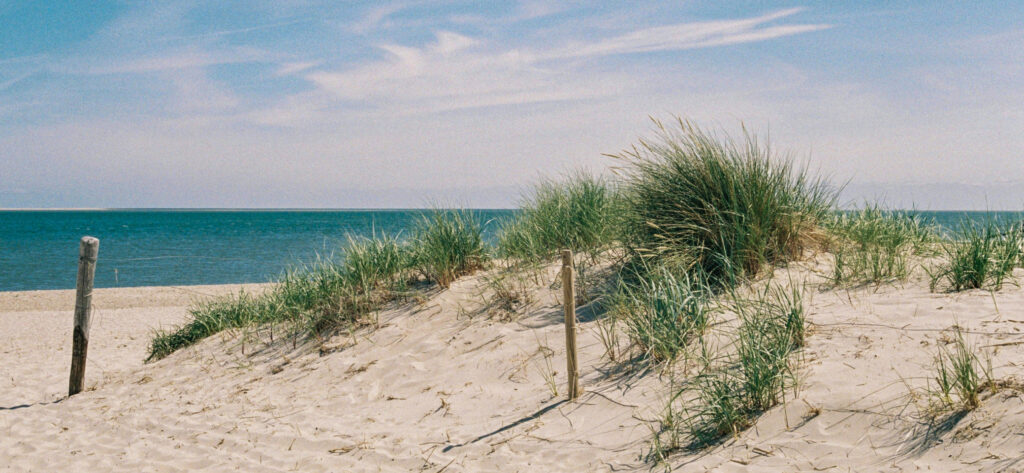
Dunes
Stabilizing the dunes along a beach is one of the most effective ways to prevent long-term shoreline erosion. Dune restoration is slow and expensive, though. Crews bring in sand, plant vegetation, and wait for the roots to take hold. A buried TrapBag dune core holds the dune’s shape while the vegetation grows in.
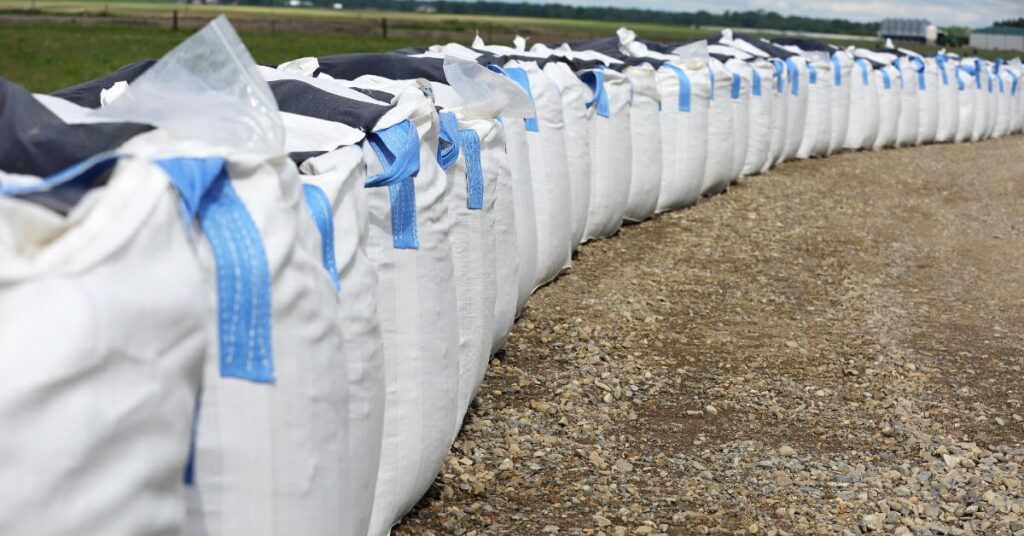
Sandbags
Sandbags have held back water for thousands of years, and they still work almost anywhere. Strong waves can tear individual bags apart, though, and filling and stacking them by hand takes days of labor. A 100-foot section of 4-ft TrapBag replaces about 8,000 sandbags and fills in minutes.
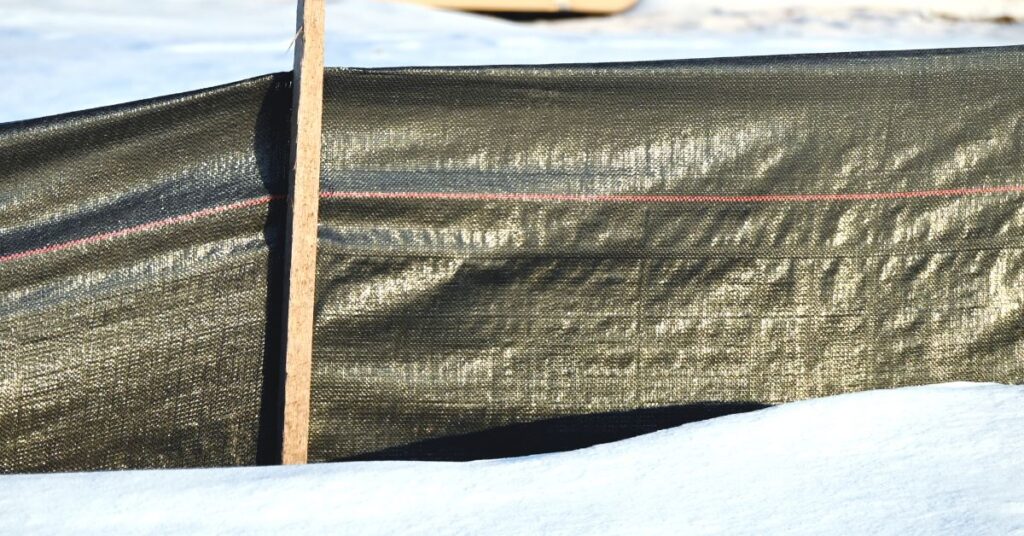
Silt Fences
Woven silt fences are a cheap, effective way to hold soil on construction sites and slow sediment runoff. Harsh weather tears or knocks them down, and they do little against waves or current. TrapBag holds slopes the way silt fence does and also protects shorelines and riverbanks.
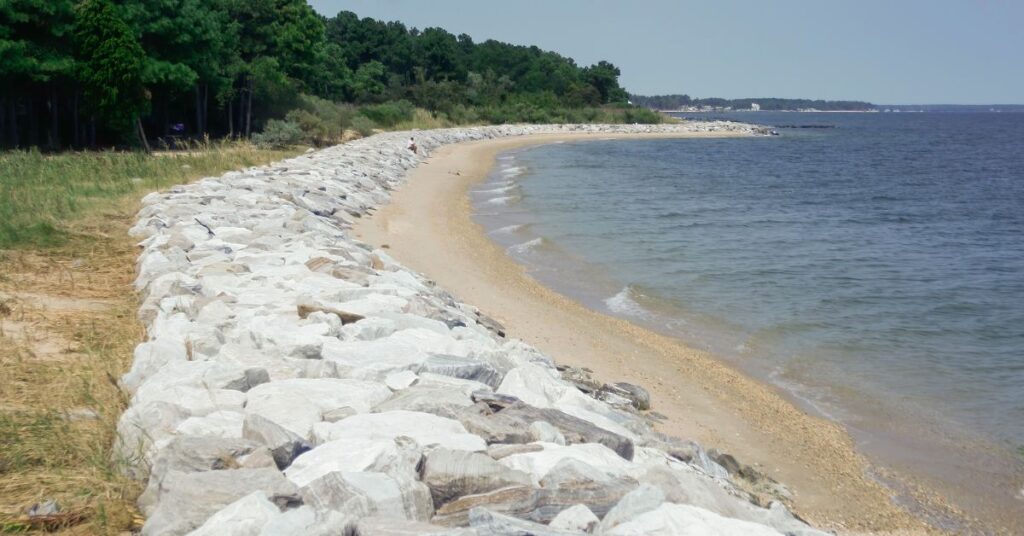
Rip Rap
Rip rap is a layer of large stones or recycled roadway material placed along a shoreline to absorb wave energy. It lasts for decades, but quarried stone costs a lot to buy and haul, and placing it takes heavy equipment and truck or barge access. TrapBag costs less for short-term and budget-limited projects, and concrete-filled TrapBag can serve as a permanent alternative.
TrapBag Specifications for Erosion Control Projects
Use these figures to scope quantities, draft specifications, and compare bids. Contact TrapBag for spec sheets and submittal documents.
Request Spec Sheets| Section length | 50 linear feet per unit; ships folded on pallets and connects end to end |
|---|---|
| Heights | 2 ft and 4 ft; over 6 ft uses a three-row pyramid |
| Fabric | High-strength polypropylene geotextile |
| Fill & crew | Sand or gravel for temporary and interim protection, pumped concrete for permanent structures; three people with an excavator or skid steer for sand and gravel |
| Sandbag equivalent | 100 ft of 4-ft TrapBag replaces about 8,000 sandbags and uses 40% less fill |
| Testing | Tested by the U.S. Army Corps of Engineers |
Why Choose TrapBag as an Erosion Control Barrier?
TrapBag improves on the traditional sandbag. Each pentagonal cell has one sloped side, one vertical side, and a flat top, and it shares its strength with the cells beside it. If a storm damages one cell, the rest of the barrier stays standing. The fill decides whether the barrier is temporary or permanent, so crews can use the same product for both.
TrapBag’s team is available 24/7 across multiple countries and continents to help your agency or firm plan, order, and install.
Procurement & Project Support
TrapBag works with public agencies, prime contractors, and engineering firms from budgeting through installation.
- Quotes by the linear foot
- Send the length of shoreline, bank, or slope you need to protect, the target height, the number of rows, and the delivery site. TrapBag returns pricing and a pallet count for budgets, bid tabs, and purchase orders.
- Submittal documents
- Spec sheets, product data, and Army Corps of Engineers testing documentation for engineer review and bid packages.
- Purchasing options
- Direct purchase orders and authorized distributors.
- Phased installation
- Sections connect end to end, so agencies can protect the most exposed stretch first and extend the line as funding or permits come through.
- Installation guidance:
- TrapBag’s team supports contractors 24/7 across multiple countries and continents, from site layout to fill methods.
Frequently Asked Questions
Erosion control is any method that keeps wind, waves, or running water from carrying soil and sand away from a site. Common methods include vegetation, silt fence, rip rap, seawalls, and cellular barriers like TrapBag. Most projects pair a barrier that holds the ground with vegetation that holds the surface.
Most do. Construction sites that disturb one acre or more need Clean Water Act stormwater permit coverage, which includes a stormwater pollution prevention plan with erosion and sediment controls. Work along shorelines, riverbanks, or wetlands may also need U.S. Army Corps of Engineers review and a state permit, so check with your state environmental or coastal agency before setting a schedule.
Each TrapBag unit covers 50 linear feet, so 500 feet of shoreline or bank at a single row height needs 10 units. Coastal sites with wave action use at least two rows placed back to back, and taller walls need stacked rows. Send the length, target height, and site conditions to TrapBag for an exact count.
Yes. Sand or gravel fill works for temporary and interim protection, and the same barrier filled with pumped concrete becomes a permanent structure. Contact TrapBag for concrete fill instructions before specifying a permanent installation.