
Sandbag Alternatives for Flooding
Some of the best sandbag alternatives for flooding are fill-and-fold barrier bags, water-filled flood tubes, inflatable plugs and dams, reusable barrier panels, and vegetative and permanent options.
What Are the Best Alternatives to Sandbags for Flooding?
Sandbags have protected homes and businesses from floodwater for generations, but filling, stacking, and disposing of them takes time and labor that most property owners don’t have during an active storm.
A single sandbag holds around 35 to 40 pounds of sand, so a three-foot wall across a 20-foot driveway can call for over a hundred bags, each one filled and placed by hand.
The bags also degrade. UV exposure breaks down the burlap or polypropylene weave within a season or two, and a stack that shifts even slightly can open gaps right when a barrier matters most. A handful of newer options address these problems while holding up to the same water pressure.
Fill-and-fold barrier bags
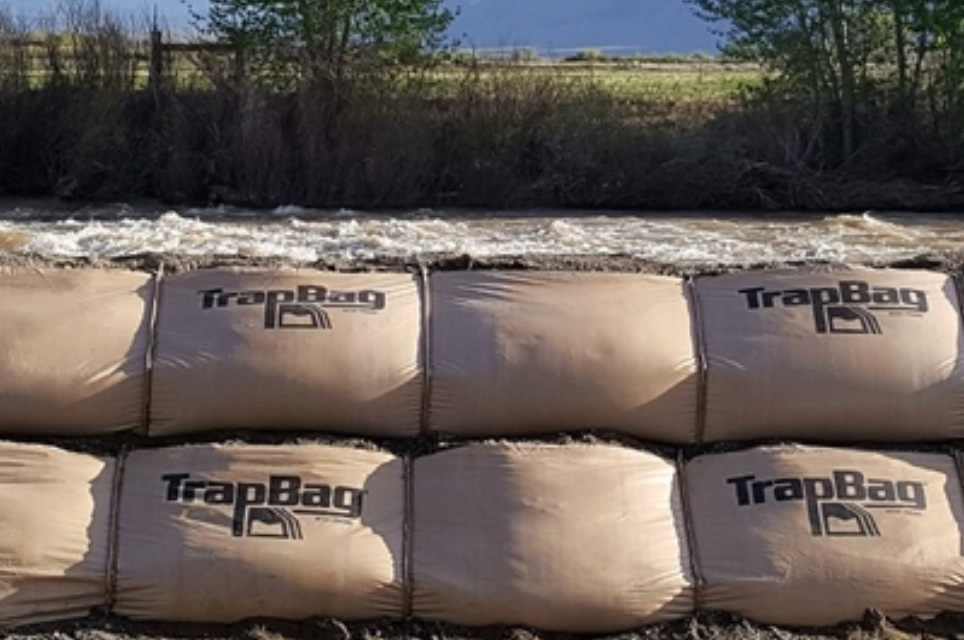
Large woven bags fill with sand, gravel, or soil pumped or shoveled in through a top valve, and they interlock end to end into a continuous wall.
Because each unit holds the volume of dozens of standard sandbags, a crew can close off a driveway or building entrance in a fraction of the time a traditional sandbag line would take. The internal baffles keep the fill from shifting once the bag is placed, so the wall holds its shape under moving water instead of slumping the way a loose sandbag stack tends to. Once the flood risk passes, crews empty the fill back out, and the bags fold flat for storage between events instead of ending up in a landfill.
Water-filled flood tubes
These barriers skip sand and gravel altogether and use the floodwater itself as ballast.
A dry, rolled tube unrolls flat against a doorway, driveway, or garage entrance, then fills through a valve connected to a garden hose or small pump. Most tubes reach full weight in under 15 minutes and hold that shape without any digging, staking, or heavy equipment. Because they store flat and empty, a household can keep one folded in a closet or garage year-round and deploy it with a few minutes’ notice before a storm arrives, which matters most for tight spaces where a full sandbag wall would eat up the entire entryway.
Inflatable plugs and dams
Storm drains, culverts, and pipe openings let floodwater bypass a barrier entirely if left uncovered, and sandbags rarely seal a round opening well. An inflatable plug expands to match the shape of the drain or culvert and seals against the inside wall using air pressure alone, so no digging or mortar work is needed.
Public works crews use these ahead of forecasted heavy rain to hold back backflow through storm systems, and property owners use smaller versions on basement floor drains or window wells. Deflating and removing the plug once the risk passes takes minutes, which keeps drainage systems from staying blocked longer than necessary.
Reusable barrier panels
Interlocking panels made from aluminum or heavy-gauge plastic slide into permanent floor-mounted or wall-mounted tracks, forming a temporary flood wall across doorways, loading docks, or parking garage entrances.
Because the tracks stay installed year-round, the panels themselves go up in minutes once a flood watch is issued, without the labor of stacking bags or filling tubes. Between events, the panels store flat against a wall or in a rack, so a business can deploy the same set repeatedly across multiple storm seasons rather than replacing degraded sandbags after every flood.
Vegetative and permanent options
For property owners facing repeat flooding rather than a single event, a permanent berm, retaining wall, or planted buffer reduces how often any temporary barrier gets used at all. A graded berm redirects surface water around a structure before it reaches the foundation, while deep-rooted native plants along a slope hold soil in place and slow runoff before it pools near a building.
These changes take more planning and often permitting to install, but property owners in flood-prone areas typically see fewer storms where a temporary barrier gets deployed at all once the grading and plantings mature.
Sandbags still have a place for small, one-time needs, but most flood-prone properties outgrow them fast. TrapBag flood protection barriers fill on site like a sandbag but go up faster, hold a straighter line, and stand up to repeat use season after season.
Meet the author

Nick Fasano
Nick Fasano is Business Development Director at TrapBag®, where he oversees operations, growth strategy, and customer success. Since joining in 2018, he has helped lead projects across the U.S. and internationally, including deployments in Florida that protected infrastructure during Hurricanes Ian and Nicole.
Get the Dirt Before the Flood Hits
Stay ahead of flooding, erosion, and disaster response challenges. The Dirt, TrapBag’s monthly newsletter, delivers field-tested tips, real-world case studies, and the latest in barrier technology straight to your inbox.