
TrapBag® for Temporary Cofferdams
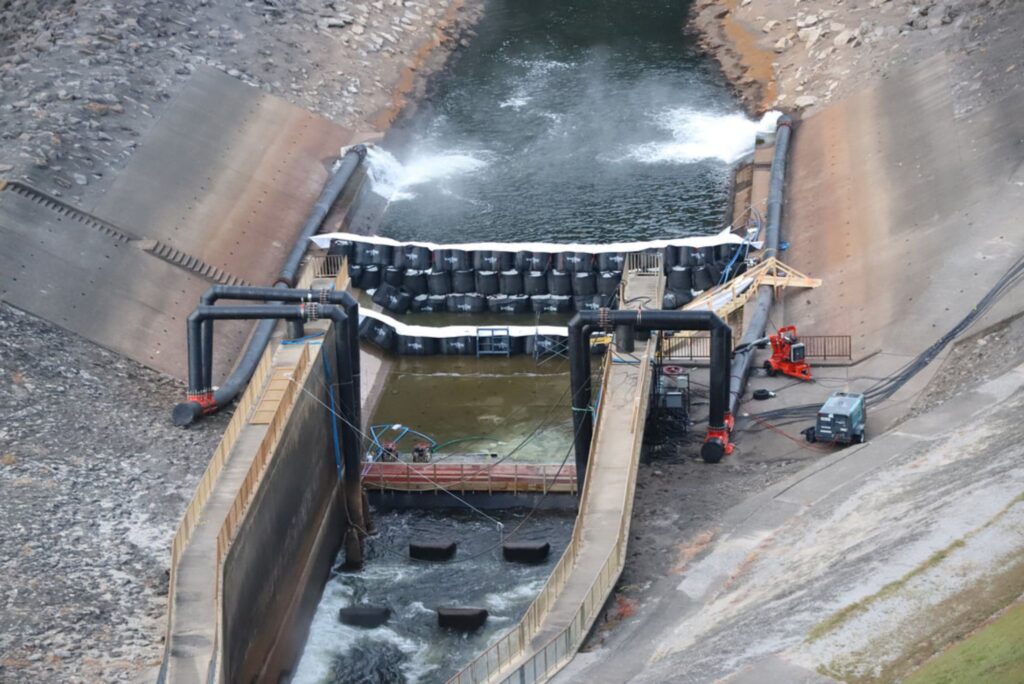
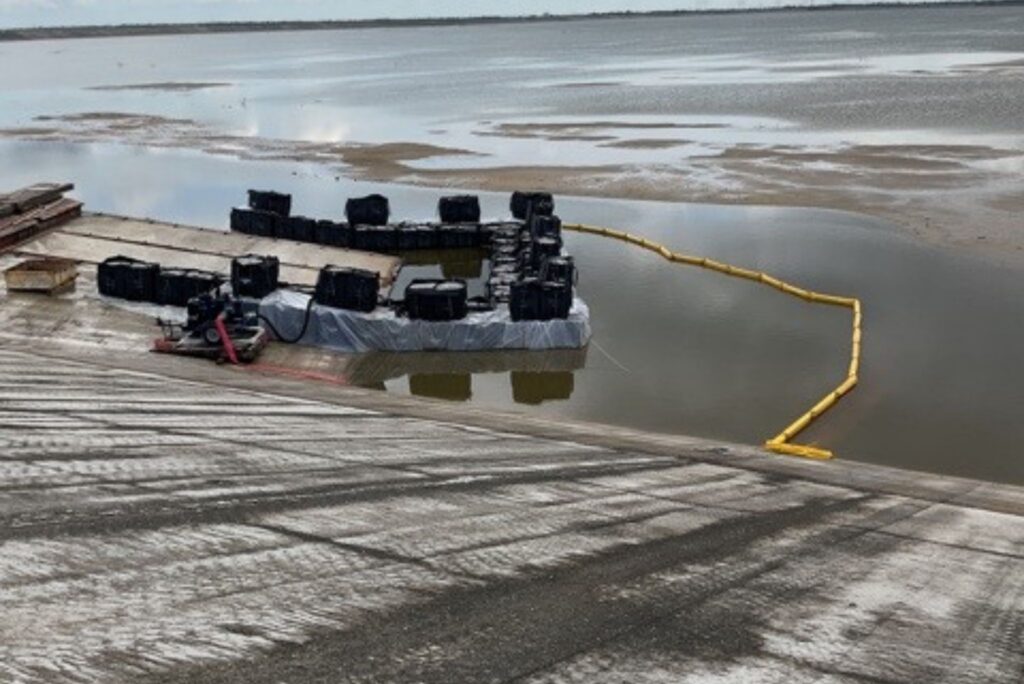
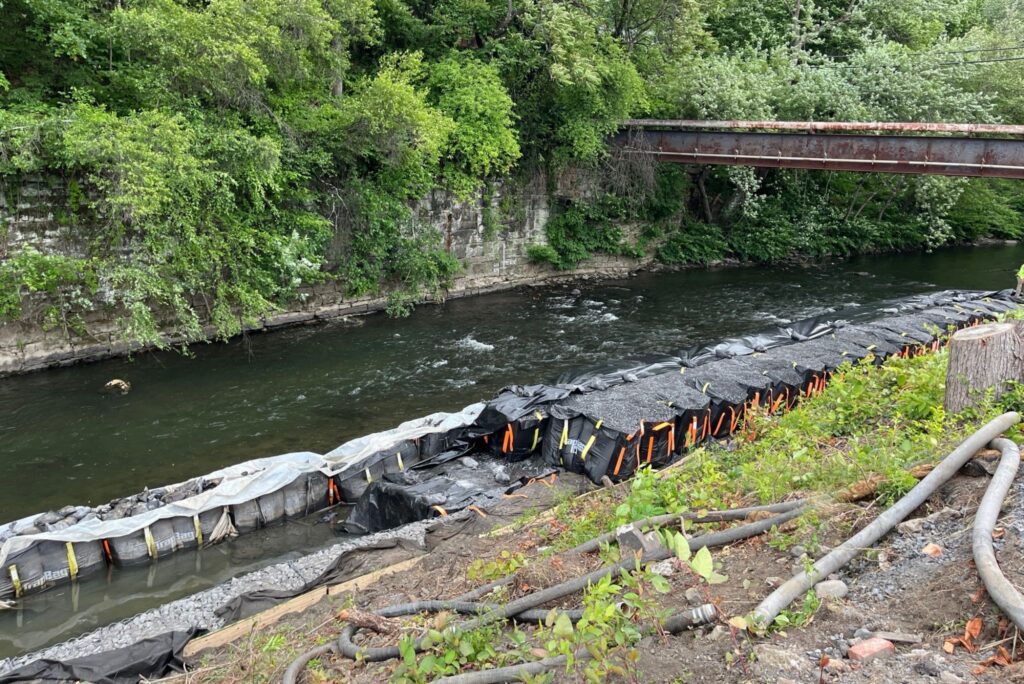
TrapBag® cofferdam bags form a stable, watertight wall for dry work zones in rivers, lakes, and coastal sites. We redesigned the standard TrapBag for this job. Instead of a continuous chain of cells, each cofferdam unit is a discrete two-cell bag with a discharge chute at the base and rigid Coroplast panels on every side. The panels hold a true rectangular shape with no sloped face, so units sit flush against each other and form a tight, leak-resistant seal.
Specifications at a glance:
- Height: 4 ft
- Shape: rectangular, no slope; rigid Coroplast panels in all walls
- Configuration: a single bag built in a two-cell layout, set flush in a continuous row
- Material: heavy-duty, permeable polypropylene geotextile
- Fill: gravel or local aggregate, filled on site
- Handling: top fork sleeves for forklift placement, plus lift belts
- Emptying: bottom discharge chute to release fill for removal and reuse
- Watertight seal: add an HDPE liner on the water-facing side
- Reuse: emptied, removed, and redeployed across projects
Why Use TrapBag®?
- Built to take water pressure, wave impact, and rough site conditions.
- Install and pull out in a fraction of the labor and time of traditional cofferdams.
- Need fewer materials and less heavy equipment to deploy.
- Work across construction, infrastructure repair, and flood prevention jobs.
- Leave a low environmental footprint, with no permanent materials left behind.
How to Deploy TrapBag® Cofferdam Bags
You’ll need a spreader bar on your excavator or skid steer to lift the bags. From there, deployment runs in four steps.
-
Prepare: Assess the site and mark the barrier line for the best placement against the water.
-
Unpack: Open each unit and lay it out for filling.
-
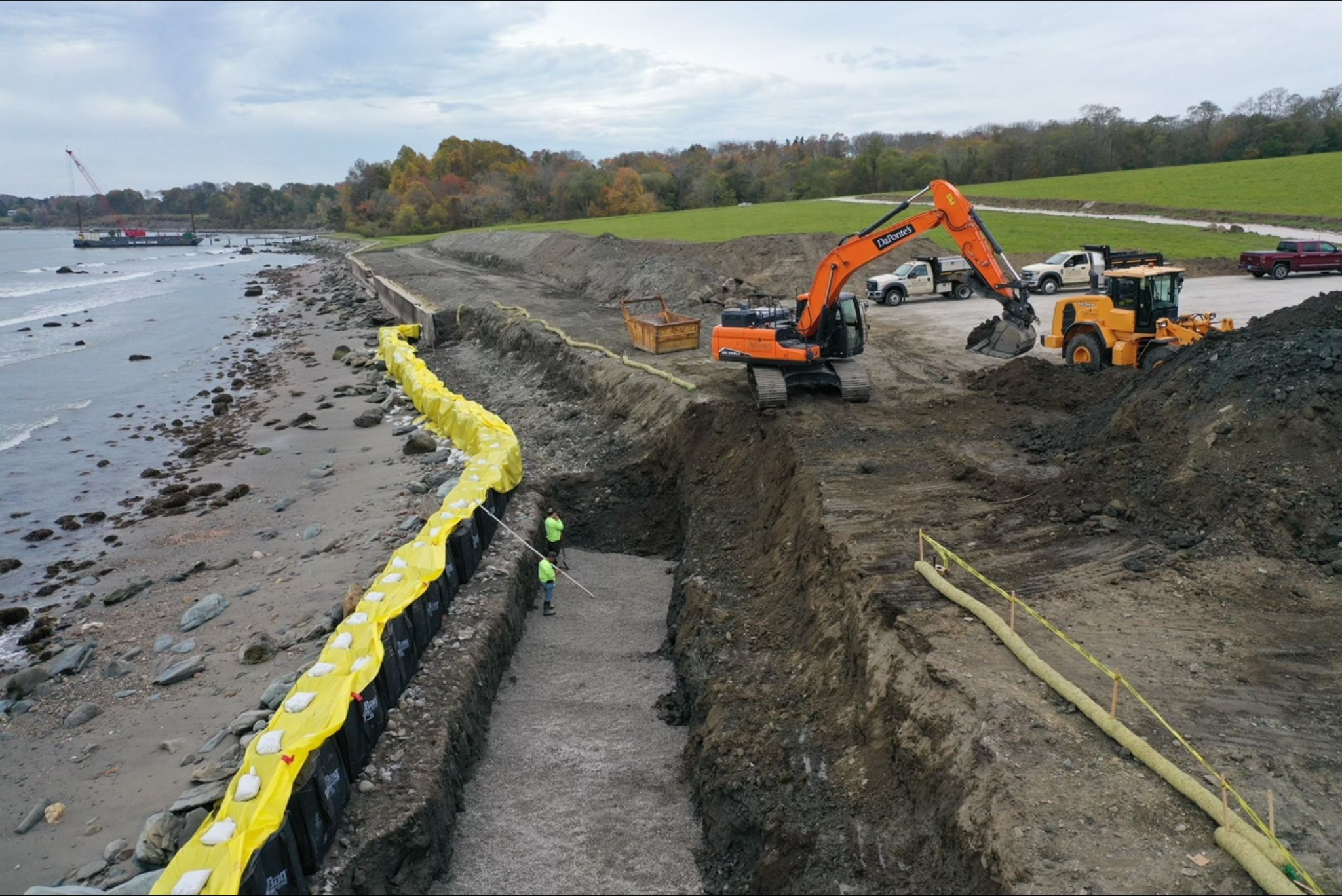
Fill: Slide your forklift forks into the top sleeves to hold the bag open, then fill with gravel. For a fully waterproof seal, run an HDPE liner along the water-facing side.
-
Place: Lift each unit by its fork sleeves or lift belts, then set it flush against the last.
Who Our Cofferdam Bags Serve
TrapBag® temporary cofferdams are trusted by industries that need water control solutions, including:
Construction
Crews divert water and keep dry job sites so bridge, culvert, and roadway work continues without costly delays.
Learn More »Civil Engineering
Firms handle bridge repairs, dam maintenance, and waterway modifications with a barrier that adapts to the site.
Learn More »Municipalities and Governments
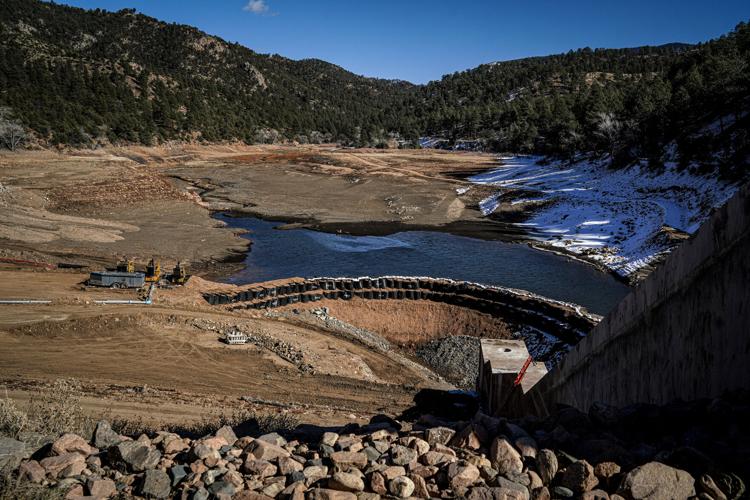
Cities and agencies use TrapBag for flood mitigation, waterway restoration, and dam and reservoir repair. TrapBag’s GSA Schedule listing (contract 47QSMS26D0024) covers cofferdams for direct government purchase.
Learn More »Projects
How TrapBag® Cofferdams Compare
Water Depth: Deep
Install Speed: Slow (driving, cranes)
Leak Resistance: High
Reusable?: No
Water Depth: Shallow to moderate
Install Speed: Fast
Leak Resistance: Low; puncture-prone
Reusable?: Limited

Water Depth: Shallow
Install Speed: Slow; labor-heavy
Leak Resistance: Moderate; build-dependent
Reusable?: No
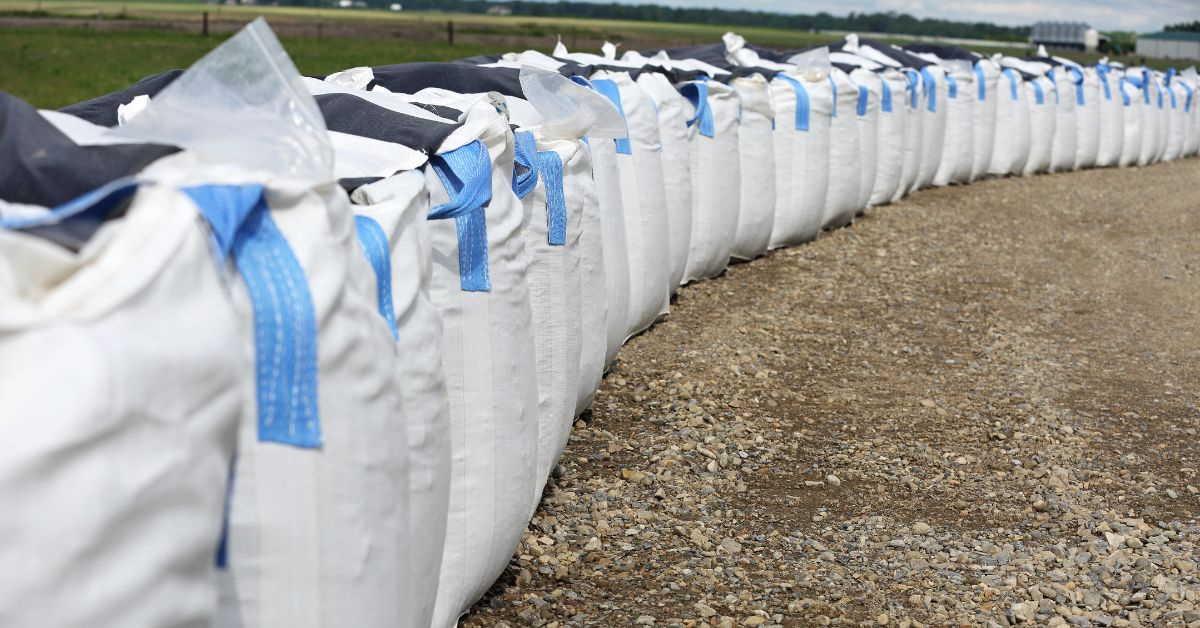
Water Depth: Shallow to transitional
Install Speed: Fast; fill on site
Leak Resistance: High; rigid panels plus HDPE liner
Reusable?: Yes
About the TrapBag® Team
TrapBag® builds water and erosion control barriers used on projects worldwide. Our team works directly with contractors, engineers, and agencies, drawing on years of field experience to help crews protect infrastructure and property. The U.S. Army Corps of Engineers has both tested TrapBag barriers and used our cofferdam bags on dam maintenance work.
