

TrapBag® dune core barriers give municipalities, state coastal programs, and engineering contractors a buried, sand-filled core that holds a dune’s shape against wind, wave runup, and storm surge. Crews set the barrier inside the dune, fill it with on-site sand or washed gravel, and bury it. The finished dune looks and functions like a natural one, with a reinforced center.
TrapBag ships in 50-foot sections folded on pallets and fills with a standard excavator or skid steer. Procurement teams can request pricing, spec sheets, and quantity estimates by the linear foot for bid packages, capital projects, and post-storm dune repair.
Coastal and shoreline dunes are constantly subject to erosion from wind and waves. They’re also invaluable for stabilizing coastlines and protecting the structures and habitats behind them from harm.
Using TrapBag as Sand Dune Stabilization & Protection
A dune loses volume from the outside in. Waves cut the toe, wind strips the crest, and once the face slumps, the next storm reaches the homes, roads, and utilities behind it. TrapBag changes that order of failure by giving the dune a heavy, interlocking core that stays in place after the outer sand is gone.
Along with planting native dune grasses and other plants, TrapBag barriers protect dunes by giving them a stable anchoring point.
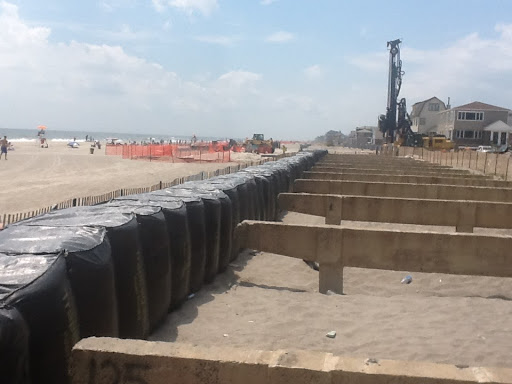
Sand Dune Stabilization Techniques with TrapBag
Installing TrapBag barriers inside the center of a sand dune gives the dune a safe, stable center that can slow down the erosion process or even stop it altogether. It’s also a relatively easy process that requires just a few overarching steps:
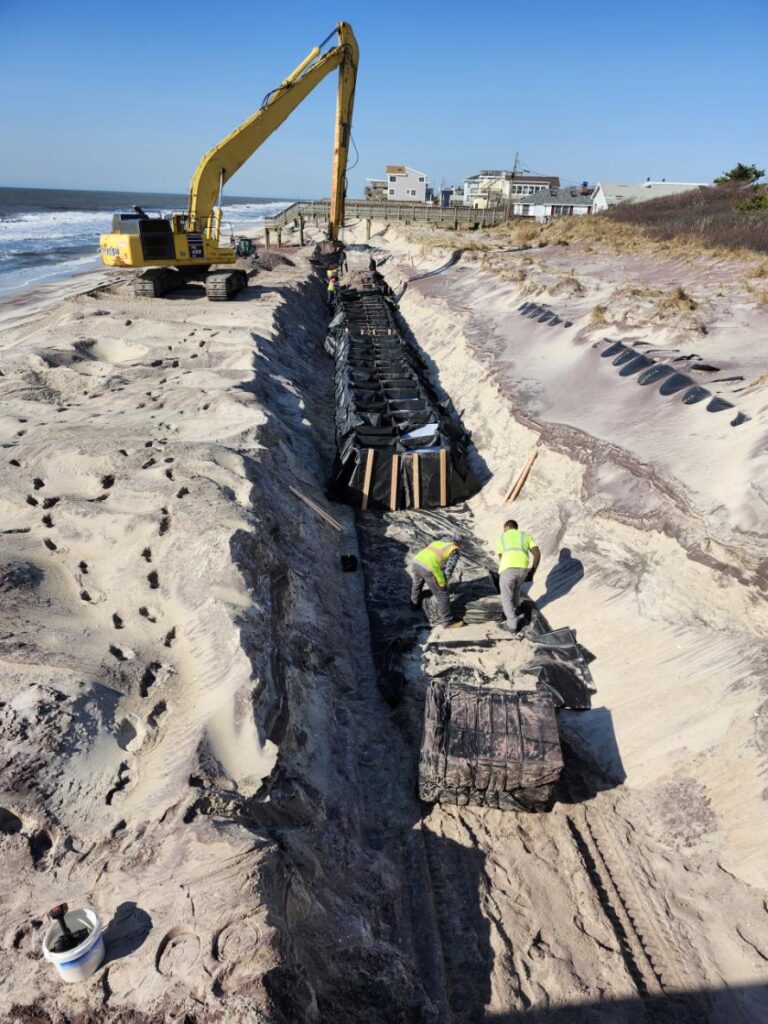 Watch the install
-
1
Uncover the sand dune
This will require some digging, ideally with an excavator or other heavy machinery. -
2
Open the TrapBag packaging
TrapBag barriers come folded up on a pallet. Pull them out like an accordion and stretch them up to 50 linear feet per unit. -
3
Place the barrier
Set the TrapBag barrier into the core of the sand dune. -
4
Fill the cells
A team of three people with an excavator or skid steer can fill a TrapBag barrier within minutes with washed gravel or more sand. -
5
Cover the barrier
Replace the sand back on top of the barrier to give the dune a more stabilized core, or add more sand from offshore to bolster its volume.
Who We Serve
TrapBag supports all types of industries for flood control, mudslide protection, and chemical spill protection. However, industries we work with to stabilize dune cores include:
Municipalities & county governments
Public works and coastal management departments use TrapBag to rebuild dunes that protect roads, utilities, and beachfront neighborhoods, and to restore dune lines after named storms. Learn More »Coastal engineering
Coastal and civil engineering firms specify TrapBag as a dune core in shoreline protection designs where a buried core preserves a natural dune profile instead of placing a hard structure on the beach. Learn More »Environmental protection services
Conservation groups and state resource agencies use TrapBag to hold dunes that shelter nesting habitat, wetlands, and back-barrier marshes from storm overwash. Learn More »Marine services
Marinas, port operators, and waterfront property managers use TrapBag to protect upland facilities, parking, and access roads where a dune separates the shoreline from their operations. Learn More »Projects
See All Our Past Projects »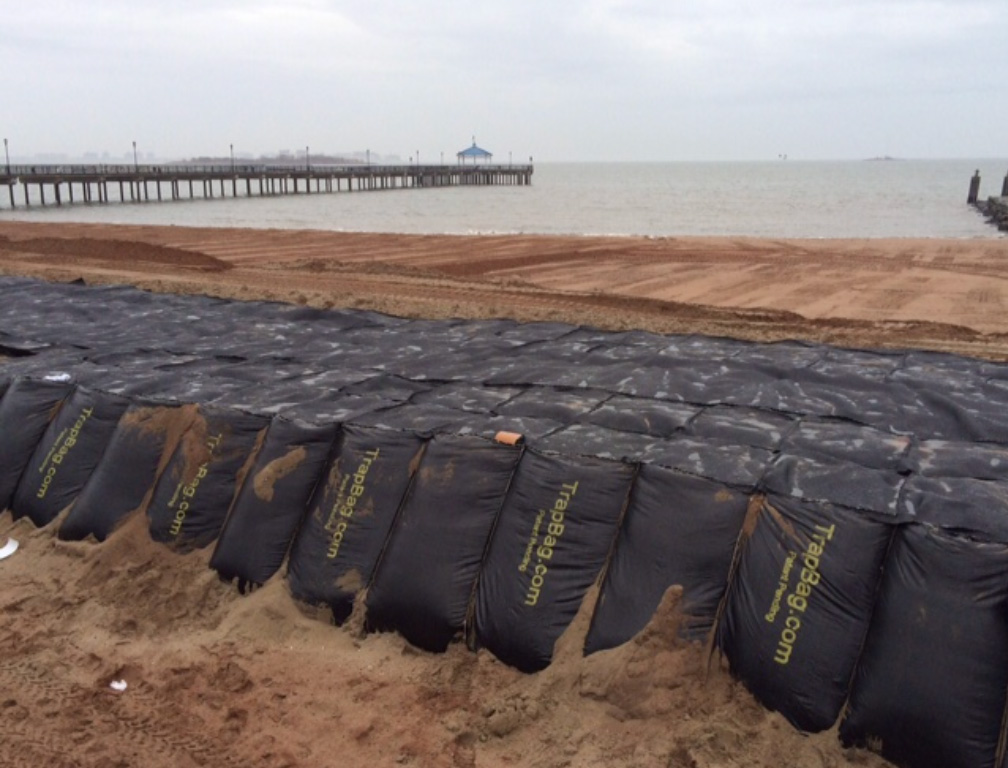
Dune Core Stabilization for Hurricane & Storm Surge Protection in Rockaway Beach, New York
May 25, 2014 Read More » about Dune Core Stabilization for Hurricane & Storm Surge Protection in Rockaway Beach, New York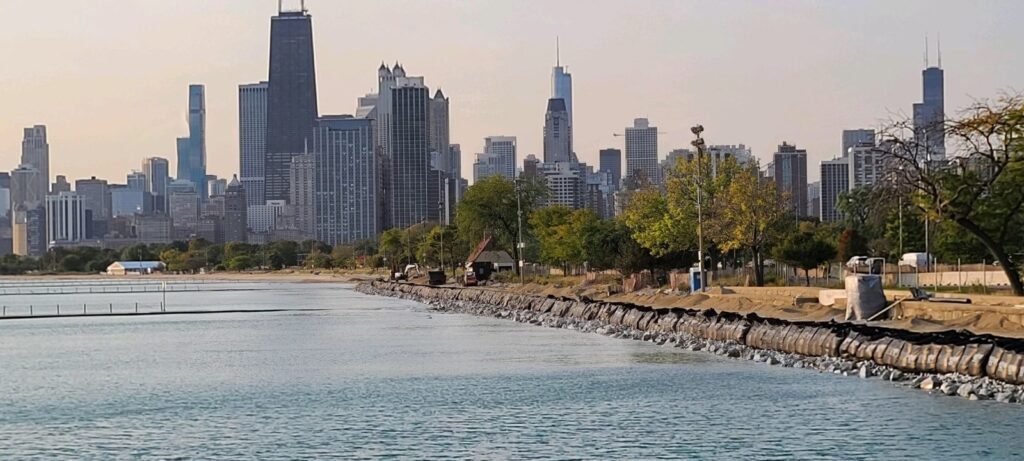
Shoreline Erosion on Lake Michigan – Chicago, IL
January 25, 2021 Read More » about Shoreline Erosion on Lake Michigan – Chicago, IL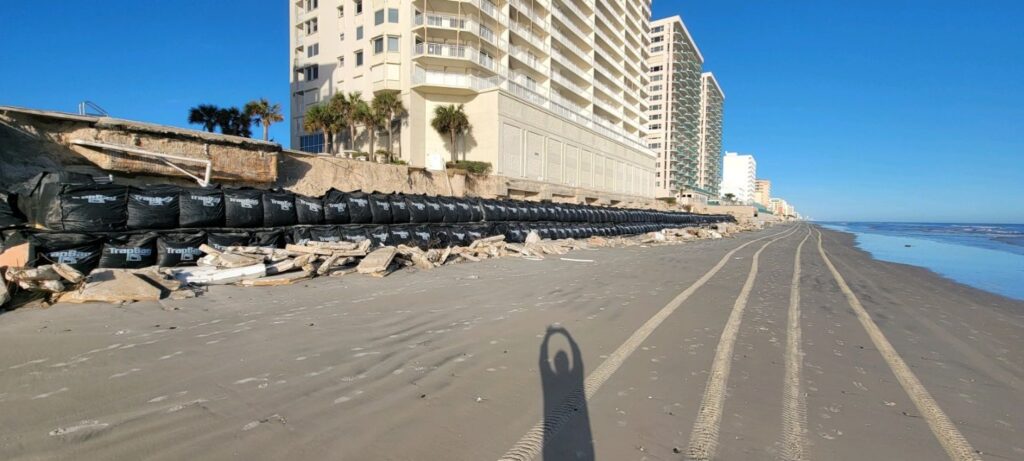
Shoreline Restoration – Volusia County, Florida
June 5, 2023 Read More » about Shoreline Restoration – Volusia County, Florida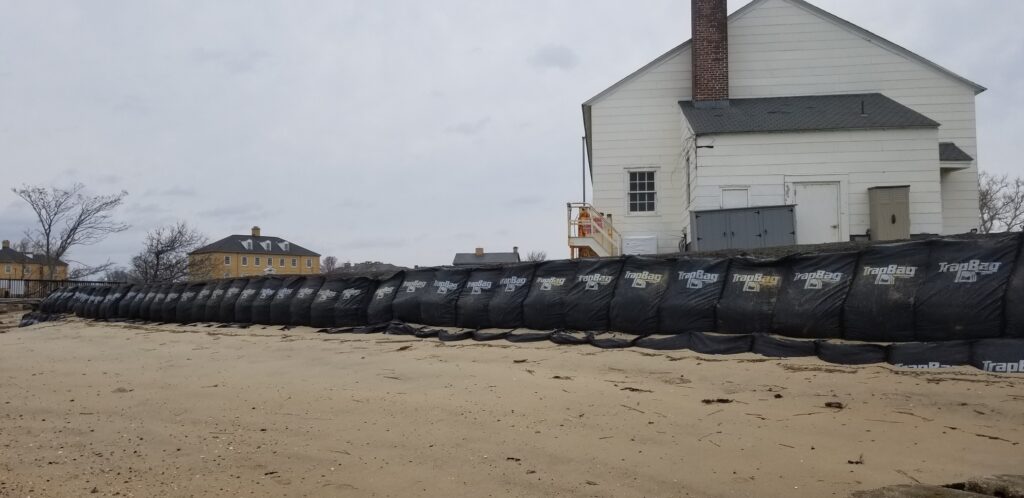
Shoreline Stabilization – Fort Hancock on Sandy Hook Bay, NJ
April 23, 2022 Read More » about Shoreline Stabilization – Fort Hancock on Sandy Hook Bay, NJFire Island, New York — Erosion Control
May 28, 2024 Read More » about Fire Island, New York — Erosion ControlHow TrapBags Compare to:
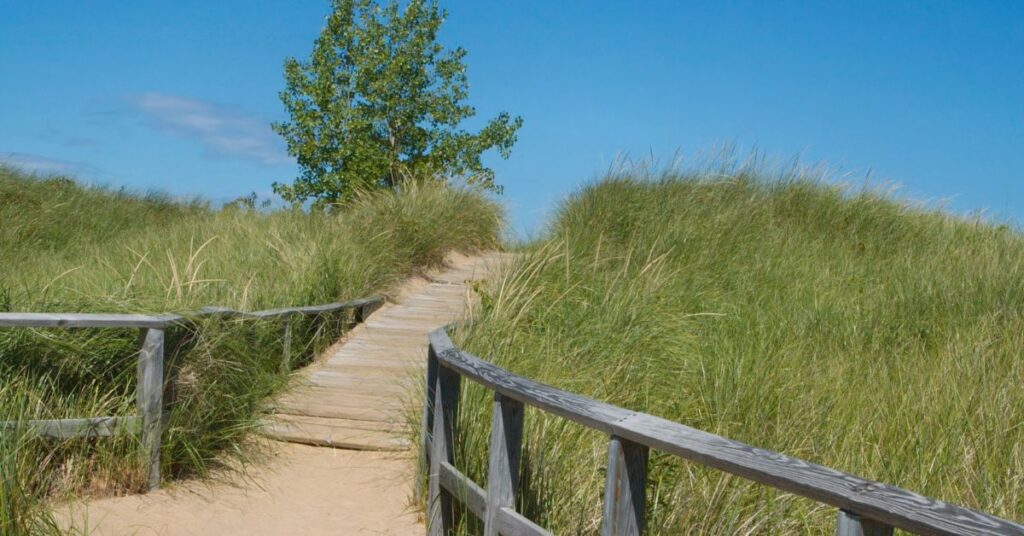
Sand Dune Boardwalks
Sand dune boardwalks or crosswalks make it easier for people to walk to beaches and shorelines without displacing the sand in a dune. They’re an ideal form of dune protection because they discourage people from walking directly on the dune, which in turn mitigates the amount of erosion due to foot traffic.
However, boardwalks aren’t very effective at preventing erosion from wave action or wind. This is why it’s important to ensure dunes have a way to stabilize their core in addition to protecting them from the outside. TrapBag offers a relatively easy solution for stabilizing sand dunes.
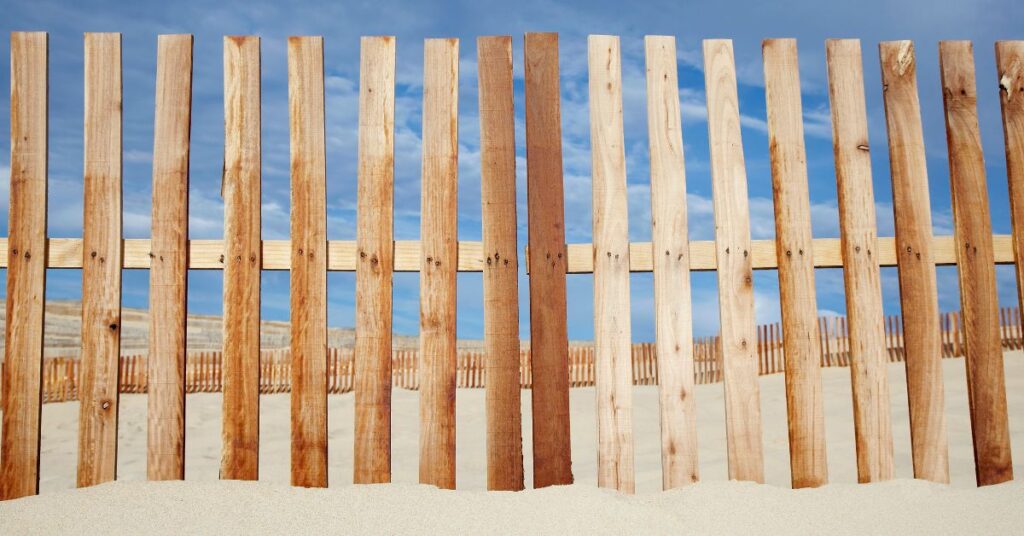
Sand Fences
Sand fences can help fill gaps in dune ridges and prevent sand from being displaced. They also discourage people from walking on sand dunes that need to be restored. These fences are made of wood, plastic, or fabric, and are typically quite affordable.
However, they can also be unsightly and cause disruption along beaches and other natural areas. In many cases, they can also cause sand to build up or disappear unintentionally, or potentially get buried over time. Stabilizing the dunes from within can be a more effective way to restore them.
TrapBag Specifications for Dune Projects
Use these figures to scope quantities, draft specifications, and compare bids. Contact TrapBag for spec sheets and submittal documents.
Request Spec Sheets| Section length | 50 linear feet per unit; ships folded on pallets and connects end to end |
|---|---|
| Heights | 2 ft and 4 ft; over 6 ft uses a three-row pyramid |
| Fabric | High-strength polypropylene geotextile |
| Fill & crew | Sand, washed gravel, or concrete; three people with an excavator or skid steer |
| Sandbag equivalent | 100 ft of 4-ft TrapBag replaces about 8,000 sandbags and uses 40% less fill |
| Testing | Tested by the U.S. Army Corps of Engineers |
Why Choose TrapBag as a Dune Stabilization & Erosion Control Solution?
TrapBag started out as a flood control solution that improved on the design of traditional sandbag barriers during storm surges and other floods. However, it has since been used for everything from stormwater containment to mudslide diversion and dune core stabilization.
One 100-foot section of TrapBag barriers replaces roughly 8,000 sandbags, all while using 40% less material than their traditional counterparts. The cells in these barriers have a pentagonal shape with one sloped side, one vertical side, and a flat top for structural integrity. Because they provide reinforcement and strength from within, they’re an ideal way to strengthen sand dunes.
TrapBag’s team is available 24/7 across multiple countries and continents to help your agency or firm plan, order, and install.
Procurement & Project Support
TrapBag works with public agencies, prime contractors, and engineering firms from budgeting through installation.
- Quotes by the linear foot
- Send the dune length, design height, and delivery site, and TrapBag returns pricing and a pallet count for budgets, bid tabs, and purchase orders.
- Submittal documents
- Spec sheets, product data, and Army Corps of Engineers testing documentation for engineer review and bid packages.
- Purchasing options
- Direct purchase orders and authorized distributors.
- Storm-season stockpiling
- Folded barriers take far less warehouse space than equivalent sandbags, so agencies can hold inventory before hurricane season and deploy after a storm without waiting on production.
- Installation guidance
- TrapBag's team supports contractors 24/7 across multiple countries and continents, from site layout to fill methods.
Frequently Asked Questions
Sand dune erosion is a natural process that occurs as wind and wave action put constant pressure on dunes. However, as people continue to develop communities along beaches and shorelines, erosion can have more disastrous consequences for things like residential neighborhoods, commercial buildings, highways, and other structures.
Thankfully, sand dunes can be restored after they’ve been damaged. Sand dunes can be saved by rebuilding them, either relatively quickly or over time. Some of the most common methods of rebuilding sand dunes include:
- Adding dredged sand from offshore to the dune
- Planting grasses and other dune vegetation
- Installing dune fences
- Stabilizing the core of the dune from within
Not all local laws allow for all types of dune stabilization methods. Most states require permits before you make modifications to sand dunes.
There are several threats that can cause sand dunes to erode more quickly:
- Wind: This natural force can both create dunes and cause them to wear away over time.
- Waves: Wave action wears away at sand dunes over time and makes them wash away into sandbars and silt offshore.
- Human activity: Activities ranging from construction of residential and commercial buildings to simply walking on them can cause damage to coastal sand dunes.
Sand dunes protect the coastal cliffs and habitats behind them from erosion and storm damage. Therefore, preserving sand dunes is essential for protecting both wildlife and neighborhoods near the shoreline.