
How Water Filled Flood Barriers Work
A water-filled barrier holds back flooding with its own mass by pressing down against the ground, and its rounded shape spreads incoming water pressure across a wider surface than a flat wall would. Hydrostatic pressure from the floodwater on one side pushes against the tube, but the water inside pushes back with equal force, so the barrier stays put without stakes, sandbags, or anchors.
How Do Water-Filled Flood Barriers Work?
A water-filled flood barrier looks simple from the outside: a long tube that fills with water and blocks a doorway, driveway, or low point in a yard. What makes it hold under pressure comes down to the materials and geometry inside, not the water alone. Here’s what happens between the moment a tube gets rolled out and the moment it turns into a barrier that can stop a few feet of rising water.
The tube starts empty and flat
Before deployment, the barrier sits rolled up or folded flat, usually made from a heavy-duty PVC or polyethylene shell reinforced with a woven fabric layer. This construction resists punctures from gravel, sticks, and debris that would tear a thinner plastic sheet. Because the barrier stores flat, one person can carry a section that would otherwise take a full crew to move if it were pre-filled or made from rigid material.
Filling uses the flood as ballast
Instead of hauling in sand or gravel, most water-filled barriers connect to a garden hose or small pump and fill directly from a nearby source, often the same water they’re meant to hold back. A single tube can reach full weight in 10 to 15 minutes depending on size and water pressure. Internal baffles or chambers divide the tube into sections, so the weight distributes evenly along its length instead of pooling at one low point and leaving the rest of the barrier thin and unstable.
Weight and shape do the work of holding back water
Once filled, the tube’s own mass presses down against the ground, and its rounded shape spreads incoming water pressure across a wider surface than a flat wall would. Hydrostatic pressure from the floodwater on one side pushes against the tube, but the water inside pushes back with equal force, so the barrier stays put without stakes, sandbags, or anchors. Longer runs of tube connect end to end, and the seams between sections use overlapping seals or interlocking connectors to stop water from slipping through the joint.
Drainage and removal happen almost as fast
When the flood risk passes, a valve at one end lets the water drain out under gravity or with help from a pump, and the tube returns to its original flat shape within a similar window to how long it took to fill. Because there’s no sand or gravel to shovel out and haul away, cleanup takes a fraction of the time compared to a barrier built from loose fill. The empty tube rolls back up for storage until the next storm.
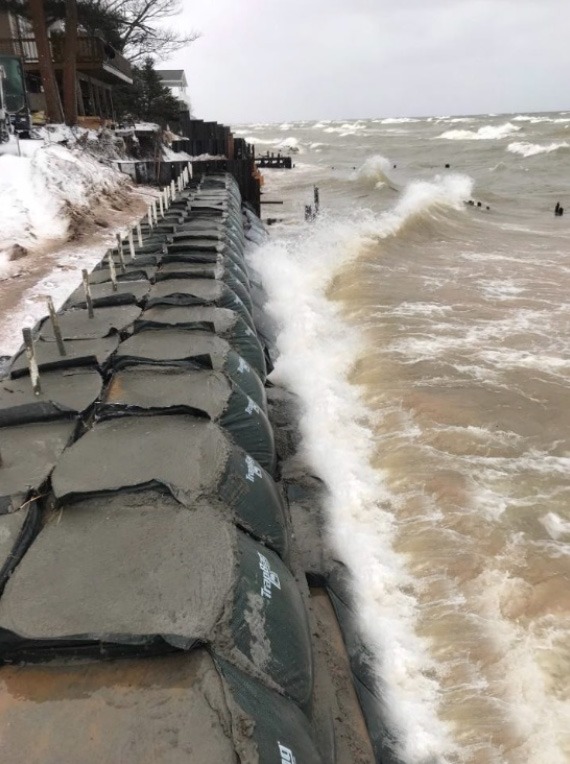
Water-filled tubes work well for tight spaces and fast deployment, but they aren’t the only barrier built to move quickly. TrapBag flood protection barriers take a similar fill-on-site approach with sand or gravel instead of water, giving property owners a barrier that holds a straighter line across longer distances and stands up to repeat use season after season.
Meet the author

Kevin Vigne
Kevin Vigne is Sales Director at TrapBag®, where he connects customers with the right barrier systems for their projects. He’s often the first point of contact, helping agencies and organizations simplify the process of flood protection, erosion control, and more.
Get the Dirt Before the Flood Hits
Stay ahead of flooding, erosion, and disaster response challenges. The Dirt, TrapBag’s monthly newsletter, delivers field-tested tips, real-world case studies, and the latest in barrier technology straight to your inbox.