

Marine Retaining Walls & Water Barriers for Marine Services
Marine contractors, marina operators, and port crews use TrapBag® to build retaining walls along the water, keep in-water work dry, and protect docks, bulkheads, and waterfront buildings from storms. Crews fill TrapBag with sand, gravel, or concrete, and it goes in without driving piles.
How Marine Contractors Use TrapBag
TrapBag works in the water and along it, from temporary work areas to permanent walls.
Marine Retaining Walls
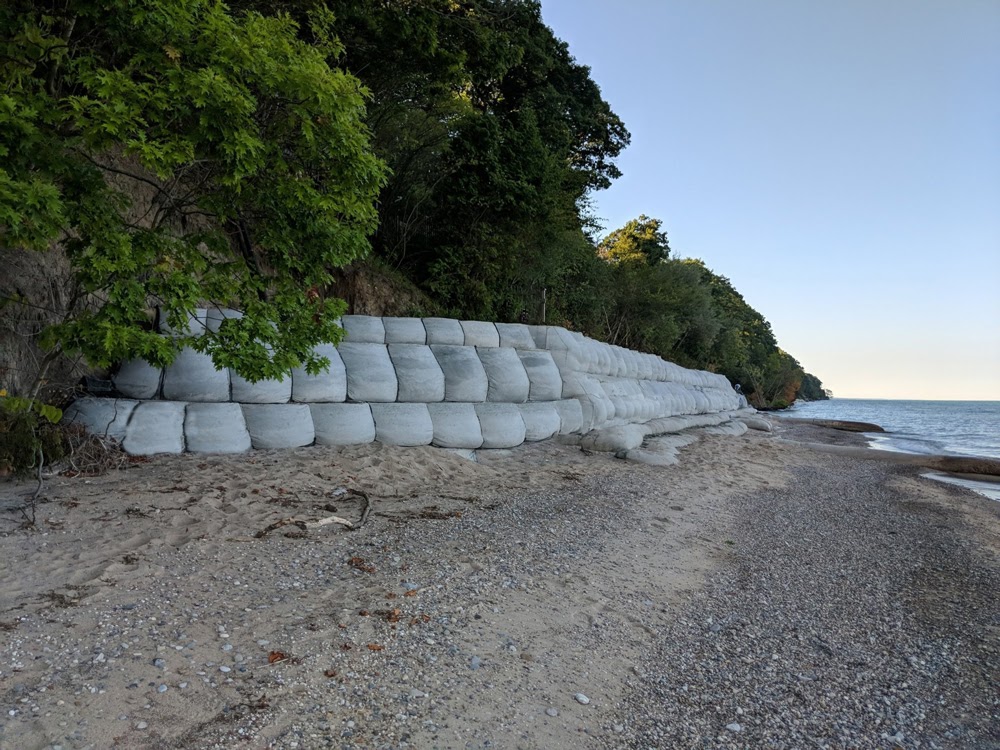
Bulkheads and waterfront retaining walls hold back the soil behind docks, boat ramps, and parking areas. TrapBag builds a temporary wall with sand or gravel fill or a permanent one with pumped concrete. Crews don’t drive sheet piles or set formwork in the water.
In-Water Construction
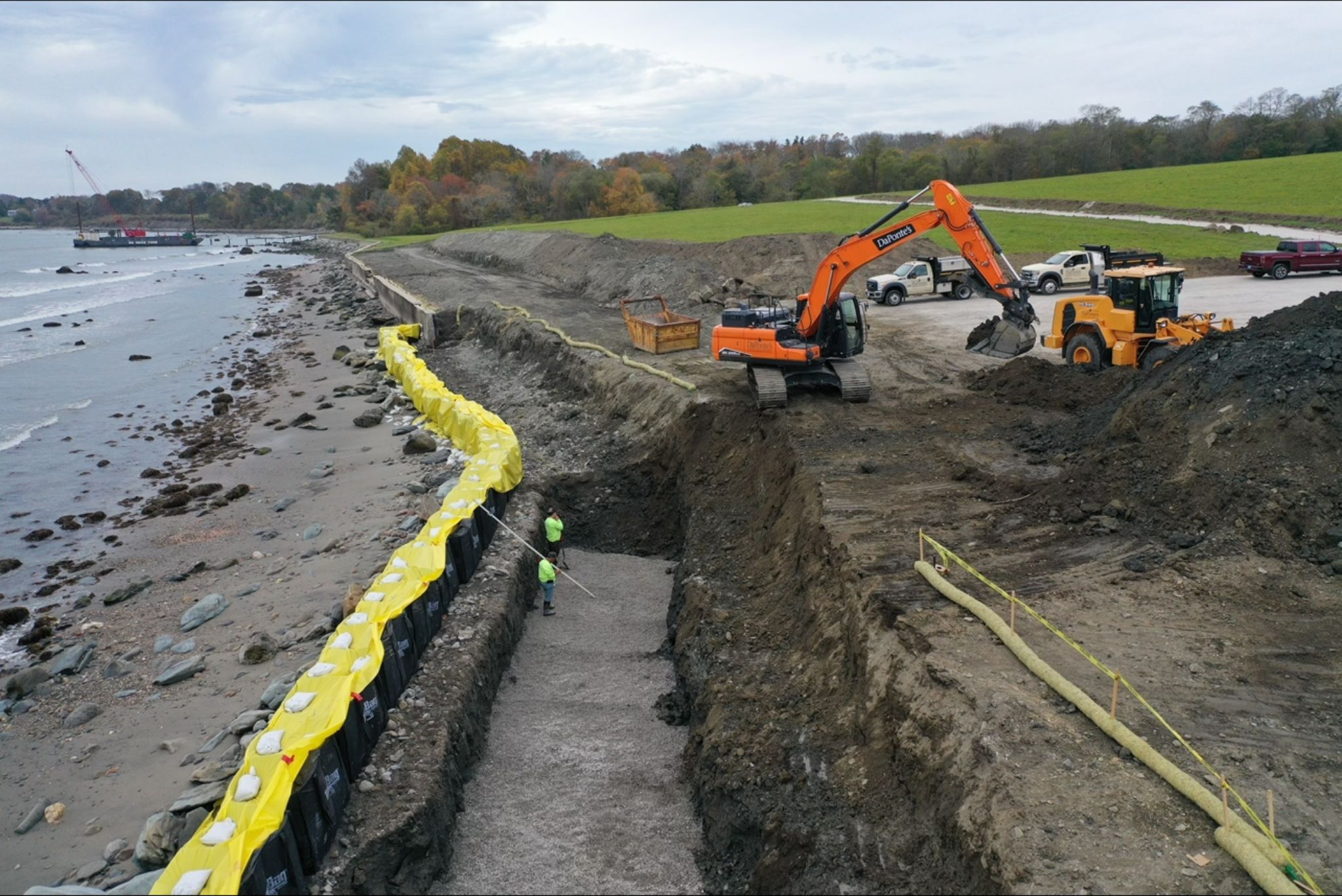
Dock, pier, and boat ramp work goes faster in the dry. TrapBag cofferdams enclose the work area so crews can pump it out, and the bags sit on the bottom instead of being driven into it.
Storm Protection
Storm surge and waves can lift docks, undercut bulkheads, and flood marina buildings. Crews place TrapBag ahead of hurricanes and nor’easters to hold back surge and protect upland facilities.


Where Marine Contractors Use TrapBag
Marine crews use TrapBag wherever water has to be held back while they work, or kept away from what they’ve built.
Docks and piers
TrapBag cofferdam bags keep dock and pier work dry.
Bulkheads and seawalls
A cofferdam holds back the water during repairs, as on a seawall repair in Portsmouth, Rhode Island.
Boat ramps
Crews pump out the ramp area and pour or repair concrete in the dry.
Marinas and harbors
Barriers protect parking lots, boat storage, and buildings from storm surge.
Fuel docks
TrapBag berms contain fuel spills before they reach the water.
Waterfront property
TrapBag controls erosion along lakefronts and bays, as at Fort Hancock on Sandy Hook Bay and along Chicago’s Lake Shore Drive.

How TrapBag Improves on Sandbag Barriers
TrapBag was originally designed as a flood barrier that could withstand hurricane-force storm surges. Marine contractors later adopted it for retaining walls and in-water work. Compared to sandbags:
Less labor
A sandbag wall along the water can take a large crew days to build. Two people and a third person operating a skid steer or excavator can fill a TrapBag barrier with sand or washed gravel in a few hours. For permanent walls, a crew pumps concrete into the cells.
More durability
Waves and current shift and split individual sandbags, and one failed bag can bring down the wall around it. TrapBag’s cells are connected and work as one unit, so the barrier holds its shape under water pressure and wave action.
Less material
A 100-foot section of 4-ft TrapBag replaces roughly 8,000 sandbags and uses 40% less fill than a stacked sandbag wall of the same size.
Why Choose TrapBags as Flood Prevention Barriers?
Versatility
One TrapBag system builds retaining walls, cofferdams, and storm barriers, and the same crews that use it on the water use it on land-based construction sites.
Speed
TrapBag goes up in a fraction of the time a sandbag wall takes. A crew of three with a skid steer or excavator can build a full barrier in hours, so a marina can protect its facilities after a storm enters the forecast.
Reliability
The U.S. Army Corps of Engineers has tested TrapBag for its ability to protect structures from flood damage. TrapBag also has a 3:1 (mass to hydraulic load) safety factor, which gives crews margin above the expected water level.
TrapBag Specifications for Marine Projects
Use these figures to scope quantities, draft specifications, and compare bids. Contact TrapBag for spec sheets and submittal documents.
| Specification | Detail |
|---|---|
| Section Length | 50 linear feet per unit; ships folded on pallets and connects end to end |
| Heights | 2 ft and 4 ft; a 2-ft row on a 4-ft row reaches 6 ft; a three-row pyramid reaches 8 ft |
| Sand or gravel fill | Temporary retaining walls, storm barriers, and erosion control; three people with an excavator or skid steer |
| Concrete fill | Permanent retaining walls and bulkheads; pumped into the cells |
| Sandbag equivalent | 100 ft of 4-ft TrapBag replaces about 8,000 sandbags and uses 40% less fill |
| Testing | Tested by the U.S. Army Corps of Engineers |
| Cofferdam units | Rectangular two-cell bags with an HDPE liner on the water-facing side |
| Installation | TrapBag Installation Manual (PDF) |
How TrapBags Compare

Sheet Piling
Steel and vinyl sheet piling are the standard for marina bulkheads. Interlocking sheets driven into the bottom form a continuous wall.
Driving sheet piles takes a crane or excavator-mounted hammer, often working from a barge, and the vibration can disturb nearby docks and structures. Rock and debris on the bottom can stop a pile short of its design depth.
As a sheet pile alternative, TrapBag sits on the bottom or on grade with no driving.
Timber Bulkheads
Timber bulkheads cost less up front than steel or concrete, and many marina crews know how to build them.
In saltwater, wood rots and marine borers eat into the piles, so timber walls need frequent repair.
TrapBag’s polypropylene geotextile doesn’t rot or rust, and TrapBag lasts for years as a bulkhead on both freshwater and saltwater shorelines.
Earthen & Rock Cofferdams
Earthen and rock cofferdams use fill dumped into the water to wall off a work area, and the material is often cheap.
An embankment needs gentle side slopes to stay stable, which takes up space in a harbor or channel that boats still need. It also multiplies the fill crews have to place and later dig out.
Among cofferdam alternatives, TrapBag cells have a vertical face, take up less of the waterway, and come out cleanly when the job ends.
Projects
See All Our Past Projects »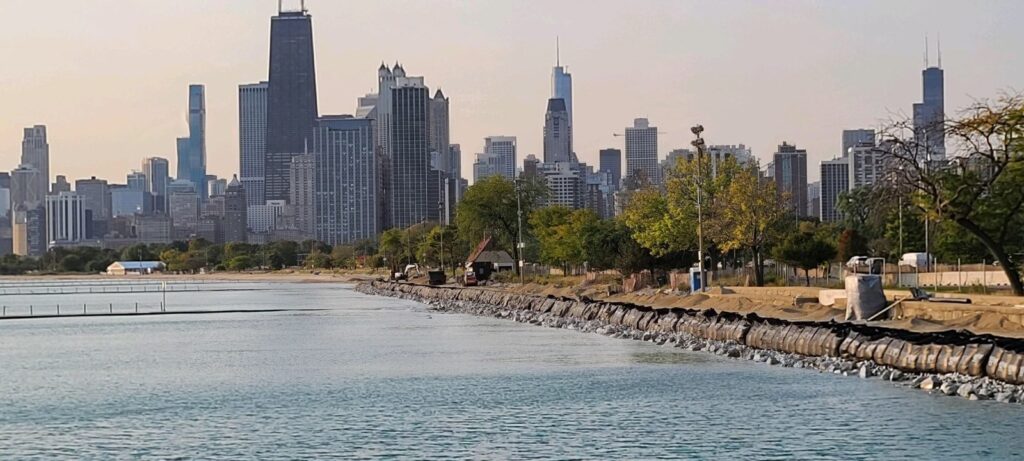
Shoreline Erosion on Lake Michigan – Chicago, IL
January 25, 2021 Read More » about Shoreline Erosion on Lake Michigan – Chicago, IL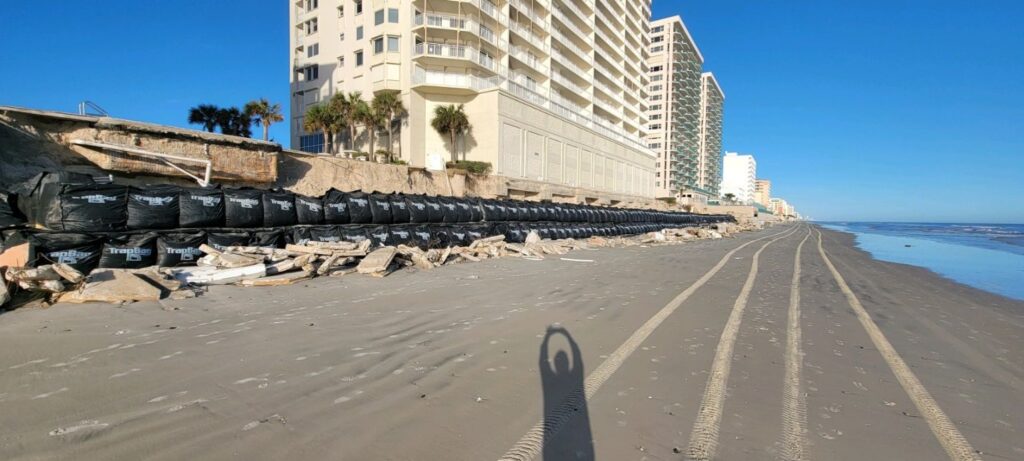
Shoreline Restoration – Volusia County, Florida
June 5, 2023 Read More » about Shoreline Restoration – Volusia County, Florida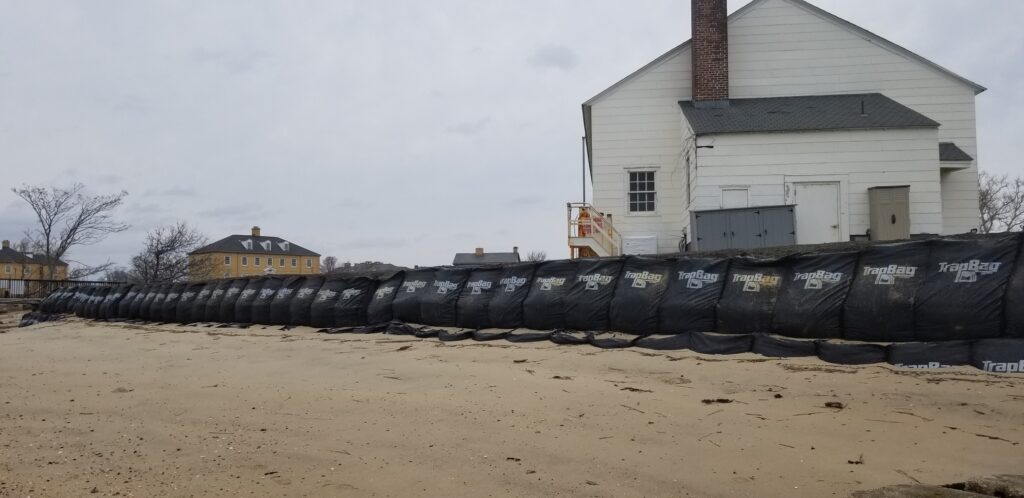
Shoreline Stabilization – Fort Hancock on Sandy Hook Bay, NJ
April 23, 2022 Read More » about Shoreline Stabilization – Fort Hancock on Sandy Hook Bay, NJFrequently Asked Questions
A marine retaining wall, often called a bulkhead, is a wall along the water’s edge that holds back soil on the land side and resists waves, tides, and current on the water side. Marinas, ports, and waterfront properties use marine retaining walls to keep land from washing out behind docks, boat ramps, and parking areas. Common materials include steel, vinyl, and timber sheet piling, concrete, and rock. TrapBag builds marine retaining walls with sand or gravel fill for temporary use or pumped concrete for permanent walls.
Contractors build a cofferdam around the work area, then pump out the water inside so crews can work on the dry bottom. Cofferdams can be built from driven sheet piles, earth or rock fill, water-filled tubes, or fillable bags like TrapBag. The right choice depends on water depth, current, bottom conditions, and how long the work will take.
Marinas control erosion by armoring the edge where waves and boat wakes hit land. Common methods include bulkheads, rock riprap, wave attenuators that break up waves before they reach the docks, and planted living shorelines in calmer water. TrapBag can serve as a retaining wall or erosion barrier, filled with sand or gravel for temporary protection or concrete for a permanent wall.
Yes. TrapBag cofferdam bags are filled on land, then lifted into place with a spreader bar on an excavator or skid steer, so crews near shore can build from the bank. Standard TrapBag units are pulled into position and filled in place with the same equipment.
Yes. With sand or gravel fill, TrapBag is a temporary wall that crews can dig out and remove when the job ends. For a permanent marine retaining wall, a crew pumps concrete into the cells and the fabric acts as the form. TrapBag’s Fabric Forming Systems are designed for permanent concrete walls.
Yes. TrapBag’s high-strength polypropylene geotextile doesn’t rot, rust, or attract marine borers, and it’s designed to last at least five years in sunlight. TrapBag has held up for years as a bulkhead on both freshwater and saltwater shorelines.
TrapBag cofferdam bags have a bottom discharge chute that releases the fill, so crews can empty them, pull them out, and use them again on the next project.
The U.S. Army Corps of Engineers has tested TrapBag as a flood barrier.
What Information Does TrapBag Need for a Quote?
Send the length of the wall or work area, water depth, target height, bottom conditions, fill material available near the site, project duration, and delivery location. TrapBag will send back a recommended layout, unit count, and pricing.