

Coastal Flood Engineering & Erosion Control
Coastal engineers in the U.S. and around the world use TrapBag® to hold shorelines against waves, erosion, and storm surge, from beach dunes to coastal bluffs and harbor walls. Crews fill the barriers with sand on site for temporary protection, or pump concrete into them for permanent walls. See why TrapBag belongs in your next shoreline design.
How Coastal Engineers Use TrapBag
TrapBag works as temporary or permanent shoreline protection, from pre-storm barriers to long-term coastal protection.
Seawalls & Shoreline Armoring
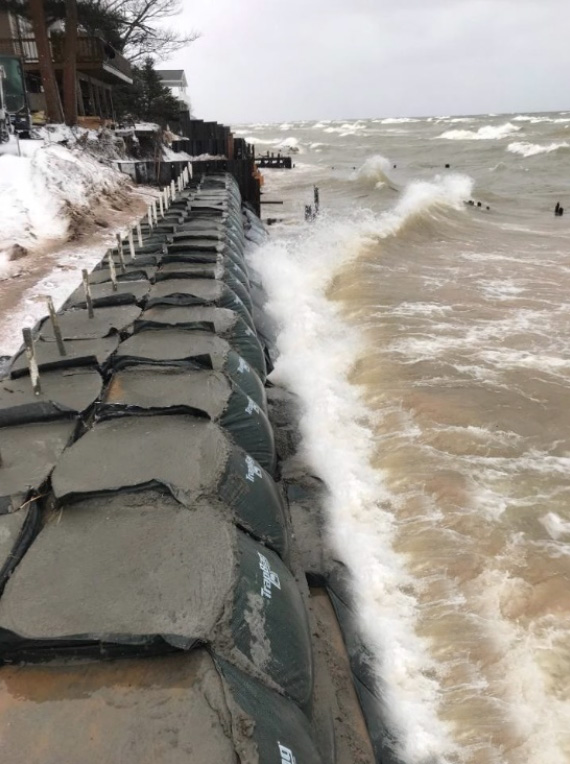
Concrete and stone seawalls are expensive and slow to build. TrapBag gives engineers a faster seawall: sand fill for interim protection after a storm or ahead of a permanent project, and pumped concrete where the design calls for a permanent wall. It holds back waves on both freshwater and saltwater shorelines.
Dune Stabilization
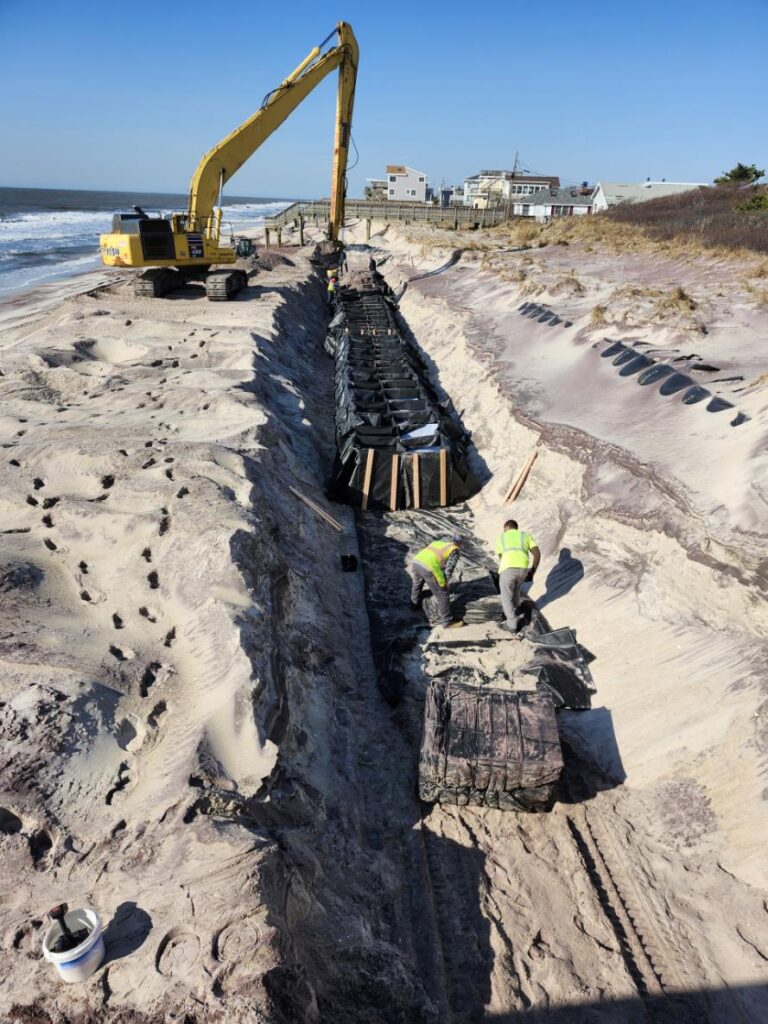
Dunes take the first hit from storm surge, and wind, waves, and foot traffic wear them down. Engineers bury TrapBag inside the dune as a stable core, then cover it with sand and replant dune grass, so the beach keeps its natural profile and never has a hard structure on it.
Storm Surge & Coastal Infrastructure Protection
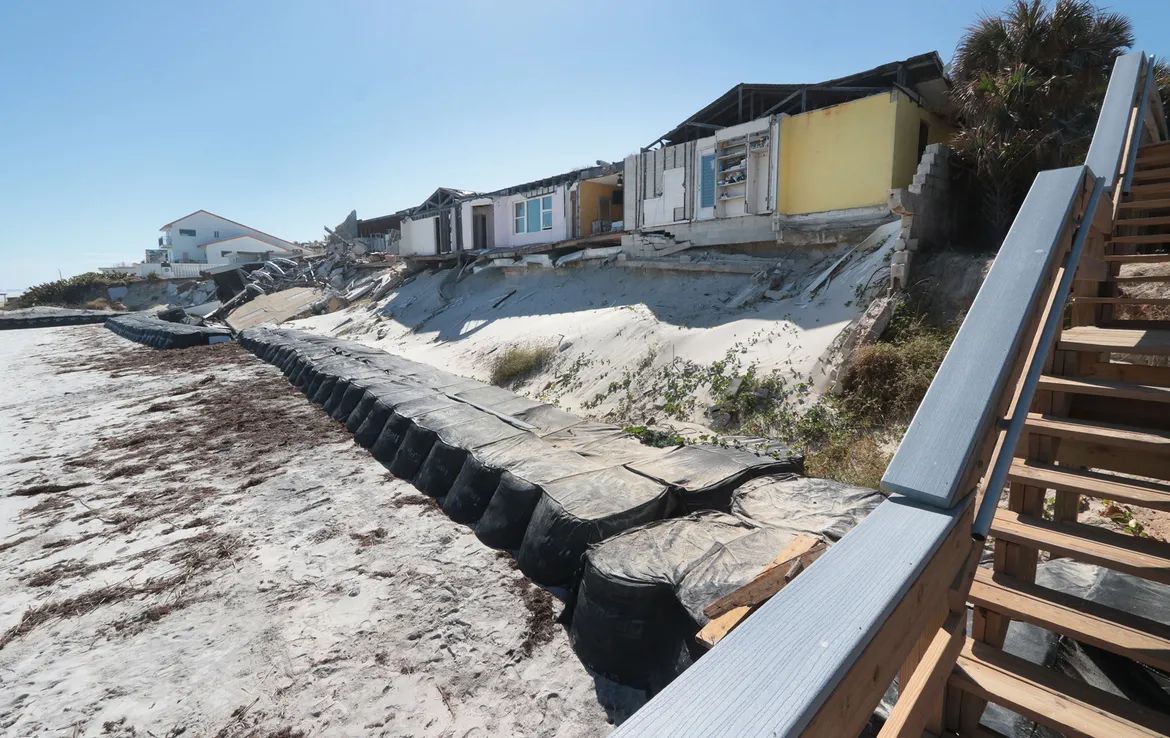
Coastal highways, sewers, and water lines sit in the path of hurricanes and nor’easters. Crews can place TrapBag ahead of a storm to hold back surge, or after one to protect a damaged road until permanent repairs are finished.

Where Coastal Engineers Use TrapBag
Coastal engineers specify TrapBag where waves, tides, and storm surge threaten the shoreline or the roads, homes, and utilities behind it.
Beaches and dunes
Buried TrapBag cores hold dunes in place through storm season, as at Rockaway Beach, New York.
Coastal bluffs
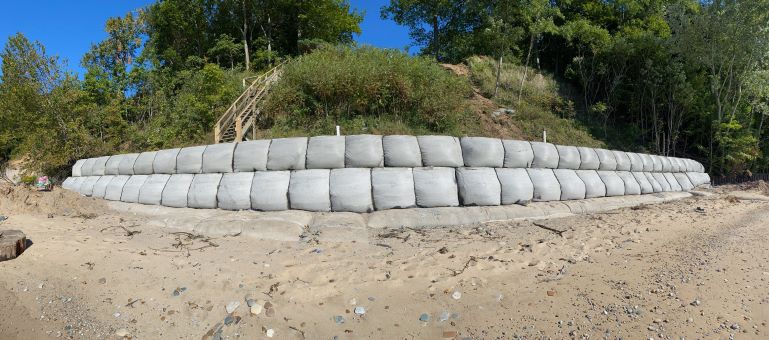
TrapBag units stepped along the toe of a bluff stop waves from undercutting the slope, as at Baker’s Bay in the Bahamas.
Coastal roads and utilities
Barriers protect storm-damaged roads until permanent repairs are in place, as on Casey Key in Sarasota County, Florida.
Seawalls and bulkheads
Cofferdams keep repair work dry, as at Portsmouth, Rhode Island.
Coastal levees
TrapBag raises and reinforces levees along bays and estuaries when surge threatens to overtop them.
Great Lakes shorelines
Barriers protect lakefront roads and parks from wave erosion, as along Chicago’s Lake Shore Drive.
Marinas and ports
Marine service providers use TrapBag to protect bulkheads, parking lots, and access roads.
How TrapBag Improves on Sandbag Barriers
TrapBag was originally designed as a flood barrier that could withstand hurricane-force storm surges. Coastal engineers later adopted it to protect shorelines and the infrastructure behind them. Compared to sandbags:
Less labor
A sandbag wall along a shoreline can take a large crew days to build. Two people and a third person operating a skid steer or excavator can fill a TrapBag barrier with sand or washed gravel in a few hours. For permanent walls, a crew pumps concrete into the cells.
More durability
Waves shift and split individual sandbags, and one failed bag can bring down the wall around it. TrapBag’s cells are connected and work as one unit, so the barrier holds its shape under wave action and storm surge.
Less material
A 100-foot section of 4-ft TrapBag replaces roughly 8,000 sandbags and uses 40% less fill than a stacked sandbag wall of the same size.
Why Choose TrapBags as Flood Prevention Barriers?
Versatility
TrapBag works as a seawall, a buried dune core, a storm surge barrier, or a cofferdam for seawall and bulkhead repair. Engineers use it on its own or alongside rock, dune vegetation, and beach nourishment.
Speed
TrapBag goes up in a fraction of the time a sandbag wall takes. A crew of three with a skid steer or excavator can build a full barrier in hours, so protection can go in after a storm enters the forecast.
Reliability
The U.S. Army Corps of Engineers has tested TrapBag for its ability to protect structures from flood damage. TrapBag also has a 3:1 (mass to hydraulic load) safety factor, which gives engineers margin above design water levels.
TrapBag Specifications for Coastal Engineering Projects
Use these figures to scope quantities, draft specifications, and compare bids. Contact TrapBag for spec sheets and submittal documents.
| Specification | Detail |
|---|---|
| Section Length | 50 linear feet per unit; ships folded on pallets and connects end to end |
| Heights | 2 ft and 4 ft; a 2-ft row on a 4-ft row reaches 6 ft; a three-row pyramid reaches 8 ft |
| Sand or gravel fill | Temporary seawalls, dune cores, and pre-storm barriers; three people with an excavator or skid steer |
| Concrete fill | Permanent seawalls and bulkheads; pumped into the cells |
| Sandbag equivalent | 100 ft of 4-ft TrapBag replaces about 8,000 sandbags and uses 40% less fill |
| Testing | Tested by the U.S. Army Corps of Engineers |
| Cofferdam units | Lids fastened with hog rings keep fill in place under wave action; see Erosion Barriers |
| Installation | TrapBag Installation Manual (PDF) |
How TrapBags Compare
Concrete Seawalls & Bulkheads
Concrete seawalls last for decades and stand up to saltwater, which makes them the standard for permanent shoreline armoring.
They’re also expensive, slow to build, and impractical as short-term protection before a storm. A vertical wall reflects wave energy back toward the beach, which can scour the sand at its toe.
TrapBag gives engineers both options: sand fill for temporary walls, or pumped concrete for permanent ones, with the barrier acting as the form so crews never set or strip formwork on the beach. See how TrapBag works as a seawall.
Rock Revetments
Rock revetments, or riprap, armor a shoreline with layers of quarried stone that absorb wave energy and last a lifetime.
The stone has to be bought, hauled, and placed with heavy equipment, which takes truck or barge access to the shoreline and a large budget. Once placed, a revetment is hard to remove or adjust.
TrapBag ships folded on pallets and can be filled with sand at the site, as crews did with native beach sand at Baker’s Bay, so far less material travels to the project.
Geotextile Tubes
Geotextile tubes are long fabric tubes pumped full of sand slurry. Engineers use them as dune cores, breakwaters, and groins.
Hydraulic filling takes slurry pumps and a steady water supply, and each tube is one long chamber, so a tear can let sand wash out along a long stretch.
TrapBag cells are filled with an excavator or skid steer and stay separate, so damage to one cell leaves the rest of the wall standing. TrapBag also has a vertical face and stacks to 8 feet.
Projects
See All Our Past Projects »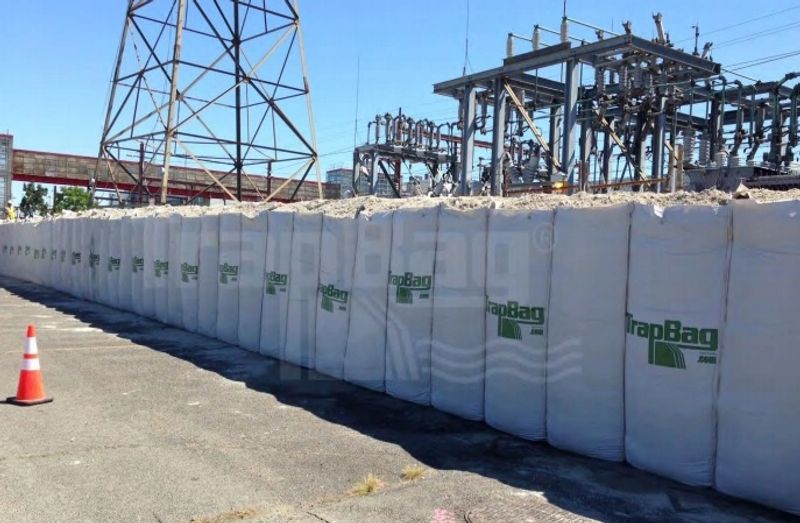
Infrastructure Protection in Kearny, New Jersey
September 13, 2013 Read More » about Infrastructure Protection in Kearny, New Jersey
Infrastructure Protection in Sarasota County, FL
October 23, 2023 Read More » about Infrastructure Protection in Sarasota County, FL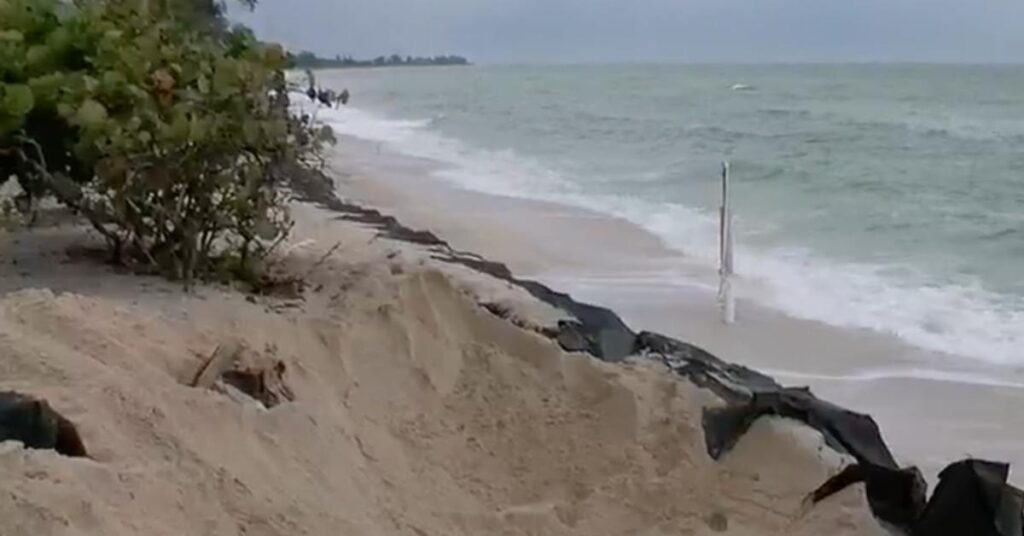
Infrastructure Protection in Sarasota County, Florida
May 13, 2014 Read More » about Infrastructure Protection in Sarasota County, FloridaFrequently Asked Questions
Coastal engineering is the branch of civil engineering that plans, designs, and maintains projects along shorelines, where waves, tides, currents, and storm surge shape the land. Coastal engineers design seawalls, revetments, breakwaters, and jetties. They also restore beaches and dunes, protect coastal roads and utilities from erosion and flooding, and lay out ports and harbors. Each design has to weigh protection against cost, permits, and the effect a structure has on neighboring shorelines.
Coastal engineers fight flooding in three ways: blocking water, absorbing wave energy, and moving what sits in the flood zone. Levees, floodwalls, seawalls, and storm surge barriers block water. Dunes, wide beaches, and wetlands absorb wave energy before it reaches land. Raising or relocating roads, utilities, and buildings takes them out of the water’s path. Ahead of a hurricane or nor’easter, engineers add temporary barriers like TrapBag to close gaps, protect roads and utilities, and rebuild eroded dunes until permanent repairs are finished.
Engineers stabilize a coastal bluff by stopping waves from undercutting its toe, then rebuilding the slope above it. Common methods include rock revetments, seawalls, and buried cores of sand-filled units covered by a reconstructed dune. At Baker’s Bay in the Bahamas, crews set TrapBag units filled with native beach sand in a stepped, two-course design along bluffs more than 15 feet high, then buried them under a rebuilt dune. The project protected oceanfront homes and utilities without an exposed seawall.
Yes. With sand or gravel fill, TrapBag is a temporary barrier that crews can dig out and remove when it’s no longer needed. For a permanent seawall, a crew pumps concrete into the cells and the fabric acts as the form, so there’s no formwork to set or strip on the beach. TrapBag’s Fabric Forming Systems are designed for permanent concrete walls.
TrapBag’s cells share walls, so the barrier works as one unit instead of a stack of loose bags that waves can pull apart. TrapBag erosion barriers add lids, fastened with hog rings, that keep fill from washing out under wave attack. Damage to one cell leaves the neighboring cells full and the rest of the wall standing.
In the U.S., work on beaches, in tidal waters, and in coastal wetlands usually needs a U.S. Army Corps of Engineers permit under Section 404 of the Clean Water Act or Section 10 of the Rivers and Harbors Act, plus approval from the state’s coastal management agency. Some states limit beach construction during sea turtle and shorebird nesting seasons. The project owner or engineer of record files the application, and TrapBag can supply product data for the permit package.
The U.S. Army Corps of Engineers has tested TrapBag as a flood barrier.
What Information Does TrapBag Need for a Quote?
Send the length of shoreline, target height, wave exposure, fill material available on site, equipment access to the beach, and delivery location. TrapBag will send back a recommended layout, unit count, and pricing.