
Project Specifications
Product used: TrapBag® TBRD120 Riverbank Stabilization System
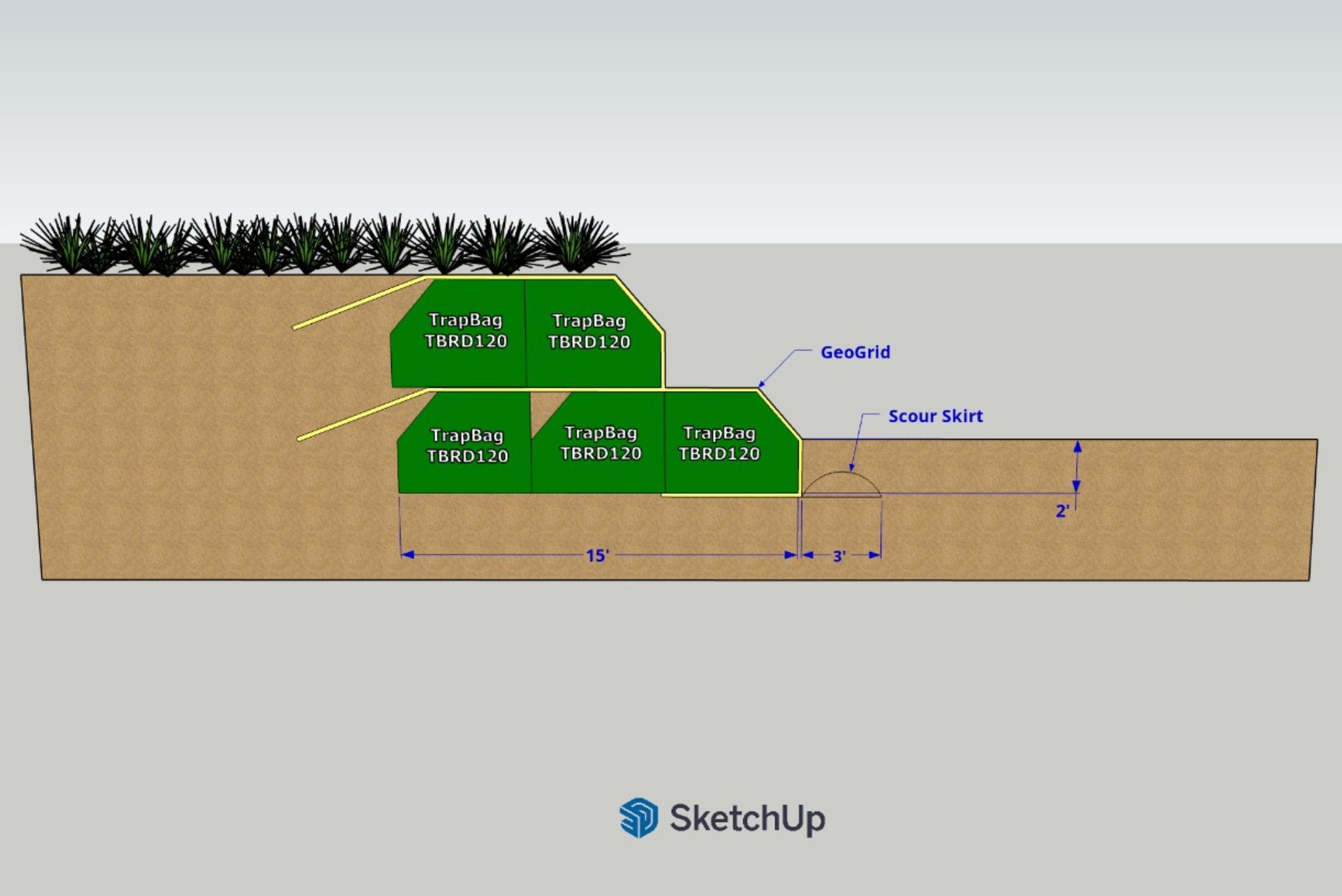
Installation configurations: Two-course stepped system with three TBRD120 units in the lower course and two units in the upper course
Structural base: Approximately 15 feet wide
Material: TrapBag® TBRD120 containment units; the specific fabric composition is not stated in the source
Fill material: Native beach sand
Reinforcement: High-strength geogrid wrapped over the TrapBag® system and extended landward into the reconstructed dune
Scour protection: 2-foot scour skirt extending seaward
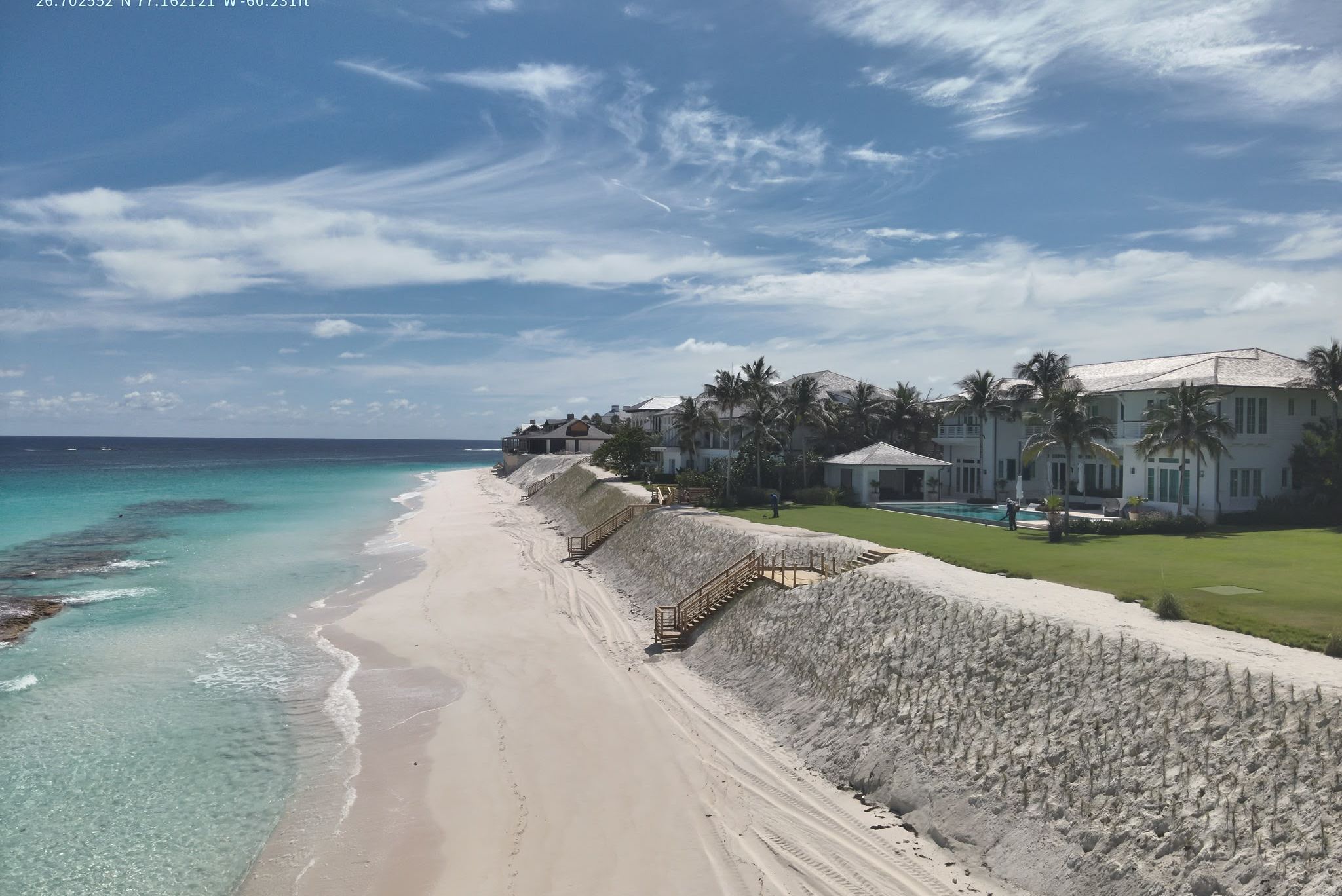
Final treatment: System buried beneath reconstructed beach sand with no exposed structural elements
Initial Solution
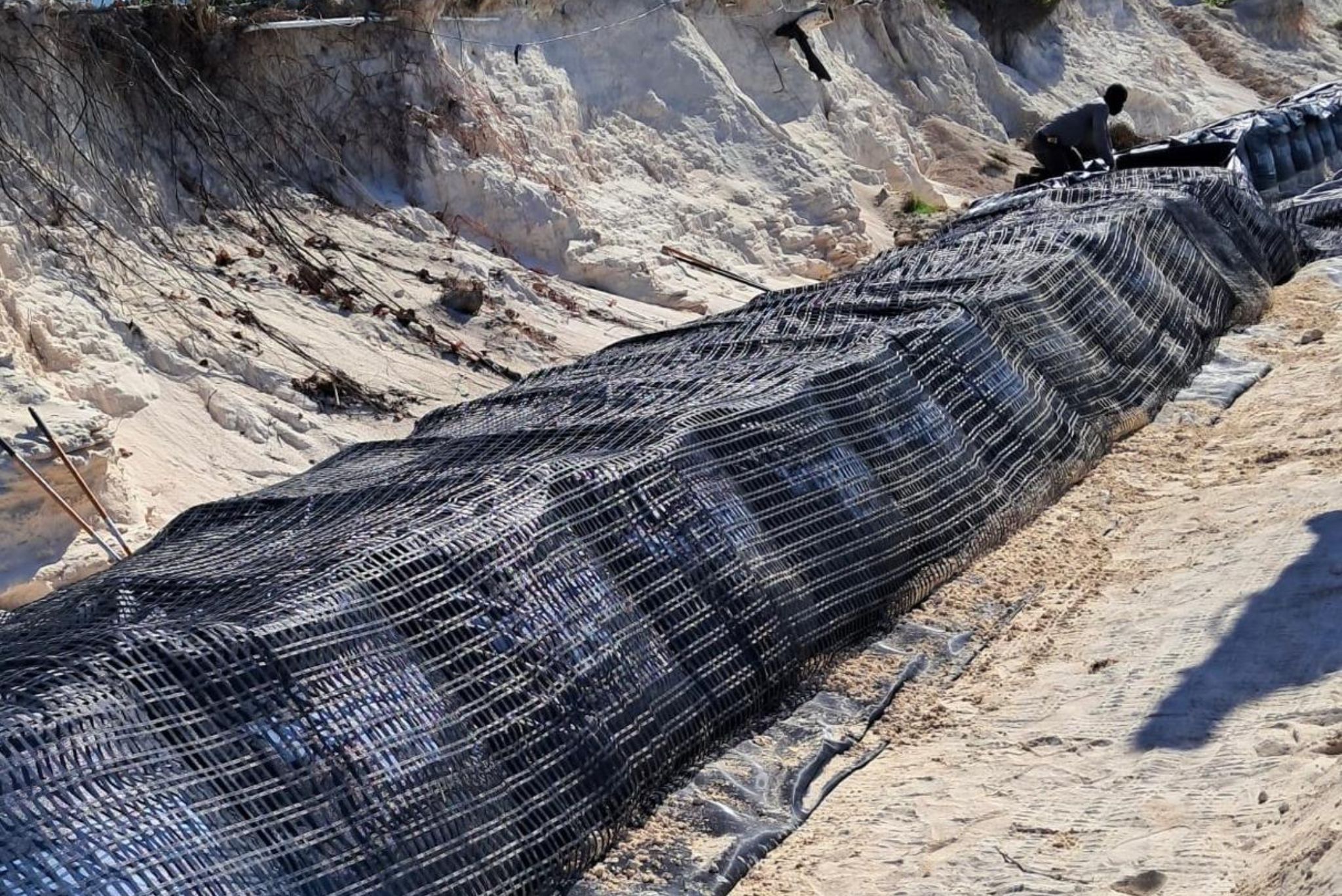
The coastal bluff stabilization design combined TrapBag® units, native beach sand, geogrid reinforcement, and an integrated scour skirt:
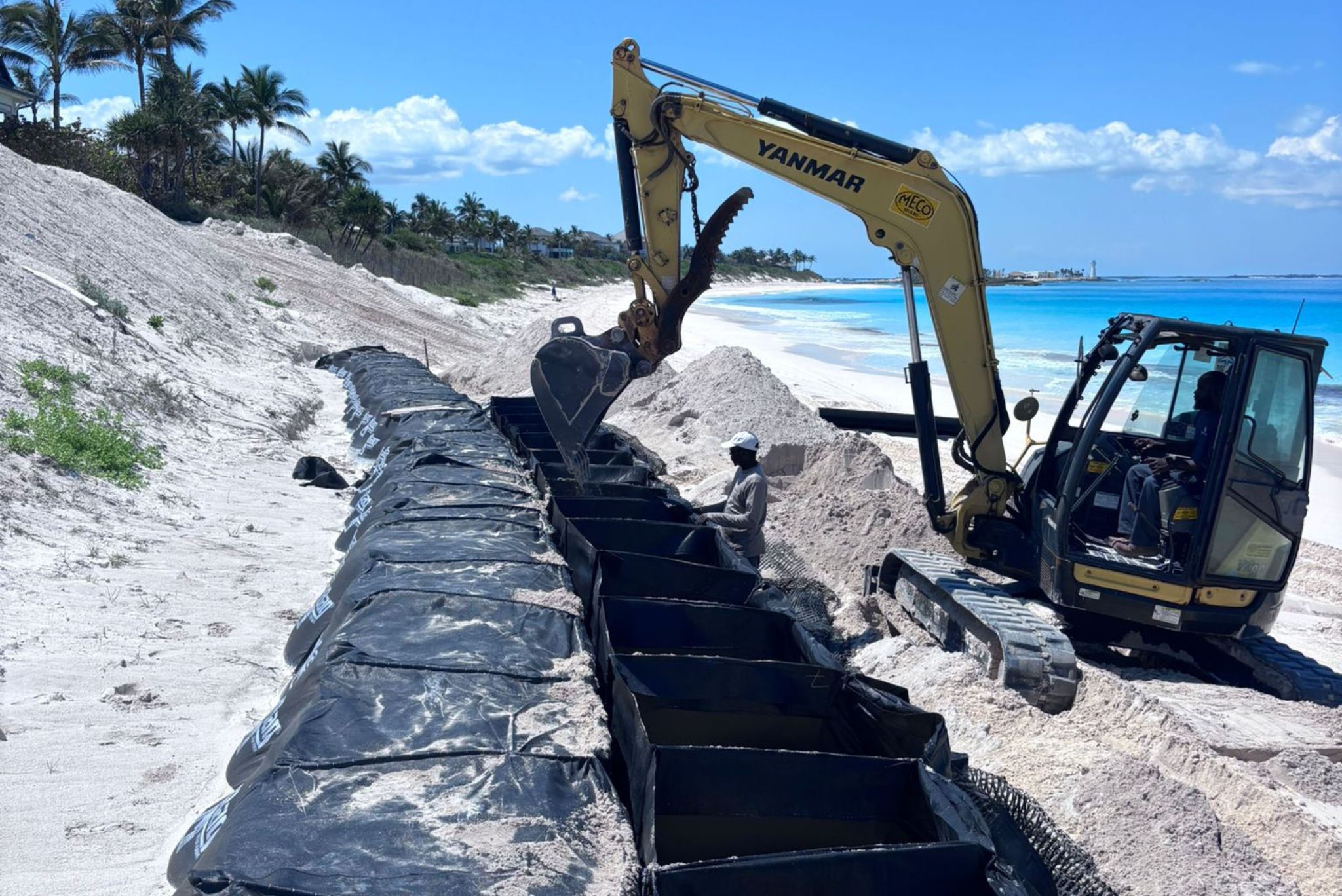
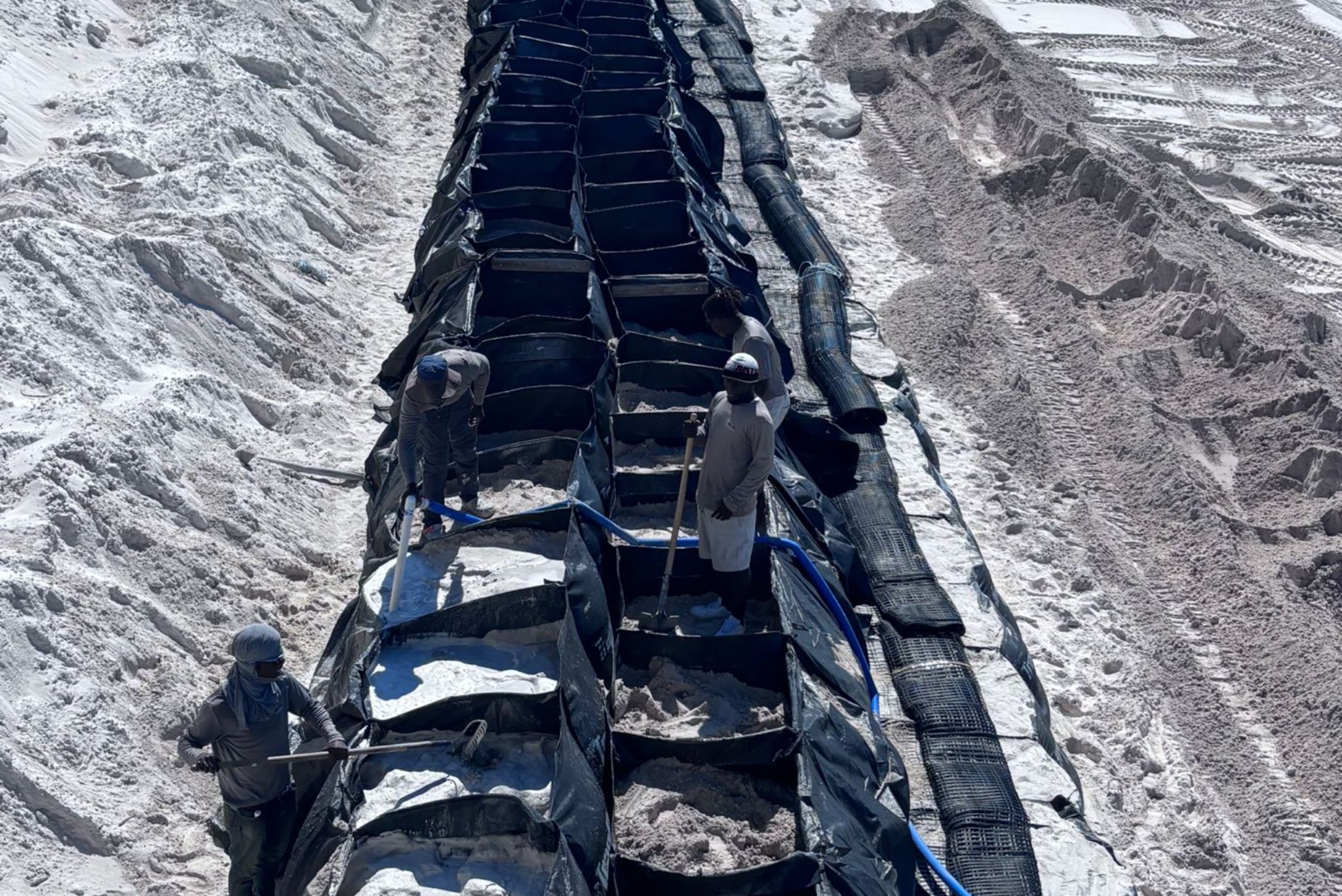
- The toe of the eroded bluff was excavated along the installation alignment.
- Three TrapBag® TBRD120 units formed the lower course.
- Two additional TBRD120 units formed the upper course in a stepped configuration.
- The two-course system created an approximately 15-foot-wide reinforced base.
- A 2-foot scour skirt extended seaward to help reduce undermining.
- Each TrapBag® unit was filled with native beach sand.
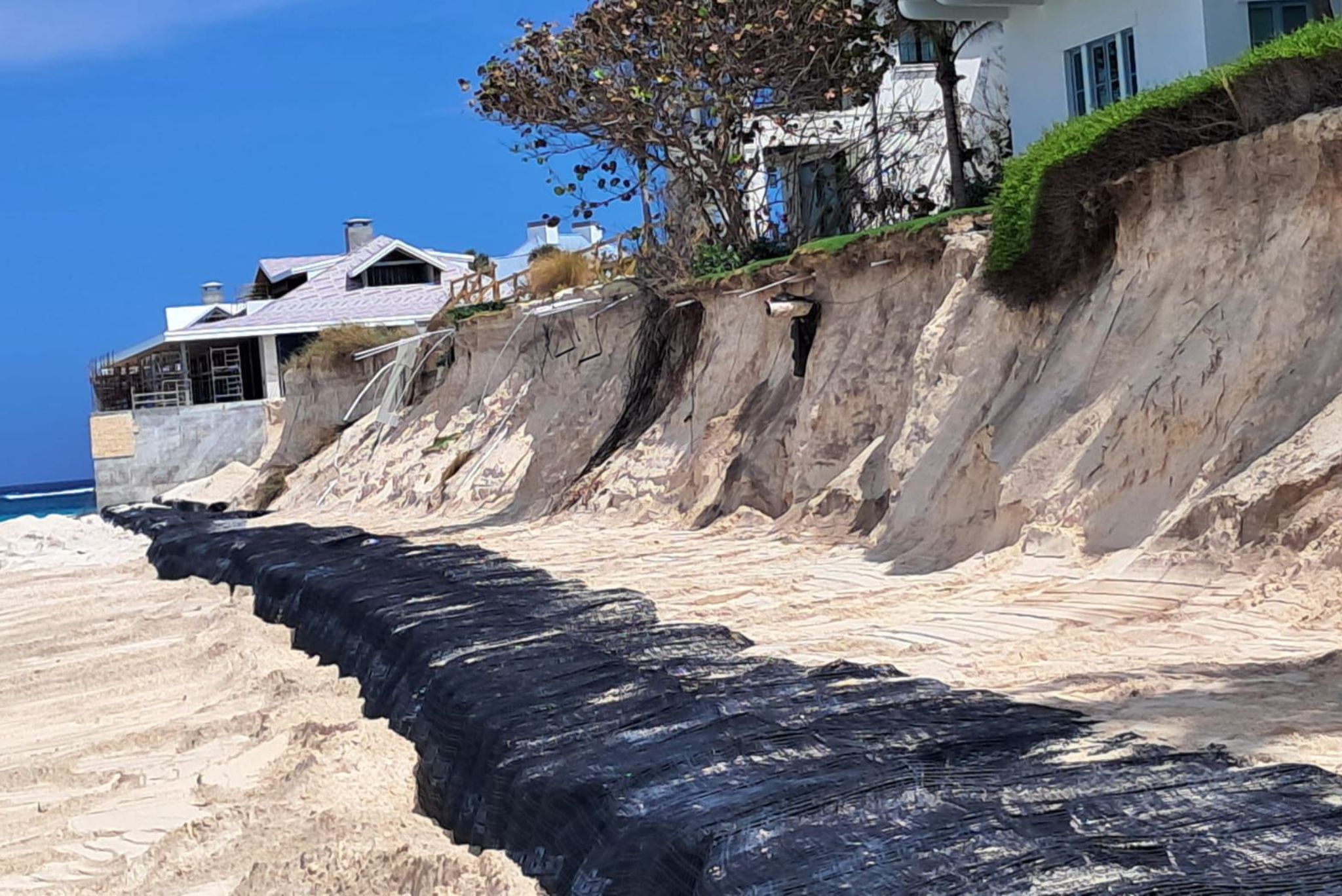
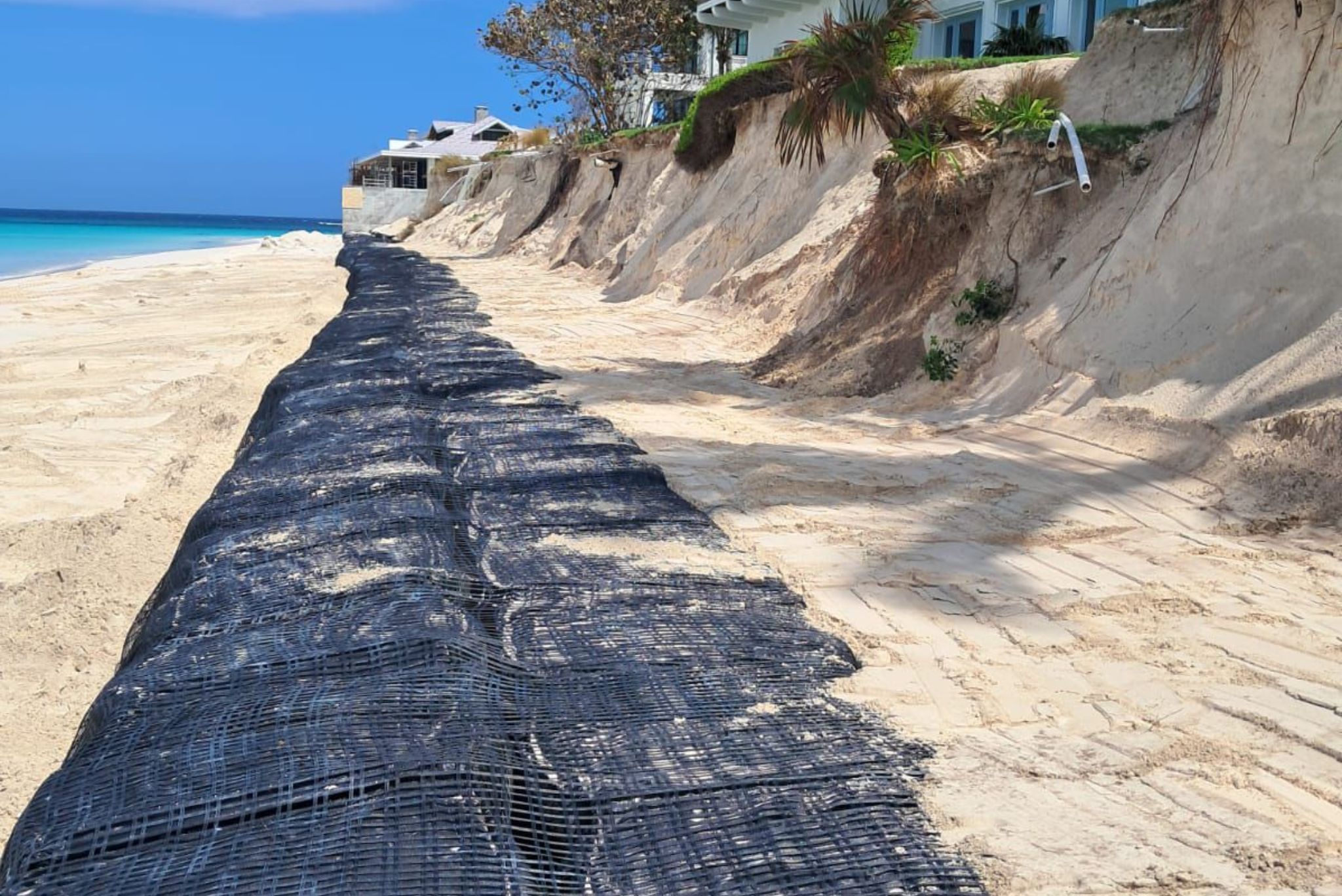
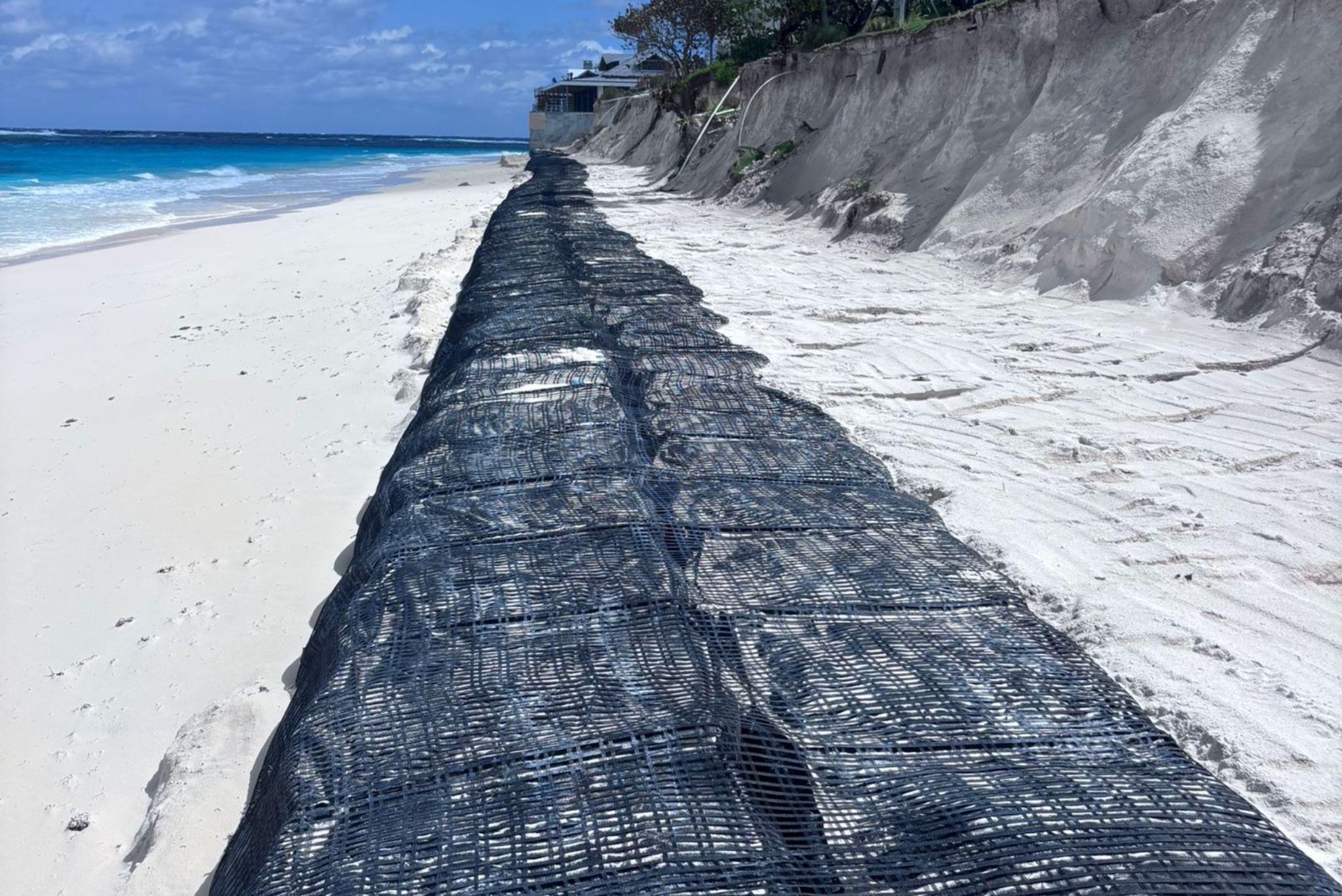
- High-strength geogrid wrapped over the system and extended landward into the reconstructed dune.
- The completed structural core was buried beneath reconstructed beach sand, leaving no exposed hard armor.
Unintended Longevity
This installation was not intended as a temporary beach erosion repair. The TrapBag® TBRD120 system was selected as a permanent coastal erosion control solution designed to resist continued toe erosion and support long-term reconstruction of the dune profile.
Project Expansions and Reinforcements
The source does not document a later expansion of the installation. Reinforcement was incorporated into the original engineered design through the two-course TrapBag® configuration, high-strength geogrid, and the seaward scour skirt.
The geogrid wrapped over the TrapBag® system and extended landward into the reconstructed bluff, connecting the buried structural core with the restored dune. This integrated dune reinforcement created a stable base while allowing the visible shoreline to retain its natural sandy appearance.
Performance
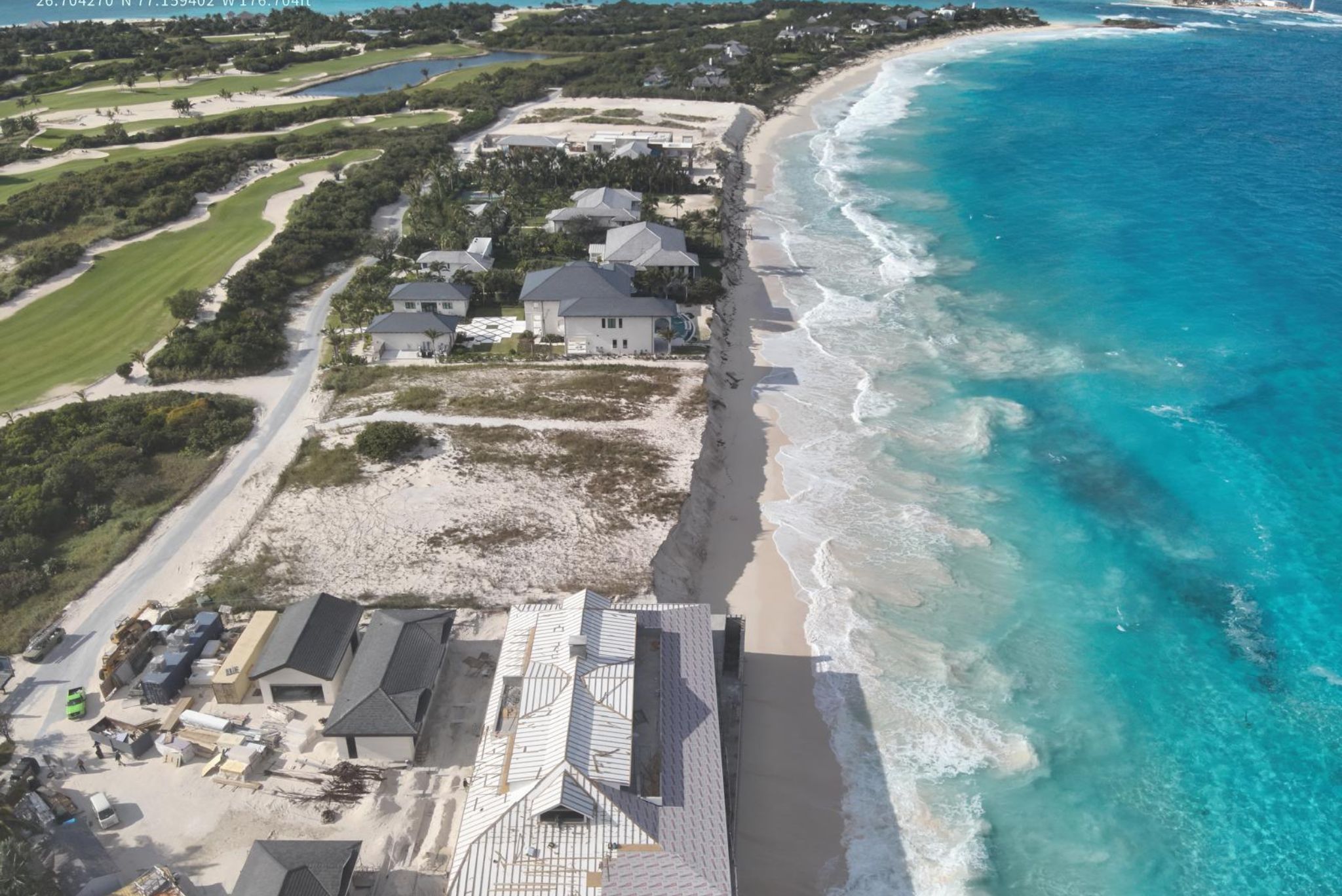
The completed project transformed a severely eroded shoreline into a stable, reinforced coastal bluff. The concealed TrapBag® core now protects the toe of the bluff from continued erosion while supporting the reconstructed dune and allowing the beach to function naturally.
The source documents the completed restoration and identifies long-term bluff stabilization, reduced future toe scour, protection of oceanfront residences, and restoration of the natural dune profile as project benefits. It does not provide post-installation monitoring data or document performance during a subsequent hurricane or catastrophic storm, so no such performance claim has been added.
Key Outcomes
Stabilized a severely eroded coastal bluff and protected oceanfront residences, utilities, landscaping, and private beach access.
Created concealed shoreline protection without an exposed seawall or rock revetment, preserving the natural appearance of Baker’s Bay.
Reconstructed the dune using native beach sand, geogrid reinforcement, and a buried TrapBag® structural core designed to reduce continued toe erosion.
Conclusion
The Baker’s Bay project demonstrates how the TrapBag® TBRD120 Riverbank Stabilization System can support coastal bluff stabilization, shoreline protection, dune reinforcement, and beach erosion repair while maintaining the natural character of a beachfront property.
By combining native sand, an engineered two-course configuration, high-strength geogrid, and an integrated scour skirt, the installation created a concealed geotextile coastal protection system beneath the restored dune. The result is a reinforced shoreline without exposed concrete or rock armor.
Installation Highlights
- Two-course TrapBag® TBRD120 installation
- Three-unit lower course with a two-unit stepped upper course
- Approximately 15-foot-wide reinforced structural base
- 2-foot seaward scour skirt to reduce undermining
- High-strength geogrid extending into the reconstructed dune
- Native beach sand used as fill material
- Buried structural core with no exposed hard armor
- Natural dune profile reconstructed over the completed system