
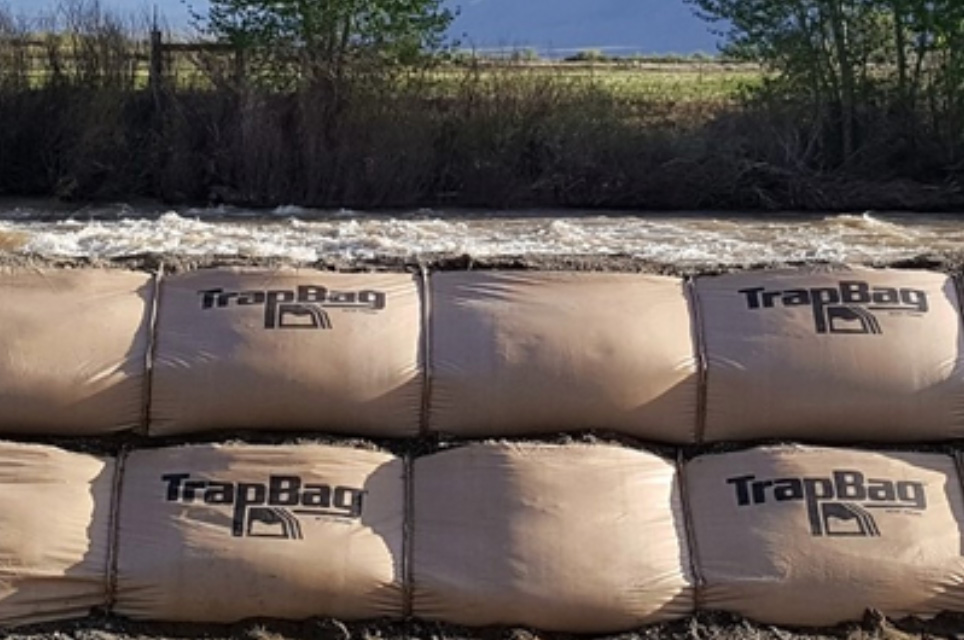
Engineered Flood Control Barriers for Civil Projects
Civil engineers in the U.S. and around the world specify TrapBag® to protect infrastructure from flooding and erosion, both during construction and after a project opens. The barriers reinforce existing structures and hold back water during severe weather.
How Civil Engineers Use TrapBag
TrapBag works as temporary or permanent flood protection on civil projects, from in-water construction to stormwater detention.
Flood Control
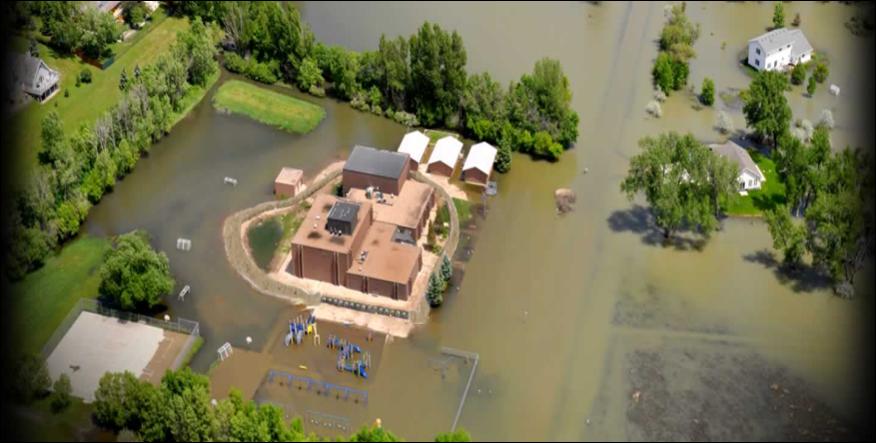
Flooding can derail construction, whether the project sits on land or on water infrastructure like a dam or levee. Crews use TrapBag as a temporary dam, dike, levee, or seawall to protect new and existing infrastructure during construction and severe weather.
Civil projects also have to meet stormwater regulations. TrapBag can form temporary or permanent detention ponds that keep construction runoff out of sanitary sewers and water supplies. Learn more about stormwater management with TrapBag.
Infrastructure Protection
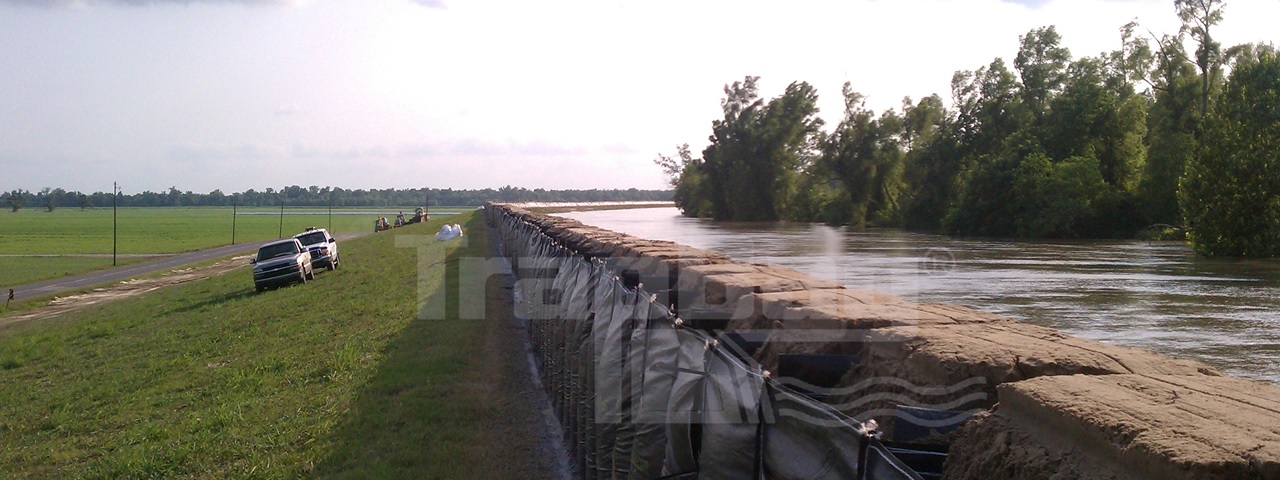
TrapBag can keep a riverside road from washing out in a flood or reinforce dams and levees along lakes and rivers. When a forecast turns, crews can put a barrier in place within hours, before high water leads to costly repairs and closures.
Erosion Control
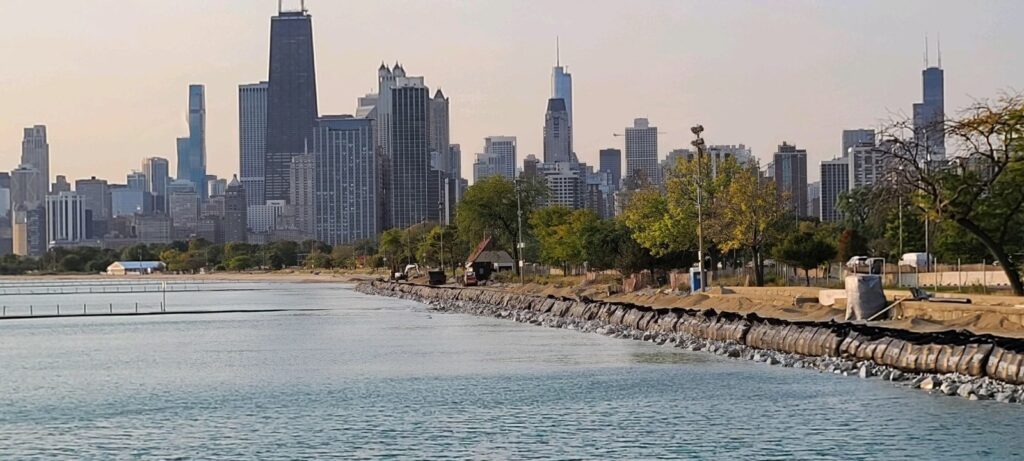
Floods, landslides, and persistent heavy rain all speed up erosion. TrapBag deploys quickly and costs less than most ways of reinforcing riverbanks, shorelines, and lakeshores. It can also stabilize sand dunes, which protect the infrastructure and neighborhoods behind them.

Where Civil Engineers Use TrapBag
Civil engineers specify TrapBag on sites where water threatens work in progress or finished infrastructure.
Bridges and culverts
Cofferdams keep the work area dry for pier, abutment, and culvert construction or repair.
Levees and dikes
TrapBag raises levee crowns during flood fights and protects communities while a levee is rehabilitated.
Roads and highways
Barriers keep riverside roads from washing out and hold floodwater off highways, as on I-29 in Iowa.
Water and wastewater facilities
Perimeter barriers protect treatment plants and lift stations from river flooding.
Riverbanks and utility corridors
TrapBag stabilizes eroding banks that support roads, bridges, and buried utilities.
Active construction sites
Detention ponds keep runoff out of sewers and waterways, and perimeter dikes keep floodwater out of open excavations.
How TrapBag Improves on Sandbag Barriers
TrapBag was originally designed as a flood barrier that could withstand hurricane-force storm surges. Civil engineers later adopted it to reinforce infrastructure and protect the structures they design from flooding and erosion. Compared to sandbags:
Less labor
A sandbag barrier for a flood-prone civil site can take a large crew days to build. Two people and a third person operating a skid steer or excavator can fill a TrapBag barrier with sand or washed gravel in a few hours. For permanent walls, a crew pumps concrete into the cells.
More durability
A sandbag wall is only as good as its stacking, and a poorly stacked wall is more likely to collapse. TrapBag’s cells are connected and work as one unit, so the barrier holds its shape under water pressure and wave action.
Less material
A 100-foot section of 4-ft TrapBag replaces roughly 8,000 sandbags and uses 40% less fill than a stacked sandbag wall of the same size.
Why Choose TrapBags as Flood Prevention Barriers?
Versatility
TrapBag started as a flood barrier. Civil engineers now use it for municipal retaining walls, stormwater detention ponds, and cofferdams on bridge and culvert projects. It keeps water in as well as it keeps water out.
Speed
TrapBag goes up in a fraction of the time a sandbag barrier takes, with equal or better results. A crew of three with a skid steer or excavator can assemble a full barrier in a matter of hours.
Reliability
The U.S. Army Corps of Engineers has tested TrapBag for its ability to protect structures from flood damage. TrapBag also has a 3:1 (mass to hydraulic load) safety factor, which gives engineers margin above design water levels.
TrapBag Specifications for Civil Engineering Projects
Use these figures to scope quantities, draft specifications, and compare bids. Contact TrapBag for spec sheets and submittal documents.
| Specification | Detail |
|---|---|
| Section Length | 50 linear feet per unit; ships folded on pallets and connects end to end |
| Heights | 2 ft and 4 ft; a 2-ft row on a 4-ft row reaches 6 ft; a three-row pyramid reaches 8 ft |
| Sand or gravel fill | Temporary dikes, levee raises, diversions, and stormwater controls; three people with an excavator or skid steer |
| Concrete fill | Permanent walls; pumped into the cells |
| Sandbag equivalent | 100 ft of 4-ft TrapBag replaces about 8,000 sandbags and uses 40% less fill |
| Testing | Tested by the U.S. Army Corps of Engineers |
| Cofferdam units | Rectangular two-cell bags with an HDPE liner on the water-facing side; see Temporary Cofferdam Bags |
| Installation | TrapBag Installation Manual (PDF) |
How TrapBags Compare
Steel Sheet Piling
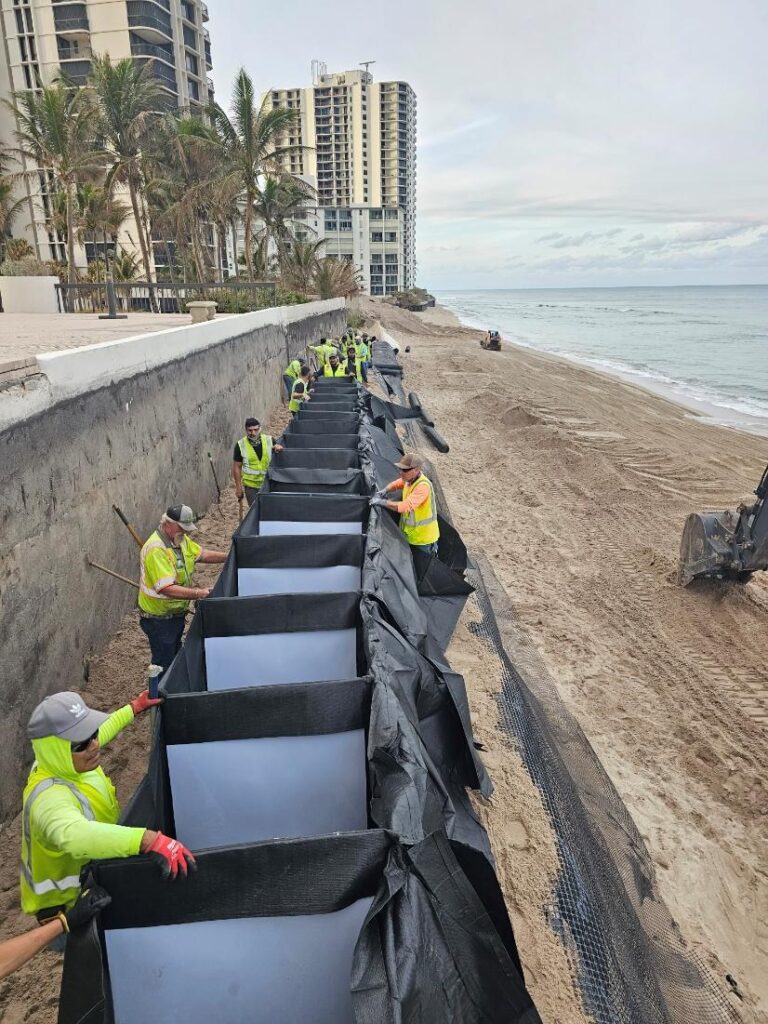
Sheet piling is the standard method for cofferdams and earth retention on deep excavations and long-duration work. Interlocking steel sheets driven into the ground form a continuous wall that holds back soil and water.
Driving and pulling sheet piles takes a crane and a vibratory or impact hammer, though, and the vibration can disturb nearby structures and utilities. Rock and boulders can also stop a pile short of its design depth.
For shallow-water cofferdams, diversions, and temporary flood walls, TrapBag sits on grade with no driving and goes in with an excavator or skid steer. Learn more about using TrapBag as a sheet pile alternative.
Earthen Cofferdams & Berms
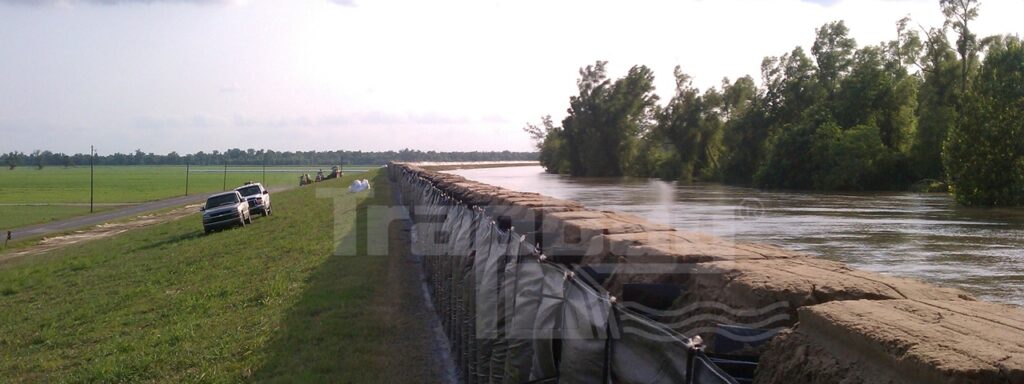
Earthen cofferdams and berms use soil or rock, often dug on site, so material costs stay low.
An earth embankment needs gentle side slopes to stay stable, which widens its footprint in the channel and multiplies the fill crews have to place and later remove. Unarmored earth also erodes under current or overtopping flow.
TrapBag cells have a vertical face and hold the fill inside geotextile fabric, so the barrier takes up less of the channel and the fill stays put when water moves against it. See how TrapBag stacks up against other cofferdam alternatives.
Water-Filled Dams
Water-filled dams use water from the site as fill, so there’s no material to haul in, and crews can drain, roll up, and reuse them.
The weak point is puncture. Water-filled barriers puncture more easily than sand-filled barriers, rivers and floodwater carry plenty of debris, and one hole can drain a section of the dam.
Unlike a water-filled dam, TrapBag cells are self-contained and filled with sand or gravel, so damage to one cell leaves the rest of the wall standing.
Projects
See All Our Past Projects »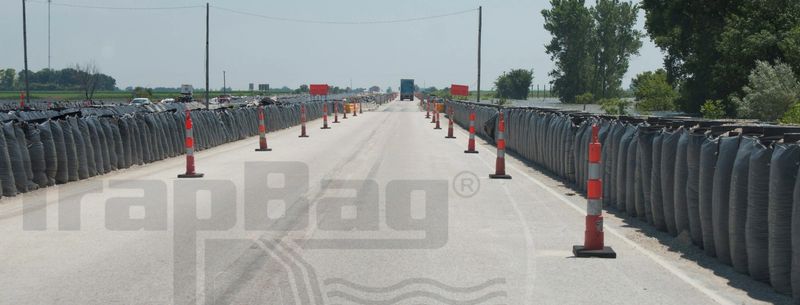
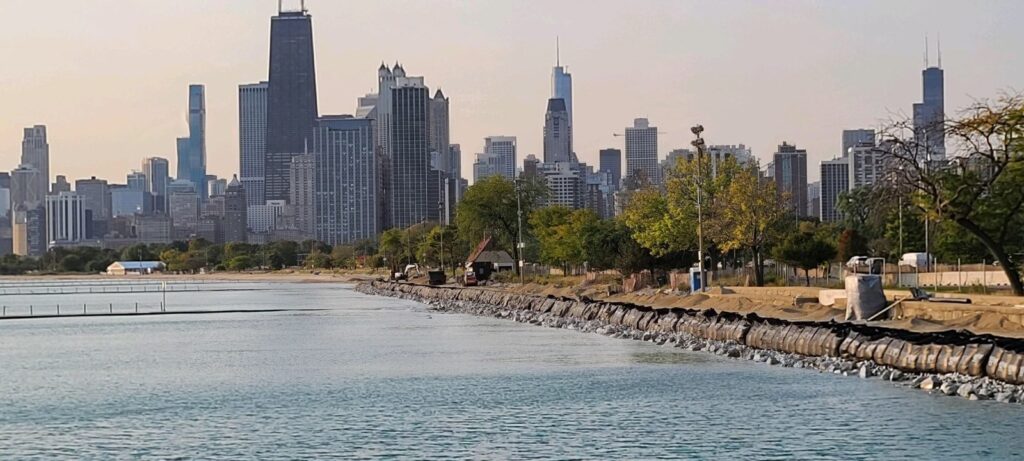
Shoreline Erosion on Lake Michigan – Chicago, IL
January 25, 2021 Read More » about Shoreline Erosion on Lake Michigan – Chicago, IL
Levee Installed for Flood Protection in Baton Rouge, Louisiana
May 7, 2020 Read More » about Levee Installed for Flood Protection in Baton Rouge, Louisiana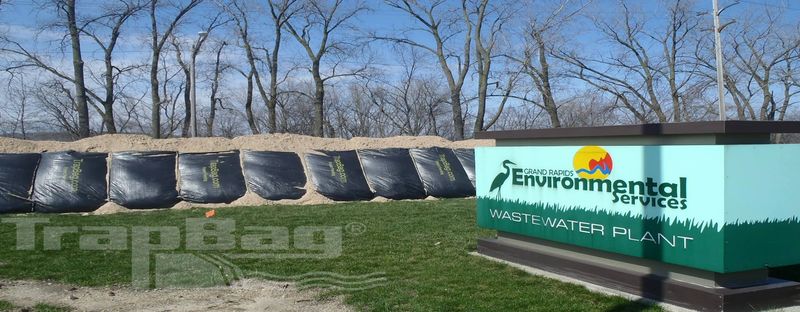
Flood Protection in Grand Rapids, Michigan
May 7, 2020 Read More » about Flood Protection in Grand Rapids, Michigan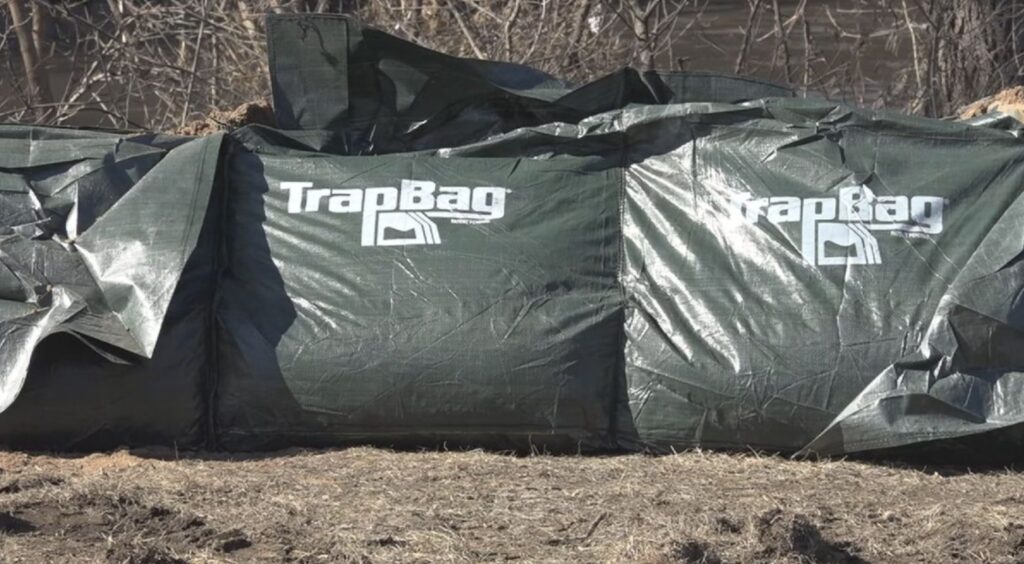
Flood Protection in Sioux Falls, SD
March 21, 2019 Read More » about Flood Protection in Sioux Falls, SD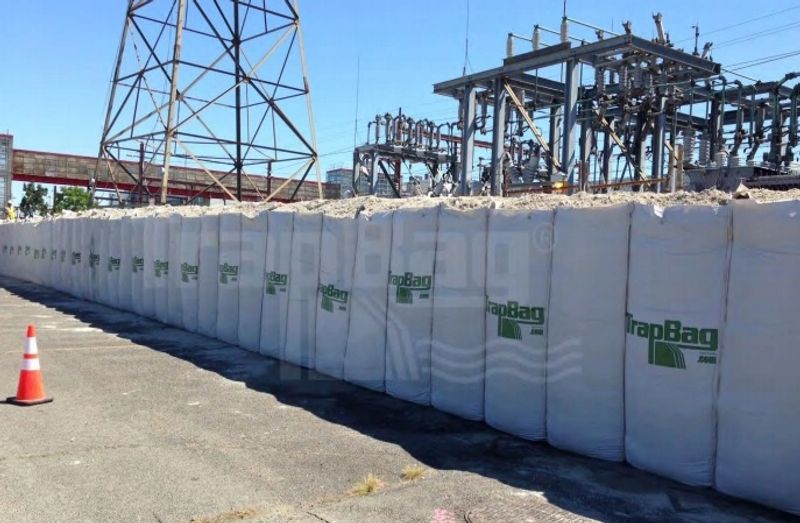
Infrastructure Protection in Kearny, New Jersey
September 13, 2013 Read More » about Infrastructure Protection in Kearny, New Jersey
Infrastructure Protection in Sarasota County, FL
October 23, 2023 Read More » about Infrastructure Protection in Sarasota County, FL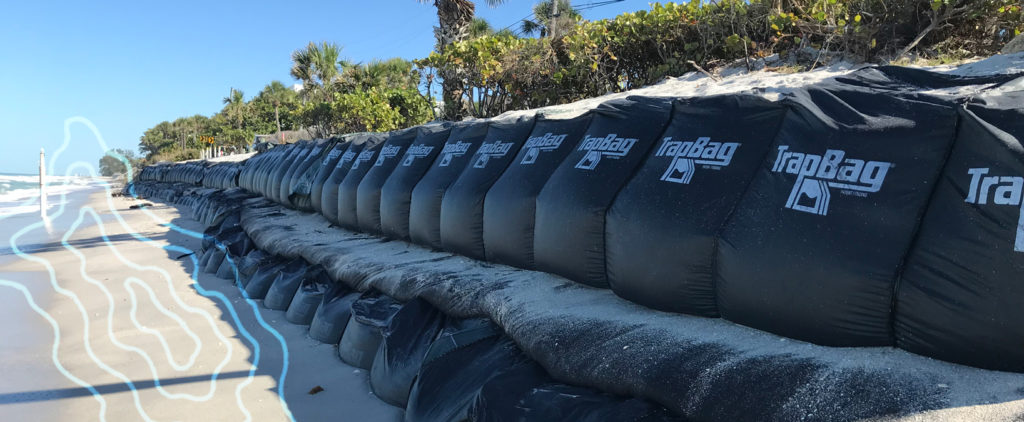
Erosion Control in Sarasota, Florida
May 24, 2018 Read More » about Erosion Control in Sarasota, FloridaFrequently Asked Questions (FAQ)
Civil engineers help with flood control in three ways: holding water back, storing it until it can drain, and moving it away faster. Levees, dikes, and floodwalls hold back rivers and coastal water, detention ponds store stormwater and release it slowly, and channels, culverts, and storm sewers carry water away from developed areas. During construction and flood emergencies, engineers add temporary barriers like TrapBag to protect work sites and close gaps in permanent systems until the water recedes.
The most common flood control structures are levees and dikes, which are earthen embankments along rivers and coastlines, and floodwalls, which are concrete or steel walls used where there’s no room for an embankment. Upstream dams and reservoirs store floodwater, and diversion channels route it around towns and infrastructure. Temporary structures such as cofferdams and sand-filled barriers protect sites during construction or raise an existing levee during a flood fight. Filled with concrete, TrapBag also becomes a permanent floodwall.
Projects near water face the most flood risk during construction, while excavations, foundations, and partly built structures sit exposed. Engineers protect them by dewatering the work area inside a cofferdam, diverting the stream or river around the site, and placing temporary dikes along the site perimeter, sized to the flood elevation expected during the construction period. TrapBag handles all three roles: crews fill it with sand or gravel on site, and the fill comes back out when the project ends.
Yes. With sand or gravel fill, TrapBag is a temporary barrier that crews can dig out and remove when the project ends. For a permanent wall, a crew pumps concrete into the cells and the fabric acts as the form, so there’s no formwork to set or strip. TrapBag’s Fabric Forming Systems are designed for permanent concrete flood walls.
TrapBag’s polypropylene geotextile is permeable, so water drains out of the fill. For cofferdams and other dewatering work, TrapBag cofferdam bags have an HDPE liner on the water-facing side for a watertight seal.
In the U.S., work in rivers, lakes, wetlands, and coastal waters usually needs a U.S. Army Corps of Engineers permit under Section 404 of the Clean Water Act or Section 10 of the Rivers and Harbors Act, plus state approvals. The project owner or engineer of record files the application, and TrapBag can supply product data for the permit package.
The U.S. Army Corps of Engineers has tested TrapBag as a flood barrier.
TrapBag cofferdam bags have a bottom discharge chute that releases the fill, so crews can empty them, pull them out, and use them again on the next project.
What Information Does TrapBag Need for a Quote?
Send the length of the alignment, target height, water depth, fill material available on site, project duration, and delivery location. TrapBag will send back a recommended layout, unit count, and pricing.