
Flood Barriers for Emergency Services & Response Teams
Emergency managers, public works crews, and first responders use TrapBag® to hold back floodwater, protect roads and water systems, and divert mudflows when a disaster is hours away. A three-person crew with a skid steer can build a barrier that would take a large team days to build with sandbags.
How Emergency Managers Use TrapBag
TrapBag gives response teams one barrier for floods, storm surge, and mudflows.
Flood Control
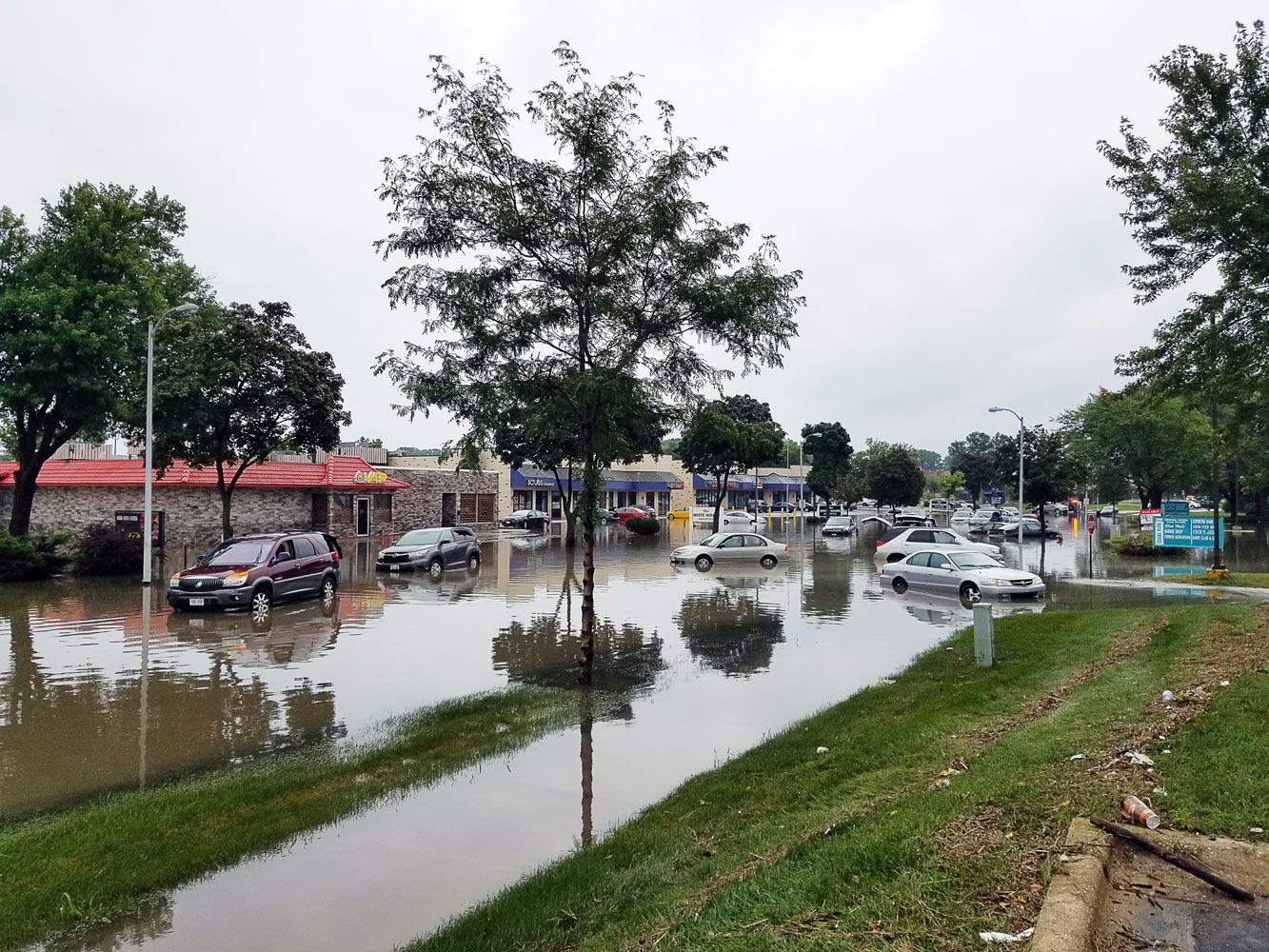
TrapBag was first designed to hold back hurricane storm surge. Response teams use it to build temporary levees, dikes, and flood walls that protect neighborhoods, schools, and businesses during river floods and storms.
Infrastructure Protection
When floodwater closes a highway or swamps a water treatment plant, every other part of the response slows down. TrapBag protects roads, bridges, treatment plants, and lift stations, so crews and supplies keep moving and residents keep clean water.
Mudslide & Mudflow Diversion
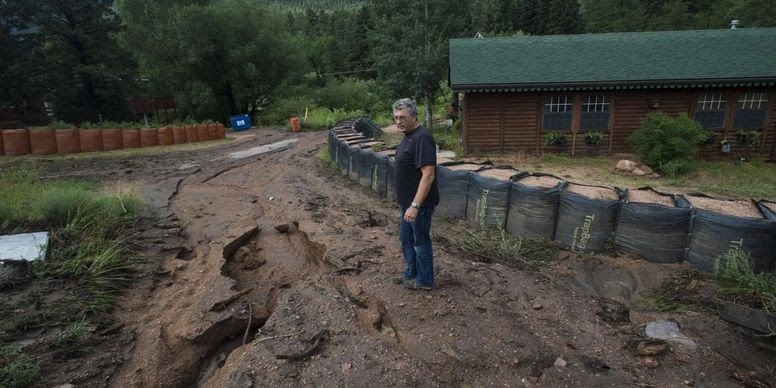
Wildfires strip hillsides of the plants that hold soil, and the next heavy rain can send mud and debris into neighborhoods. Filled TrapBag barriers divert those flows away from homes and roads.



Where Emergency Managers Use TrapBag
Response teams deploy TrapBag wherever water or debris threatens lives, homes, and the routes in and out.
Riverside neighborhoods
Temporary levees hold rivers back during spring flood fights, as in Swift Current, Saskatchewan.
Levee gaps and low spots
TrapBag raises and reinforces levees where the river threatens to overtop them, as along the Mississippi in Baton Rouge, Louisiana.
Roads and evacuation routes
Barriers protect storm-damaged roads until permanent repairs are finished, as on Casey Key in Sarasota County, Florida.
Coastal communities
Crews place barriers ahead of hurricane landfall and keep them up through recovery, as in Volusia County after Hurricane Nicole.
Wildfire burn scars
Barriers divert mud and debris from homes below burned slopes, as in Colorado Springs, Colorado.
Chemical and fuel spills
TrapBag berms contain spills before they reach storm drains and waterways.
How TrapBag Improves on Sandbag Barriers
TrapBag was originally designed as a rapid-deployment flood barrier that could withstand hurricane-force storm surges. Emergency managers adopted it because sandbagging ties up people they need elsewhere during a disaster. Compared to sandbags:
Less labor
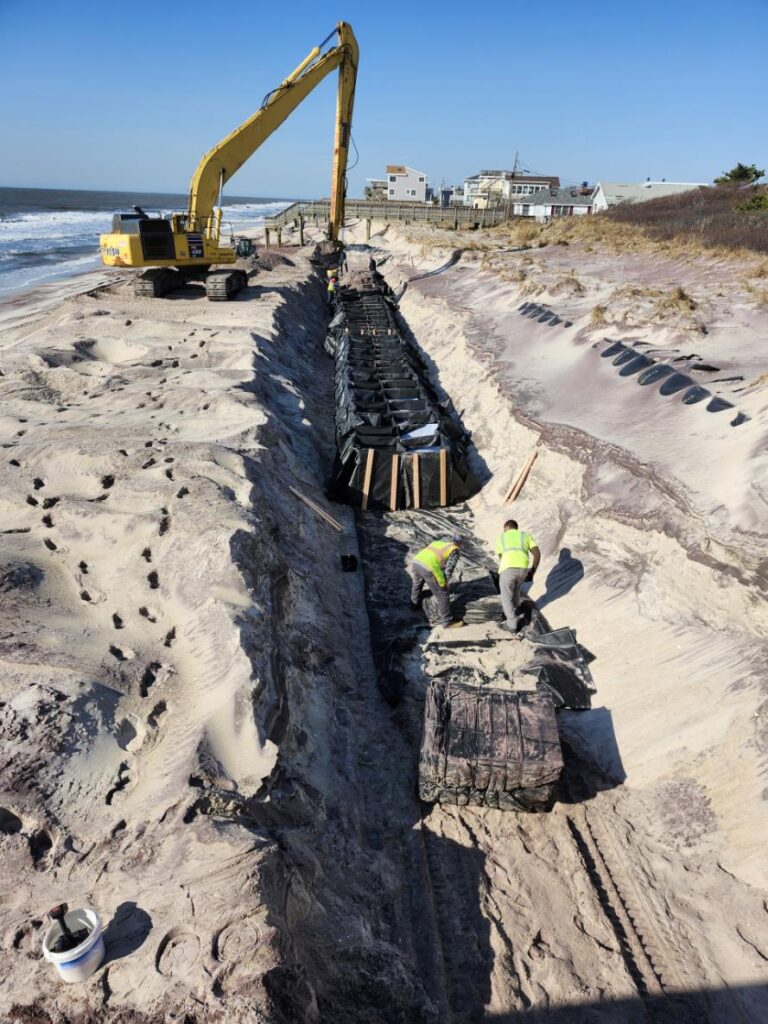
A sandbag wall can take a large crew of staff and volunteers days to build. Two people and a third person operating a skid steer or excavator can fill a TrapBag barrier with sand or washed gravel in a few hours.
More durability
A sandbag wall is only as good as its stacking, and a poorly stacked wall is more likely to collapse in the middle of a flood. TrapBag’s cells are connected and work as one unit, so the barrier holds its shape under water pressure and wave action.
Less material
A 100-foot section of 4-ft TrapBag replaces roughly 8,000 sandbags and uses 40% less fill than a stacked sandbag wall of the same size.
Why Choose TrapBags as Flood Prevention Barriers?
Versatility
One TrapBag stockpile covers river floods, storm surge, mudflows, and spill containment. Agencies don’t need a separate product for each kind of emergency.
Speed
TrapBag goes up in a fraction of the time a sandbag wall takes. A crew of three with a skid steer or excavator can build a full barrier in hours, so protection can go in after the river forecast or storm track arrives.
Reliability
The U.S. Army Corps of Engineers has tested TrapBag for its ability to protect structures from flood damage. TrapBag also has a 3:1 (mass to hydraulic load) safety factor, which gives response teams margin above the forecast crest.
TrapBag Specifications for Emergency Management
Use these figures to scope quantities, draft specifications, and compare bids. Contact TrapBag for spec sheets and submittal documents.
| Specification | Detail |
|---|---|
| Section Length | 50 linear feet per unit; ships folded on pallets and connects end to end |
| Heights | 2 ft and 4 ft; a 2-ft row on a 4-ft row reaches 6 ft; a three-row pyramid reaches 8 ft |
| Sand or gravel fill | Flood fights, levee raises, and mudflow diversion; three people with an excavator or skid steer |
| Concrete fill | Permanent walls; pumped into the cells |
| Sandbag equivalent | 100 ft of 4-ft TrapBag replaces about 8,000 sandbags and uses 40% less fill |
| Testing | Tested by the U.S. Army Corps of Engineers |
| Storage | Folds flat on pallets and takes far less warehouse space than equivalent sandbags |
| Installation | TrapBag Installation Manual (PDF) |
How TrapBags Compare
Water-Filled Barriers
Water-filled barriers use floodwater or hydrant water as fill, so there’s no material to haul, and crews can drain and reuse them.
Floodwater carries trees, vehicles, and debris, and one puncture can drain a section of a water-filled barrier in the middle of an event.
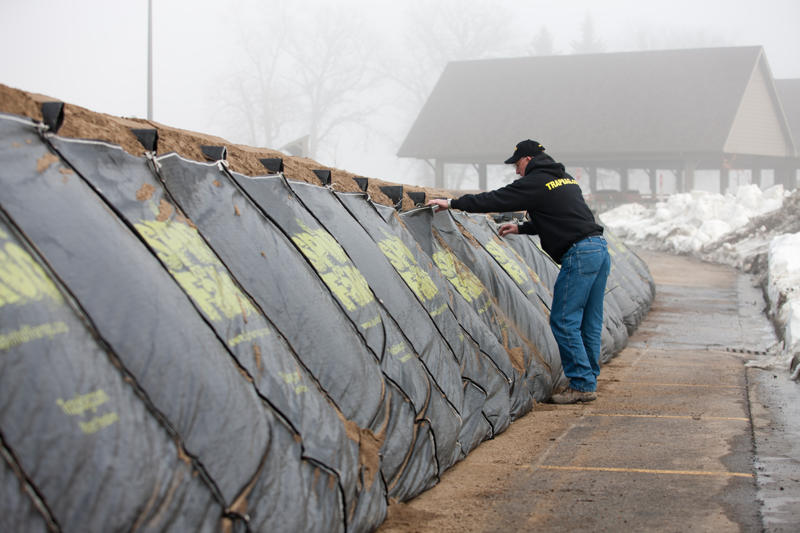
TrapBag cells are self-contained and filled with sand or gravel instead of water, so damage to one cell leaves the rest of the wall standing.
Emergency Earthen Levees
Bulldozers can push up an emergency levee from local soil, and the material costs nothing.
An earth levee needs a wide base to stay stable, so it takes more equipment time and more room than a flood fight often has. Saturated soil can slump or erode as water moves against it.
TrapBag has a vertical face, holds its fill inside geotextile fabric, and fits along streets and property lines where an earth levee won’t.
Demountable Flood Walls
Demountable flood walls slide aluminum panels into posts or tracks to close openings in a permanent flood defense.
They only work where posts and foundations were installed in advance, and their height is fixed. When water rises somewhere the plan didn’t expect, demountable walls can’t move there.
TrapBag goes down on any grade, follows curves, and stacks higher if the forecast crest rises.
Projects
See All Our Past Projects »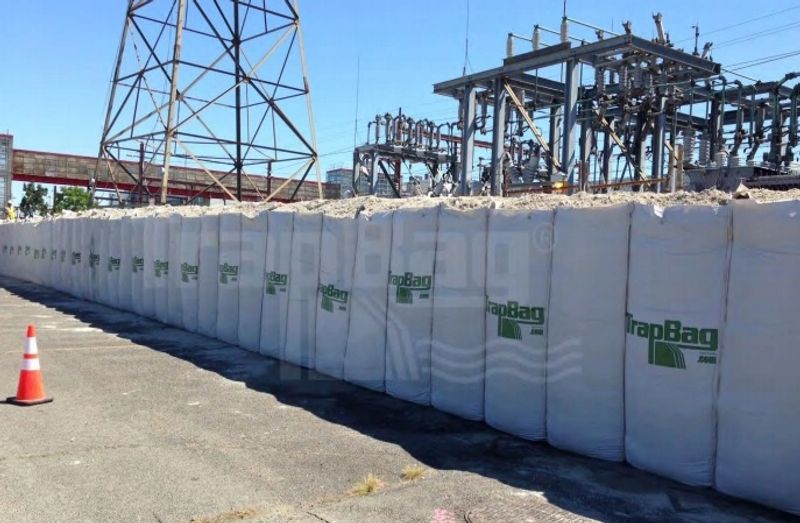
Infrastructure Protection in Kearny, New Jersey
September 13, 2013 Read More » about Infrastructure Protection in Kearny, New Jersey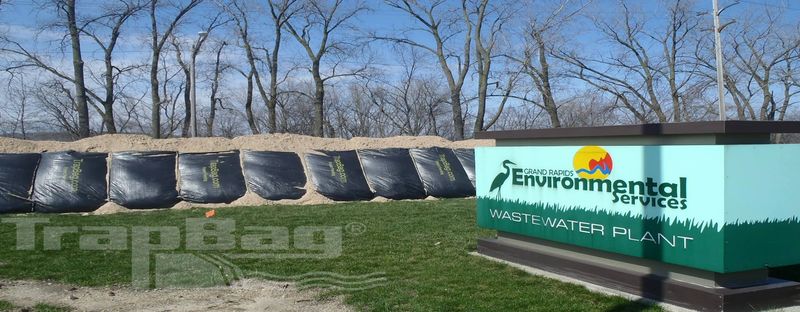
Flood Protection in Grand Rapids, Michigan
May 7, 2020 Read More » about Flood Protection in Grand Rapids, Michigan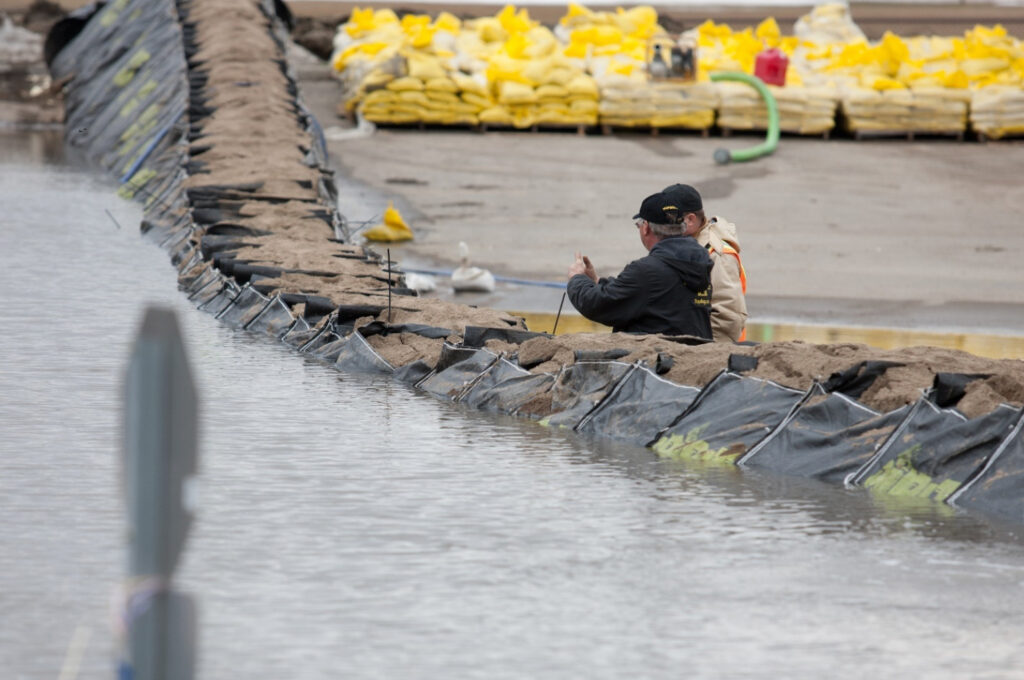
Flood Protection in Fargo, North Dakota
January 24, 2012 Read More » about Flood Protection in Fargo, North DakotaFrequently Asked Questions
Flood barriers for emergency services are temporary walls that response teams set up during a flood to keep water away from homes, roads, and public facilities. Common types include sandbags, water-filled tubes, earthen levees, and fillable cellular barriers like TrapBag. Agencies choose based on how much warning they have, how high the water will rise, and how many people and machines they can spare for the build.
Emergency managers track river and storm forecasts, warn residents, and order evacuations where water will reach homes. At the same time, crews protect what the community can’t lose, such as hospitals, water treatment plants, and evacuation routes, with temporary barriers and pumps. After the water drops, teams assess damage, clear debris, and restore services.
Flood response teams need barriers to hold water back, pumps to remove water that gets through, and fill material with loaders or skid steers to place it. Generators, lighting, high-water vehicles, boats, and protective gear round out the kit. Agencies that stage barriers and line up fill sources before flood season can start building as soon as the forecast turns.
A crew of three with a skid steer or excavator can build a full TrapBag barrier in hours. Each 50-ft unit pulls out of its pallet like an accordion, and crews place and fill it in sequence. The same wall in sandbags can take a large crew days.
TrapBag ships and stores folded flat on pallets, so it takes far less warehouse space than the equivalent sandbags. Agencies can stage pallets near flood-prone areas before the season starts and arrange sand or gravel sources ahead of time, so crews only need to place and fill the barrier when a flood is coming.
Yes. Federal, state, and local agencies can buy TrapBag through GSA Schedule contract 47QSMS26D0024.
The U.S. Army Corps of Engineers has tested TrapBag as a flood barrier.
What Information Does TrapBag Need for a Quote?
Send the length of the area you need to protect, the target height or forecast crest, fill material available locally, storage location, and how quickly you need delivery. TrapBag will send back a recommended layout, unit count, and pricing.