

TrapBag® flood barriers give municipalities, emergency managers, and contractors a sand-filled flood wall that goes up in hours rather than days. Crews stretch 50-foot sections into place, fill them with sand or washed gravel using an excavator or skid steer, and stack rows to match the forecast crest. For permanent flood walls, crews pump concrete into the cells.
TrapBag ships folded on pallets, so agencies can stockpile barriers before flood season and deploy them when a river forecast turns. Procurement teams can request pricing, spec sheets, and quantity estimates by the linear foot for bid packages, emergency purchases, and capital flood control projects.
Using TrapBag for Flood Protection Solutions
Sandbag walls are the default flood fight for most communities, and they take time a community rarely has before a crest, whether the water comes from a hurricane, a stalled storm, or spring snowmelt. A 100-foot, 4-foot-tall sandbag wall takes about 8,000 bags, each filled and placed by hand. The same wall in TrapBag takes two units, three people, and an excavator or skid steer. Every TrapBag cell shares walls with its neighbors, and 60% of the barrier’s mass sits in its bottom half, so the wall resists tipping as water rises against it.
The U.S. Army Corps of Engineers has successfully tested TrapBag as a cellular flood barrier that can withstand severe wave action and flooding. See our installation manual (PDF) for the full process.
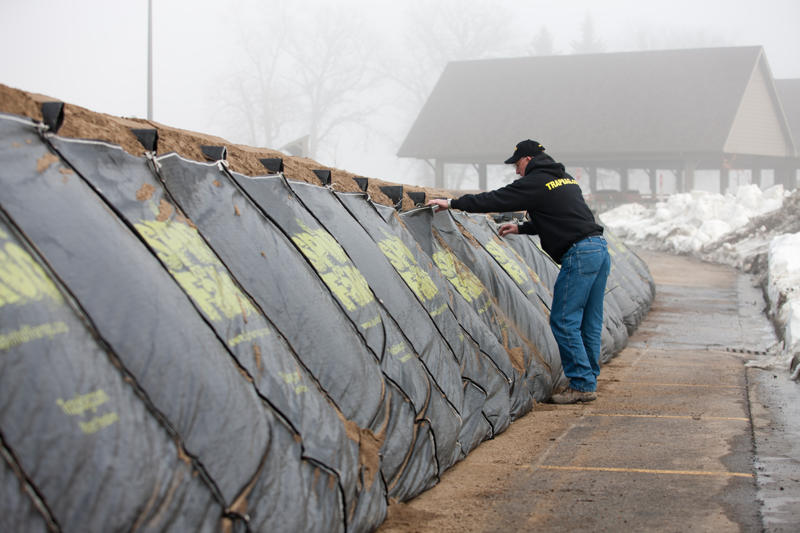
How TrapBags Are Deployed as Flood Control Barriers
TrapBag is easier to install than other types of flood protection barriers. Each cell in a TrapBag barrier interconnects with its neighbors to strengthen the entire barrier. This allows it to hold back even severe floodwaters during historical flooding events.
The barrier can be set up easily in just a few steps:
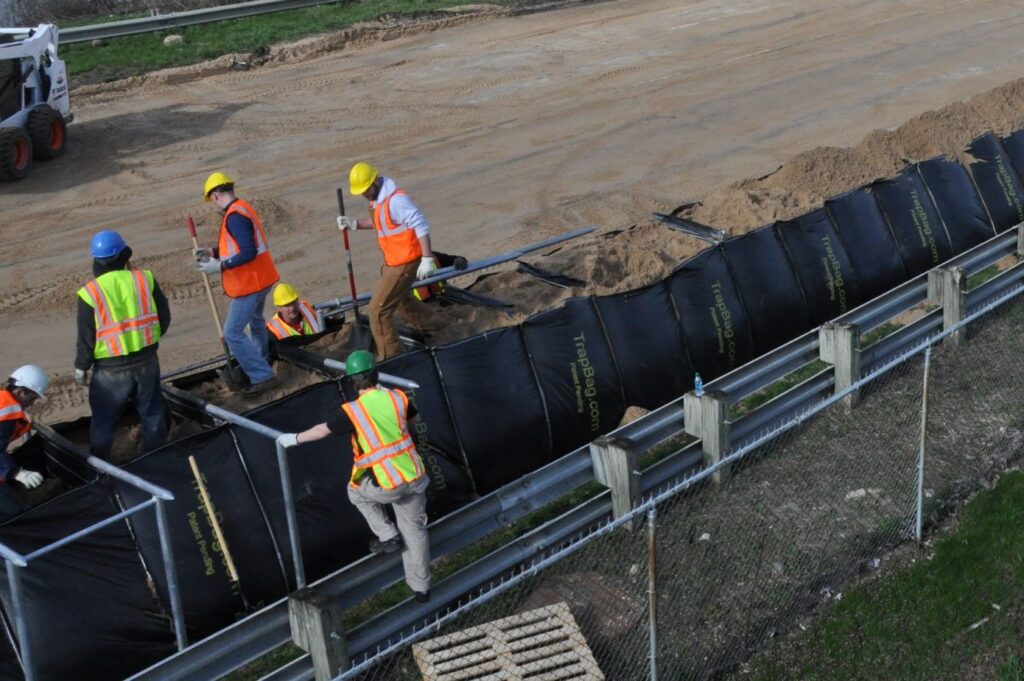
-
1
Open the packaging
TrapBag barriers come folded up on a pallet. Pull them out like an accordion and stretch them up to 50 linear feet per unit. -
2
Place the barrier where you need it
Place the TrapBag barrier wherever you might need it to mitigate flood damage. -
3
Fill the cells
A team of three people with an excavator or skid steer can fill your TrapBag barrier within minutes with sand, washed gravel, or concrete. You can also stack a 2-ft barrier on top of it for added height. Anything over 6 ft of height will require a pyramid configuration (2 rows of 4-ft back-to-back with the third row stacked on top for 8 ft height).

Who We Serve
TrapBag works with companies across countless industries to protect what matters most to them. Some of the industries we help include:
Municipalities
Government organizations need flood defense systems to keep homes, businesses, and infrastructure like highways and sewer systems safe from coastal or river flood damage. Learn More »Construction sites
Construction crews can use TrapBag to protect their project sites and prevent damage and setbacks to the project timeline. Learn More »Coastal & civil engineers
Both along the coast and inland, civil and coastal engineers need flood protection solutions to prevent damage to infrastructure like water lines, highways, and sewer systems. Learn More »Emergency management
TrapBag enables emergency management teams to set up effective flood barriers in a fraction of the time needed for a standard sandbag barrier. Learn More »Mining
Mining companies can use TrapBag to prevent severe flooding in open-pit mines, preventing wastewater and pollutants from leaving the site during flood events. Learn More »Projects
See All Our Past Projects »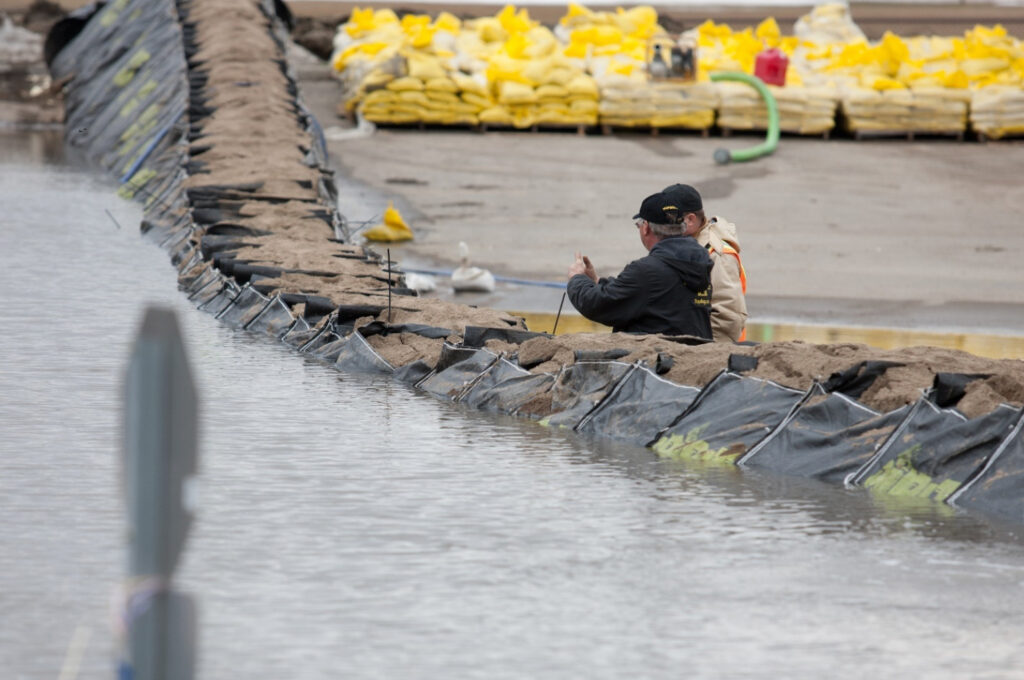
Flood Protection in Fargo, North Dakota
January 24, 2012 Read More » about Flood Protection in Fargo, North Dakota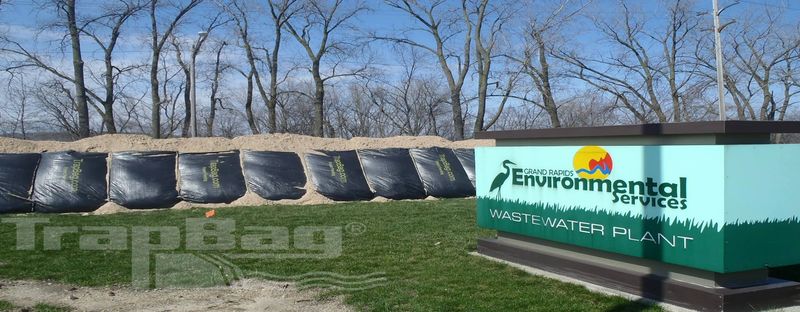
Flood Protection in Grand Rapids, Michigan
May 7, 2020 Read More » about Flood Protection in Grand Rapids, Michigan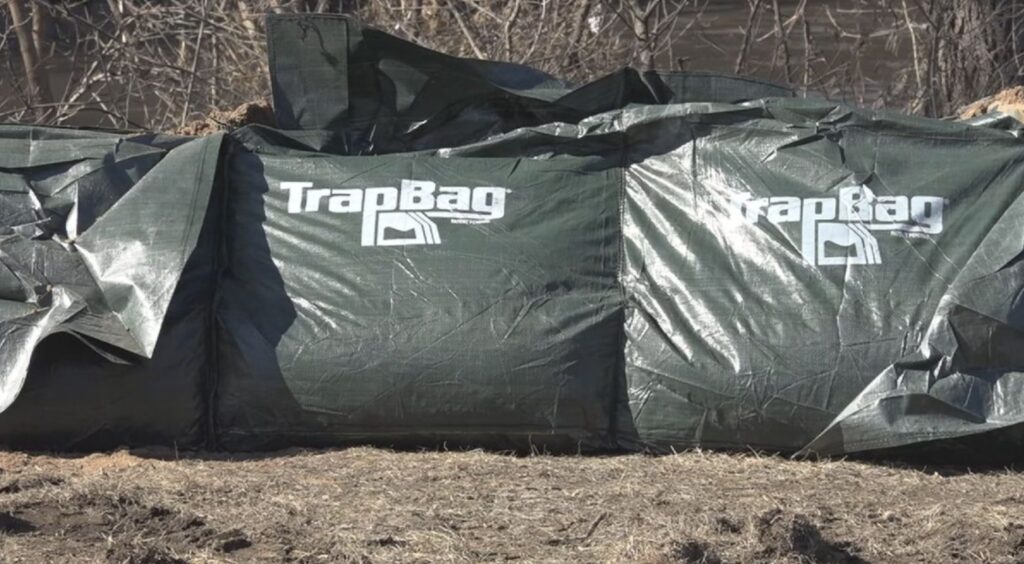
Flood Protection in Sioux Falls, SD
March 21, 2019 Read More » about Flood Protection in Sioux Falls, SD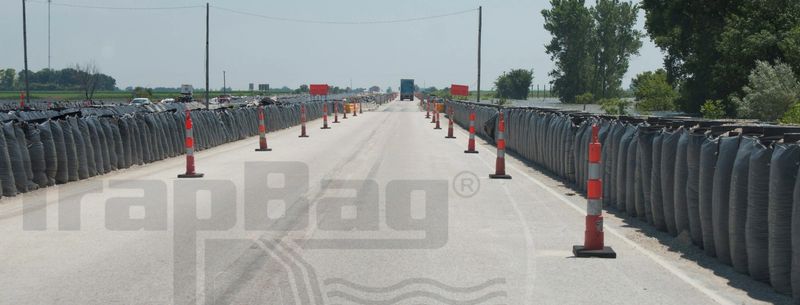
How TrapBags Compare to:
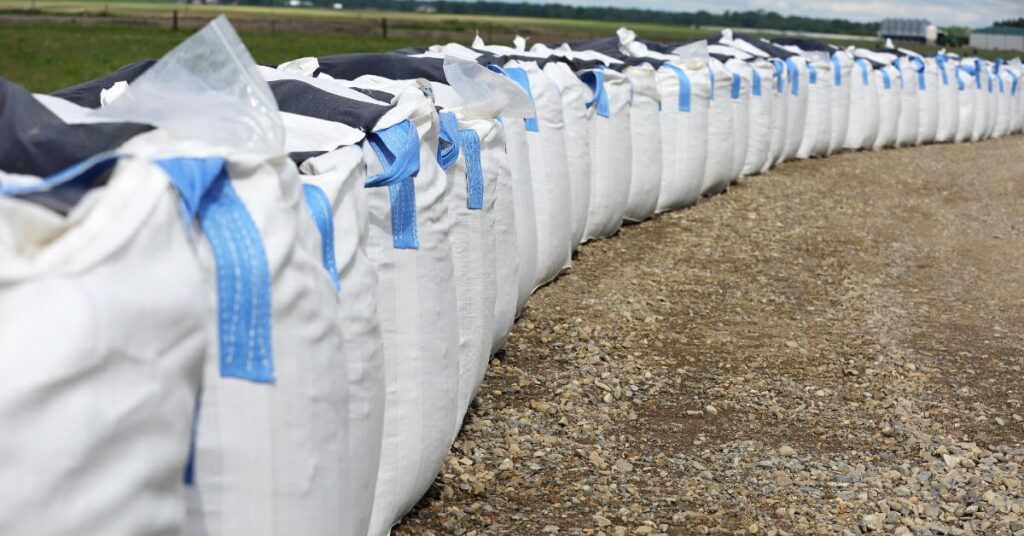
Sandbags
For centuries, sandbags were often the only solution people had to protect their communities from flooding. They’re relatively inexpensive and can be stacked to create a flood barrier that protects houses and other structures from storm surges.
However, sandbags aren’t ideal flood control bags compared to TrapBag. They have a much higher margin of error that can cause them to fail or give way during flooding events, causing serious damage. They’re also labor-intensive to fill. It can take days and thousands of sandbags to create a flood barrier large enough to protect your community effectively.
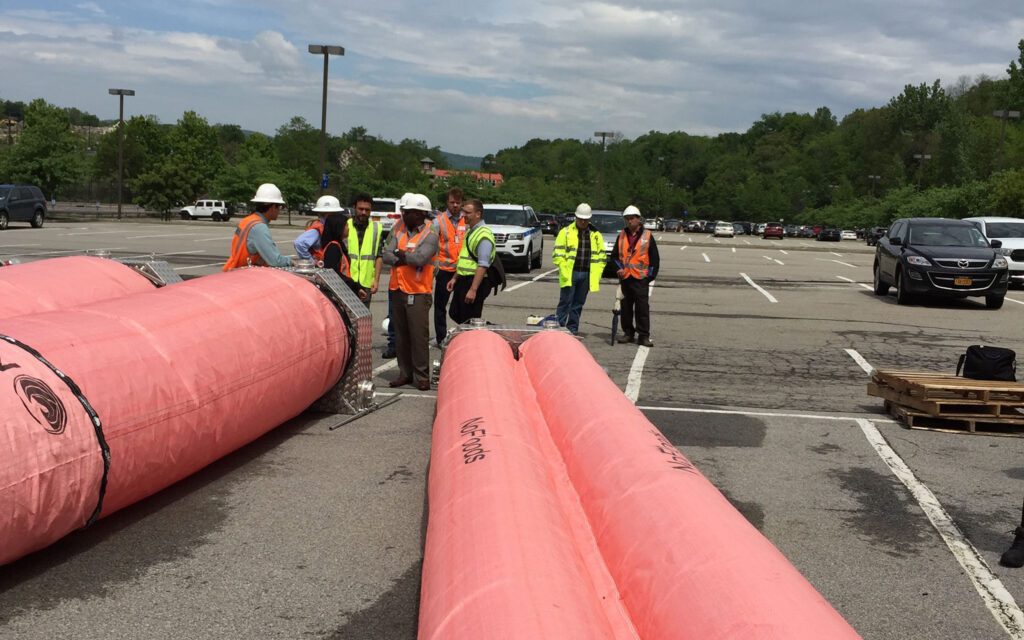
Flood Water Barriers
These flood protection products are designed to be filled with water and divert floodwaters away from buildings and structures. Many water barriers are reusable, so they’re handy for preventing water infiltration during flooding events.
However, flood water barriers aren’t a practical solution for severe flooding because they typically aren’t more than a few feet tall. TrapBags, however, start at 4 feet tall at a minimum. They’re also stackable, so emergency crews can create even taller barriers to stand up to catastrophic flooding events.

Floodgate Systems
Floodgate systems are a permanent form of commercial flood protection. Some municipalities in particularly flood-prone areas use them to protect buildings and lives from severe flooding. Ahead of predicted flooding events, crews can close the floodgates to protect vulnerable areas from the worst of the flood damage.
However, as a long-term solution, floodgates take a long time to properly install. They’re also unfeasibly expensive for many communities and aren’t a practical solution for any area that can flood. TrapBags can serve as temporary flood protection barriers to protect these areas just as well as a floodgate system for a fraction of the total cost.
TrapBag Specifications for Flood Protection Projects
Use these figures to scope quantities, draft specifications, and compare bids. Contact TrapBag for spec sheets and submittal documents.
Request Spec Sheets| Section length | 50 linear feet per unit; ships folded on pallets and connects end to end |
|---|---|
| Heights | 2 ft and 4 ft; over 6 ft uses a three-row pyramid |
| Fabric | High-strength polypropylene geotextile |
| UV exposure | Withstands at least five years of UV exposure |
| Fill & crew | Temporary flood walls; three people with an excavator or skid steer, permanent structures with concrete |
| Sandbag equivalent | 100 ft of 4-ft TrapBag replaces about 8,000 sandbags and uses 40% less fill |
| Testing | Tested by the U.S. Army Corps of Engineers |
Why Choose TrapBag as a Flood Control System?
TrapBag was first designed in 2004 by our founder, Everett “Buzz” Waid, as an all-around improved alternative to traditional flood control solutions after a hurricane devastated his Florida community. Since then, we’ve installed hundreds of miles of flood barriers worldwide.
TrapBag improves on the traditional design of sandbags. One 100-foot section of TrapBags replaces 8,000 sandbags. We engineered the cells in these flood protection barriers with a pentagonal shape with one sloped side and one vertical side for added structural integrity.
Our dedicated staff wants to ensure you can protect what matters most. Our team is here to help 24/7 across multiple countries and continents.
Procurement & Project Support
TrapBag works with public agencies, prime contractors, and engineering firms from budgeting through installation.
- Quotes by the linear foot
- Send the length of wall you need, the forecast crest or target height, fill material, and delivery site, and TrapBag returns pricing and a pallet count for budgets, bid tabs, and purchase orders.
- Submittal documents
- Spec sheets, product data, the installation manual, and Army Corps of Engineers testing documentation for engineer review and bid packages.
- Purchasing options
- Direct purchase orders and authorized distributors.
- Flood-season stockpiling
- Folded barriers take far less warehouse space than equivalent sandbags, so agencies can hold inventory before flood season and deploy the day a river forecast turns.
- Installation guidance
- TrapBag's team supports contractors 24/7 across multiple countries and continents, from site layout to fill methods.
Frequently Asked Questions
TrapBag comes in 2-ft and 4-ft heights. Stacking a 2-ft barrier on a filled 4-ft barrier creates a 6-ft wall, and walls taller than 6 ft use a pyramid configuration of two 4-ft rows back to back with a third row on top, for a total height of 8 ft.
Each TrapBag unit covers 50 linear feet, so a 1,000-foot flood wall at a single row height needs 20 units. Taller walls need stacked rows, which multiplies the count by the number of rows. Send your wall length, target height, and fill material to TrapBag for an exact count.
Yes. TrapBag ships folded flat on pallets and takes far less warehouse space than the sandbags it replaces, so agencies can store barriers ahead of spring high water or hurricane season and deploy them as soon as a forecast calls for flooding.
FEMA’s Public Assistance program can reimburse eligible public agencies for emergency protective measures during a declared disaster, which can include temporary flood barriers placed to reduce an immediate threat. Eligibility depends on the declaration, timing, and documentation, so confirm with your state emergency management agency before purchasing.