

Mine Flooding Prevention, Water Management & Erosion Control
Mine operators around the world use TrapBag® for mining erosion control, flood diversion, and spill containment, from open pits and haul roads to tailings areas. Crews fill TrapBag with local gravel or rock and build barriers in hours with equipment already on site.
How Mine Operators Use TrapBag
TrapBag holds water back, keeps it in, and holds soil in place on active and closed mine sites.
Flood & Water Diversion
Heavy rain and snowmelt can flood open pits and underground portals, stop production, and put crews at risk. TrapBag forms diversion berms, dikes, and levees that route surface water around pits, shafts, and haul roads to sumps and treatment.
Stormwater & Sediment Control
Mine runoff carries sediment and metals that can’t leave the site under most permits. TrapBag builds detention and sediment ponds that hold runoff until it settles or is treated.
Erosion Control
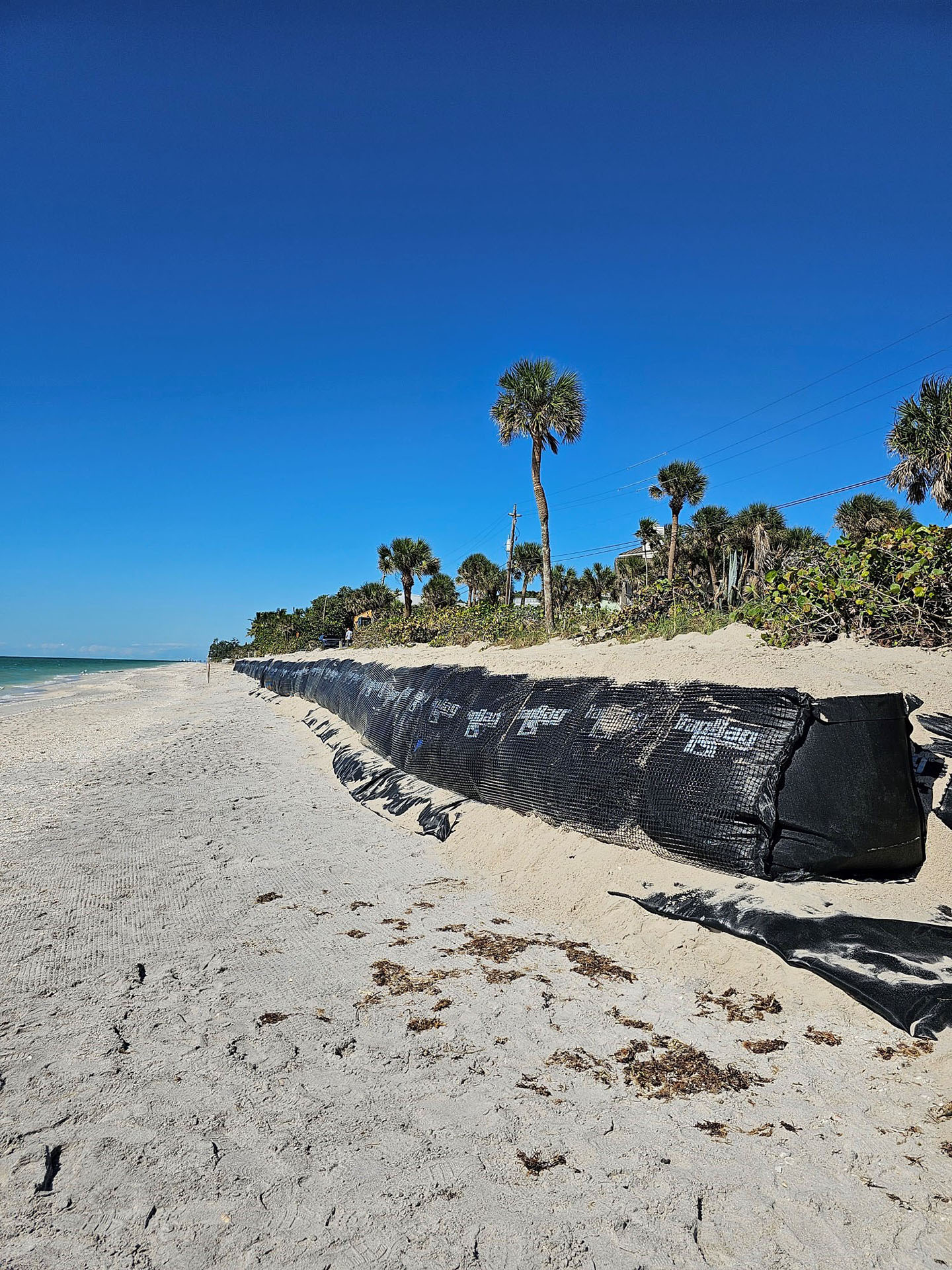
Stockpiles, cut slopes, waste dumps, and haul road embankments wash out in heavy rain. TrapBag holds soil and rock in place at the toe of a slope and keeps sediment out of drainage channels and nearby streams.


Where Mine Operators Use TrapBag
Mine operators use TrapBag wherever water threatens the work or carries material off the site.
Open pits
Diversion berms along the pit rim keep surface water out of the pit.
Portals and shafts
Berms keep runoff away from underground entries.
Haul roads
TrapBag retaining walls support road embankments and keep loose material off the road.
Slopes above facilities
Barriers divert mud and debris flows away from offices, shops, and processing areas.
Tailings and leachate areas
TrapBag forms berms and basins around tailings and leachate storage.
Spill sites
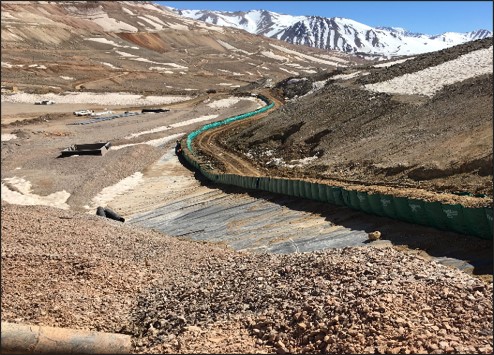
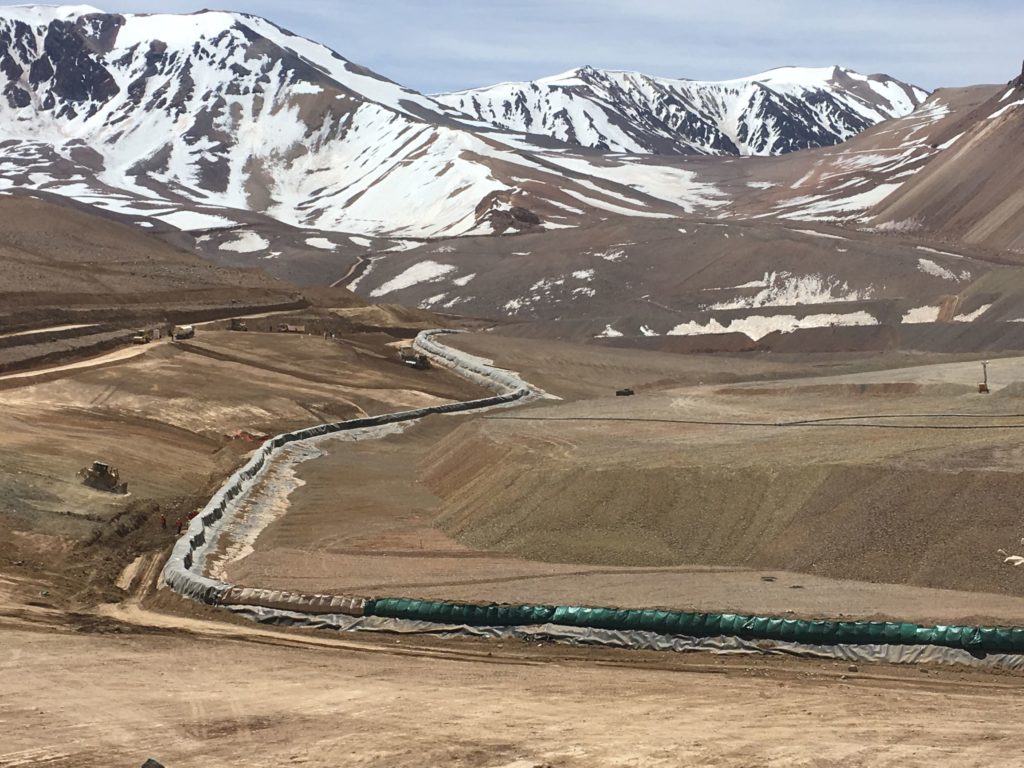
Containment berms hold chemicals inside the spill area, as at Barrick Gold’s Veladero Mine in Argentina.
How TrapBag Improves on Sandbag Barriers
TrapBag was originally designed as a flood barrier that could withstand hurricane-force storm surges. Mine operators adopted it to control water and erosion across large sites without tying up crews. Compared to sandbags:
Less labor
A sandbag berm long enough to protect a pit or haul road can take a large crew days to build. Two people and a third person operating a skid steer or excavator can fill a TrapBag barrier with local gravel or rock in a few hours.
More durability
A sandbag wall is only as good as its stacking, and a poorly stacked wall is more likely to collapse. TrapBag’s cells are connected and work as one unit, so the barrier holds its shape under water pressure.
Less material
A 100-foot section of 4-ft TrapBag replaces roughly 8,000 sandbags and uses 40% less fill than a stacked sandbag wall of the same size.
Why Choose TrapBags as Flood Prevention Barriers?
Versatility
One TrapBag system builds diversion berms, sediment ponds, retaining walls, leachate basins, and spill containment, so a mine can stock one product for several jobs.
Speed
TrapBag goes up in a fraction of the time a sandbag wall takes. After a cyanide spill at the Veladero Mine, crews installed more than 8 km of TrapBag barriers in 8 days, at an elevation above 4,000 meters in the Andes.
Reliability
The U.S. Army Corps of Engineers has tested TrapBag for its ability to protect structures from flood damage. TrapBag also has a 3:1 (mass to hydraulic load) safety factor, which gives operators margin above the expected water level.
TrapBag Specifications for Mining Projects
Use these figures to scope quantities, draft specifications, and compare bids. Contact TrapBag for spec sheets and submittal documents.
| Specification | Detail |
|---|---|
| Section Length | 50 linear feet per unit; ships folded on pallets and connects end to end |
| Heights | 2 ft and 4 ft; a 2-ft row on a 4-ft row reaches 6 ft; a three-row pyramid reaches 8 ft |
| Sand or gravel fill | Diversion berms, sediment ponds, and spill containment; three people with an excavator or skid steer |
| Concrete fill | Permanent walls; pumped into the cells |
| Sandbag equivalent | 100 ft of 4-ft TrapBag replaces about 8,000 sandbags and uses 40% less fill |
| Testing | Tested by the U.S. Army Corps of Engineers |
| Cofferdam units | No special fill; local gravel, rock, or sand from the mine site |
| Installation | TrapBag Installation Manual (PDF) |
How TrapBags Compare

Earthen Berms
Most mines have plenty of soil and equipment, so earthen berms cost little to build.
A berm needs gentle side slopes to stay stable, which takes up room along pit rims and haul roads. Bare soil also erodes under moving water, and the runoff from a failing berm becomes a sediment problem of its own.
TrapBag has a vertical face and holds its fill inside geotextile fabric, so it takes up less room and keeps its fill in place.
Concrete Jersey Barriers
Many mines already have Jersey barriers on hand for traffic control along haul roads.
Jersey barriers are made to stop vehicles, not water. Water leaks through the joints between sections unless crews line them, and each section weighs thousands of pounds, so moving them takes a loader or crane.
TrapBag sections connect end to end into a continuous wall and ship folded on pallets.
Gabion Walls
Gabion walls stack wire-mesh baskets filled with rock, and mines often have the rock on site.
Each basket has to be assembled, placed, and filled one at a time, which takes time and labor on a long wall. Galvanized wire can also corrode where mine water is acidic.
TrapBag sections pull out 50 feet at a time and fill with an excavator or skid steer.
Projects
See All Our Past Projects »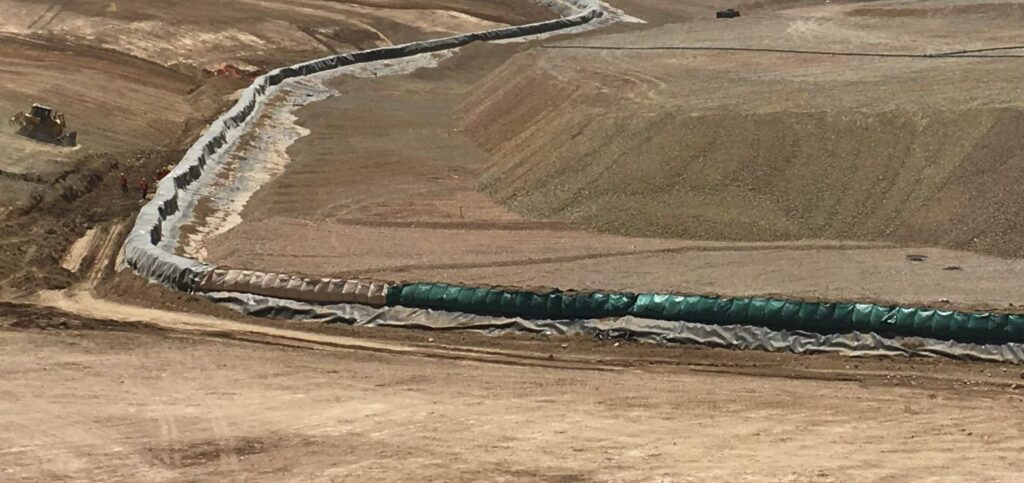
Chemical Spill Containment – San Juan, Argentina
September 27, 2016 Read More » about Chemical Spill Containment – San Juan, Argentina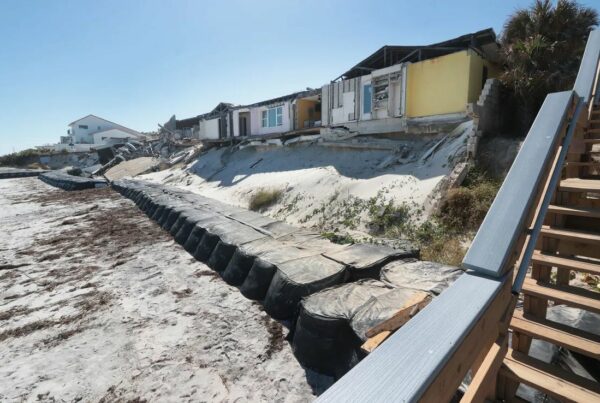
Continued Protection After Hurricane Nicole – Volusia County, FL
November 10, 2023 Read More » about Continued Protection After Hurricane Nicole – Volusia County, FL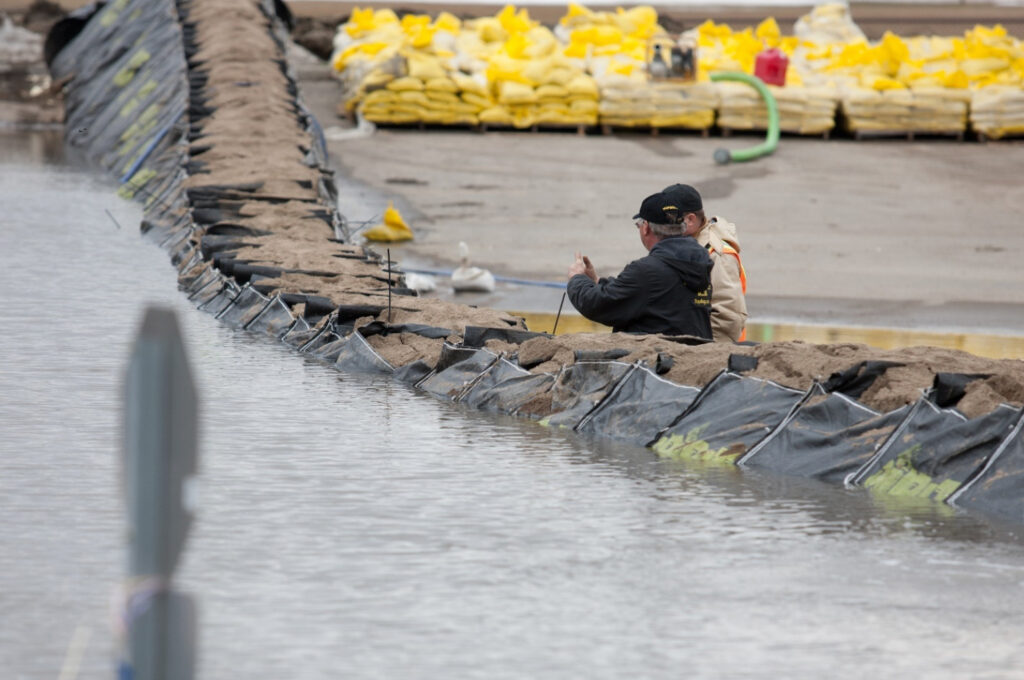
Flood Protection in Fargo, North Dakota
January 24, 2012 Read More » about Flood Protection in Fargo, North Dakota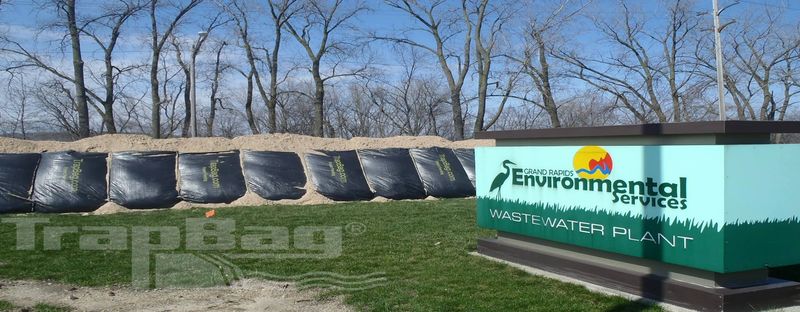
Flood Protection in Grand Rapids, Michigan
May 7, 2020 Read More » about Flood Protection in Grand Rapids, Michigan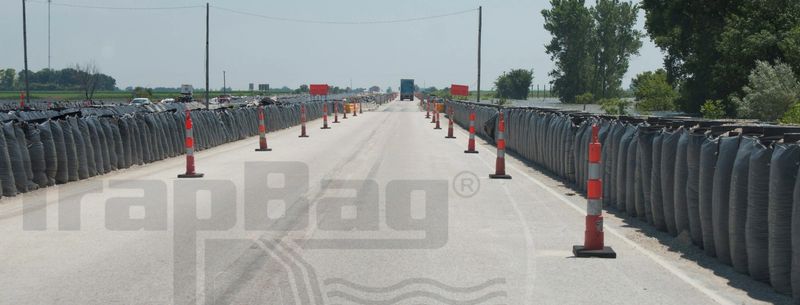
Frequently Asked Questions
Mining erosion control covers the methods mine operators use to keep soil, rock, and sediment in place on a mine site and out of nearby waterways. Crews protect slopes, stockpiles, waste dumps, and haul roads with grading, benching, diversion channels, sediment ponds, erosion barriers, and replanting. Most mining permits and reclamation plans set erosion control standards that operators have to meet during operations and after closure.
Mine flooding usually starts with heavy rain or snowmelt that overwhelms a site’s drainage and pours into pits or underground workings. Rivers can overtop their banks into a mine, groundwater can seep in faster than pumps remove it, and underground crews can break into old flooded workings. Diversion berms, sumps, pumps, and barriers around pit rims and portals keep surface water out.
Mines protect miners from inundation, a sudden inrush of water into underground workings, by mapping old flooded workings and keeping active mining a safe distance from them. In U.S. underground coal mines, federal rules call for boreholes drilled ahead of mining near old workings that may hold water. Operators also pump water out of the mine and divert surface water away from portals, shafts, and pit walls, which is where TrapBag barriers come in.
Yes. After a cyanide spill at Barrick Gold’s Veladero Mine in Argentina, crews installed more than 8 km of 4-ft TrapBag barriers in 8 days, filled with local gravel and rock, to keep the spill out of nearby waterways.
TrapBag needs no special fill. Crews use gravel, crushed rock, or sand from the mine site for temporary barriers and pump concrete into the cells for permanent walls.
Yes. TrapBag ships folded on pallets to mine sites around the world, and crews fill it with local material on arrival, so only the fabric travels. The Veladero installation sat above 4,000 meters in the Andes.
The U.S. Army Corps of Engineers has tested TrapBag as a flood barrier.
What Information Does TrapBag Need for a Quote?
Send the length of the berm or wall, target height, what it needs to hold back or contain, fill material available on site, project duration, and delivery location. TrapBag will send back a recommended layout, unit count, and pricing.