
Project Specifications
Product used: TrapBag® TBRD Riverbank Stabilization System
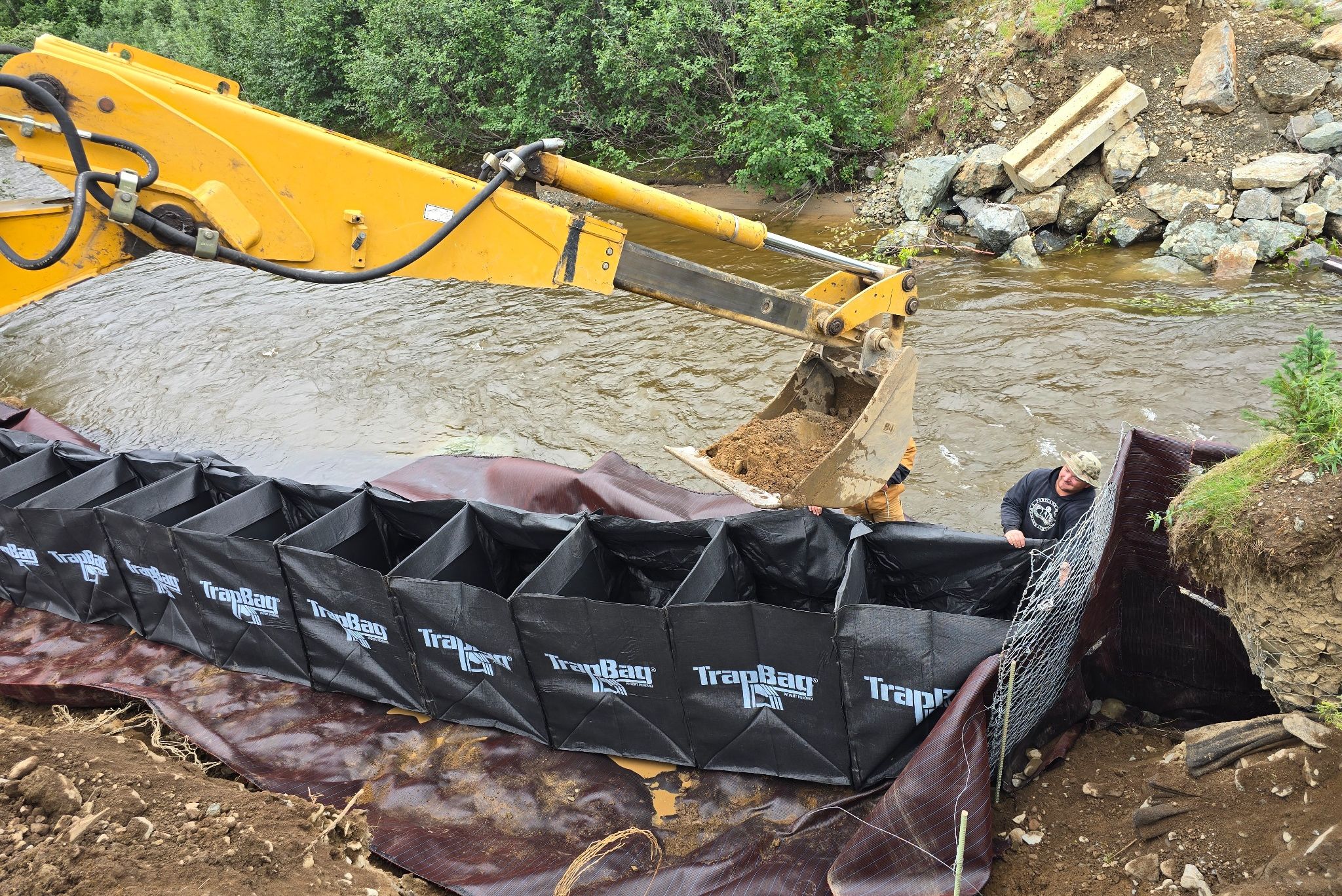
Installation configurations: Continuous reinforced-earth revetment, including back-to-back TrapBag® installation; 150 linear feet supplied and installed; desired stabilization height of approximately 10 feet; maximum water depth of approximately 5 feet
Material: TrapBag® TBRD interconnected containment cells; the specific fabric composition is not stated in the source
Fill material: Native soil and gravel excavated directly from the project site
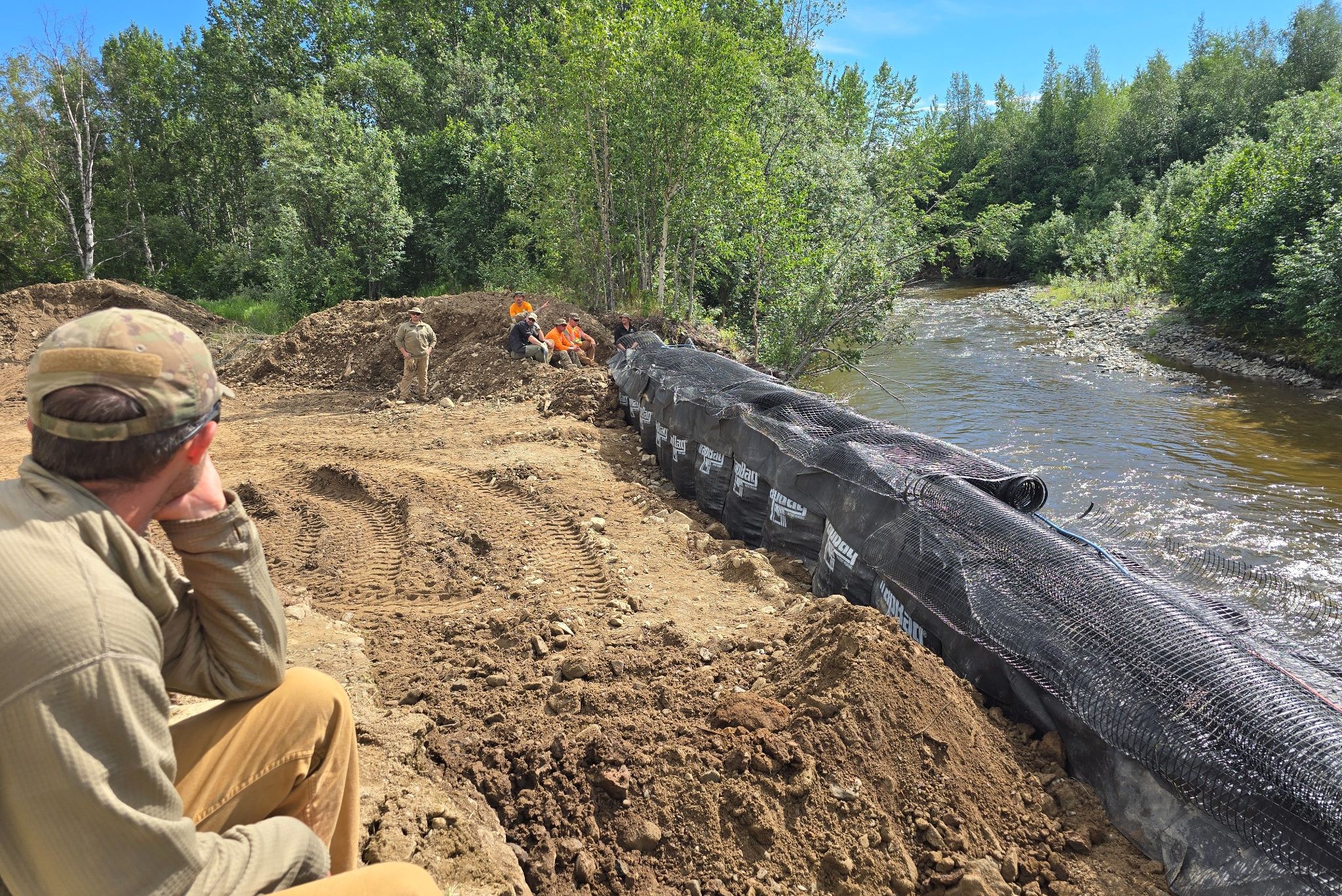
Reinforcement: Geogrid
Installation equipment: Hydraulic excavator
Initial Solution
Before TrapBag® was selected, Air Force personnel attempted to slow the erosion using temporary stabilization measures:
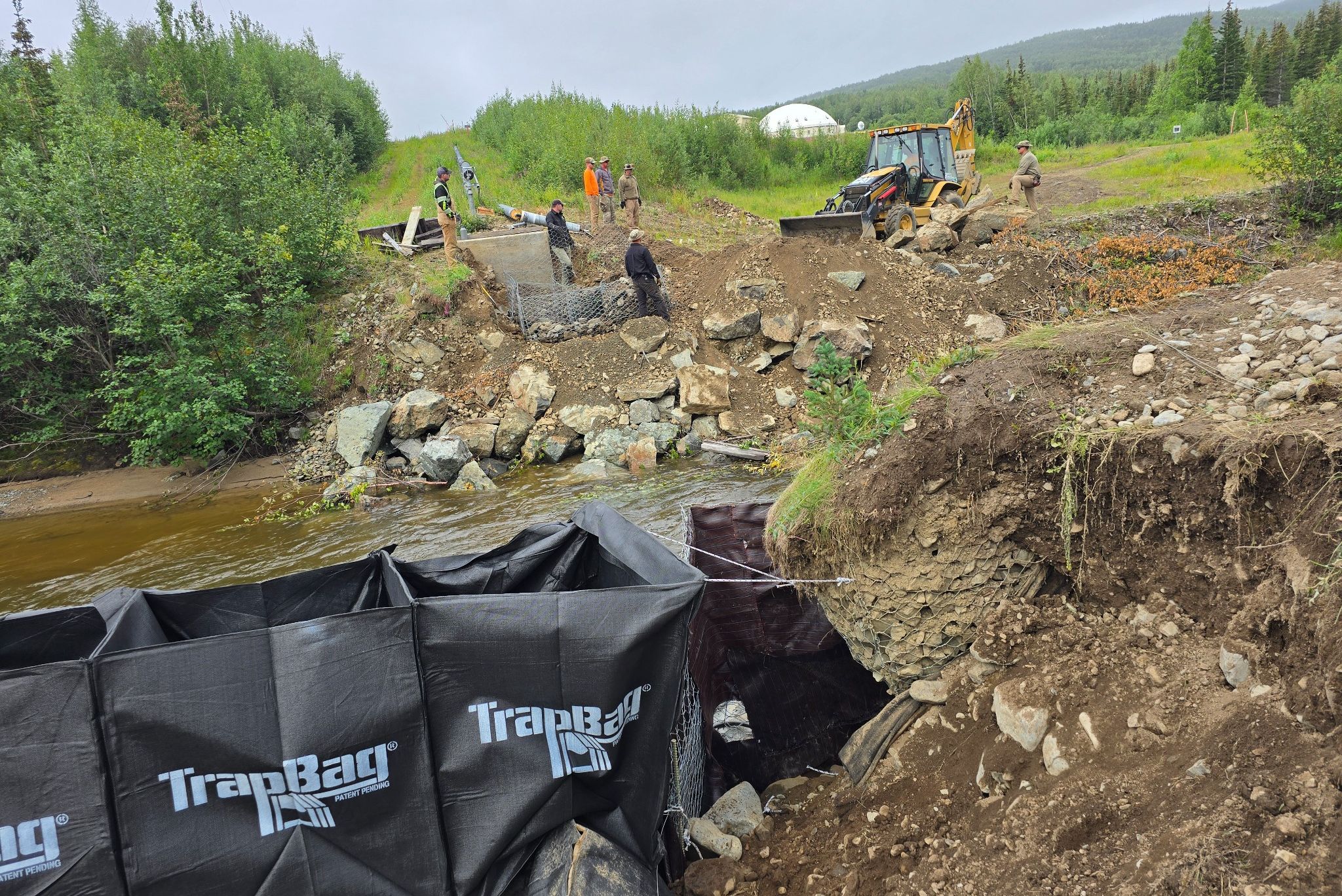
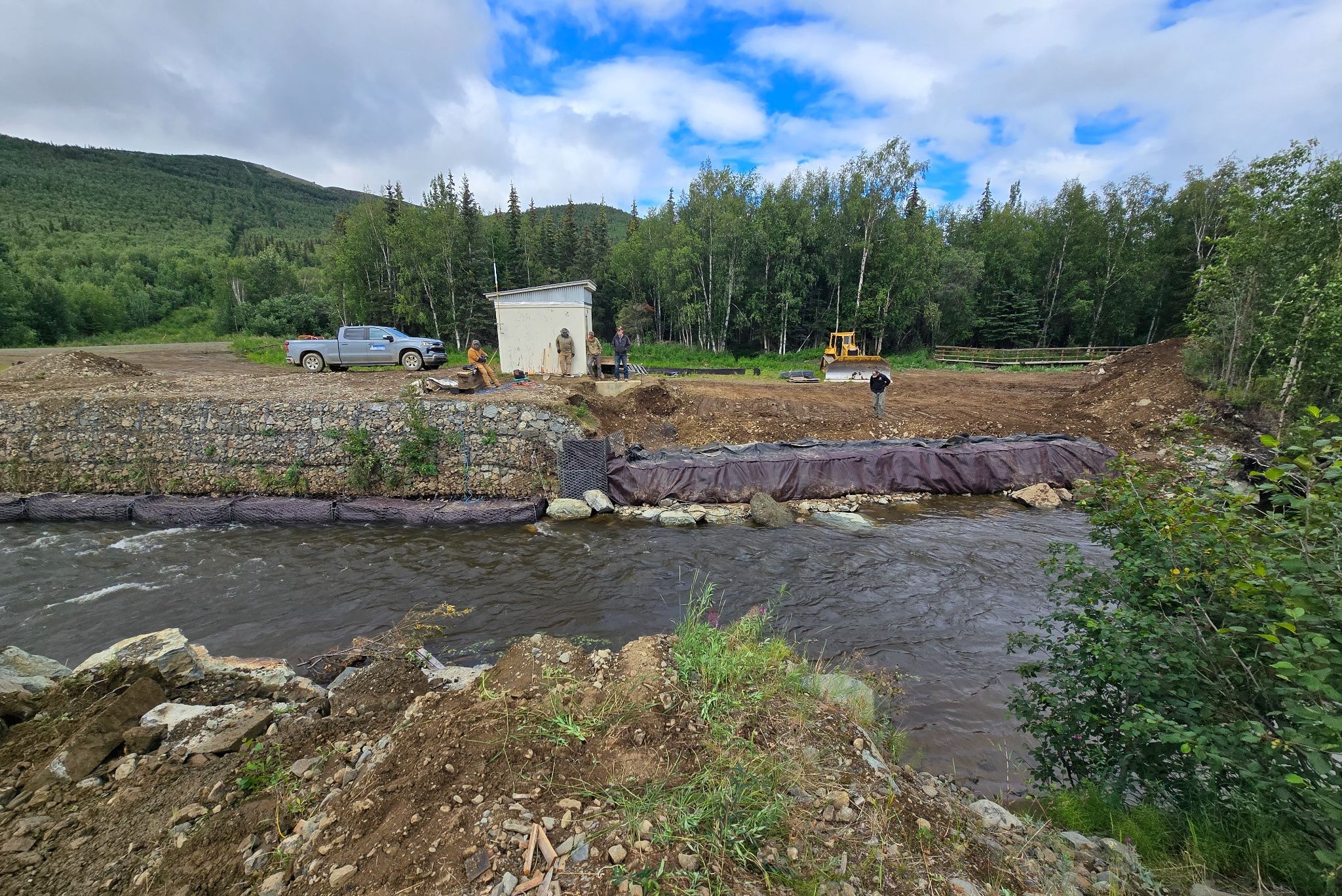
- Gabion baskets were installed along the streambank.
- Additional temporary erosion-control measures provided short-term protection.
- Continued scour beneath the gabion baskets allowed erosion to progress.
- Portions of the bridge embankment remained exposed, threatening the bridge’s long-term integrity.
After reviewing the site conditions, Best Flood Barriers prepared a preliminary stabilization concept and provided product specifications, engineering drawings, and technical guidance for a permanent TrapBag® TBRD installation.
Unintended Longevity
The source does not describe a temporary TrapBag® deployment that remained in service longer than originally intended. The system was selected from the outset as a permanent riverbank-stabilization solution designed to provide long-term protection against erosion and hydraulic scour.
Project Expansions and Reinforcements
No later expansion of the project is documented. The original installation used 150 linear feet of TrapBag® TBRD material. The interconnected containment cells were installed in a continuous reinforced-earth revetment, with back-to-back configurations documented in the project photographs. Geogrid was incorporated as reinforcement, helping the flexible system accommodate settlement and seasonal freeze-thaw movement.
Performance
The completed installation replaced temporary emergency repairs with a permanent reinforced-earth stabilization system designed to protect the bridge embankment from future erosion and hydraulic scour. Native soil and gravel excavated at the project site were used as fill, minimizing the need to transport aggregate into the remote location. Conventional excavation equipment was used for installation.
The customer’s initial assessment was positive:
“We finished up our placement of the TrapBags. The product worked fantastic. Attached are some project photos.”
— Project Representative, U.S. Air Force, Indian Mountain Air Force Station
The source document does not provide post-installation monitoring results or document performance during a subsequent catastrophic flood or other extreme event. No such performance claim has therefore been added.
Key Outcomes
- Permanently stabilized 150 linear feet of severely eroded riverbank and protected critical bridge infrastructure from ongoing scour.
- Used native soil and gravel, reducing imported-material requirements, freight volume, and transportation costs at the remote Alaskan site.
- Replaced failing gabion baskets and temporary repairs with a continuous, flexible reinforced-earth system designed to accommodate settlement and freeze-thaw movement.
Conclusion
The Indian Mountain Air Force Station project demonstrates how the TrapBag® TBRD Riverbank Stabilization System can protect critical infrastructure in remote environments where transportation, available equipment, and local material use are major considerations. By shipping flat, using native fill, and forming a continuous geogrid-reinforced revetment, TrapBag® provided the Air Force with a practical permanent solution for riverbank erosion and bridge scour protection.
Installation Highlights
- 150 linear feet of TrapBag® TBRD material installed
- Back-to-back configuration along the eroded streambank
- Reinforced with geogrid for added structural integrity
- Filled with native soil and gravel excavated on site
- Installed using a hydraulic excavator
- Continuous reinforced-earth revetment protecting the bridge approach