

TrapBag® stormwater barriers give municipalities, site contractors, and engineering firms a fast way to build detention ponds and sediment basins that hold runoff on site. Crews set the barrier around the basin footprint, fill it with sand or washed gravel for a temporary pond, or pump concrete into the cells for a permanent basin wall.
TrapBag ships in 50-foot sections folded on pallets and fills with a standard excavator or skid steer. Procurement teams can request pricing, spec sheets, and quantity estimates by the linear foot for bid packages, capital projects, and construction stormwater plans.
Commercial and municipal projects of every size have to manage stormwater. Good stormwater controls protect other city infrastructure and keep the local water supply clean.
Using TrapBag for Stormwater Management Systems
Rain that hits a construction site picks up loose soil, fuel, and debris on its way downhill. Without a place to collect, that runoff reaches storm drains, sewers, and streams. A detention pond holds it on site long enough for the sediment to settle out and the water to drain away slowly.
TrapBag is a low-cost, rapidly deployable barrier that forms the walls of that pond. It goes up as fast as sandbags and costs about as little, but its cells connect into one continuous barrier that holds its shape under the weight of the water.
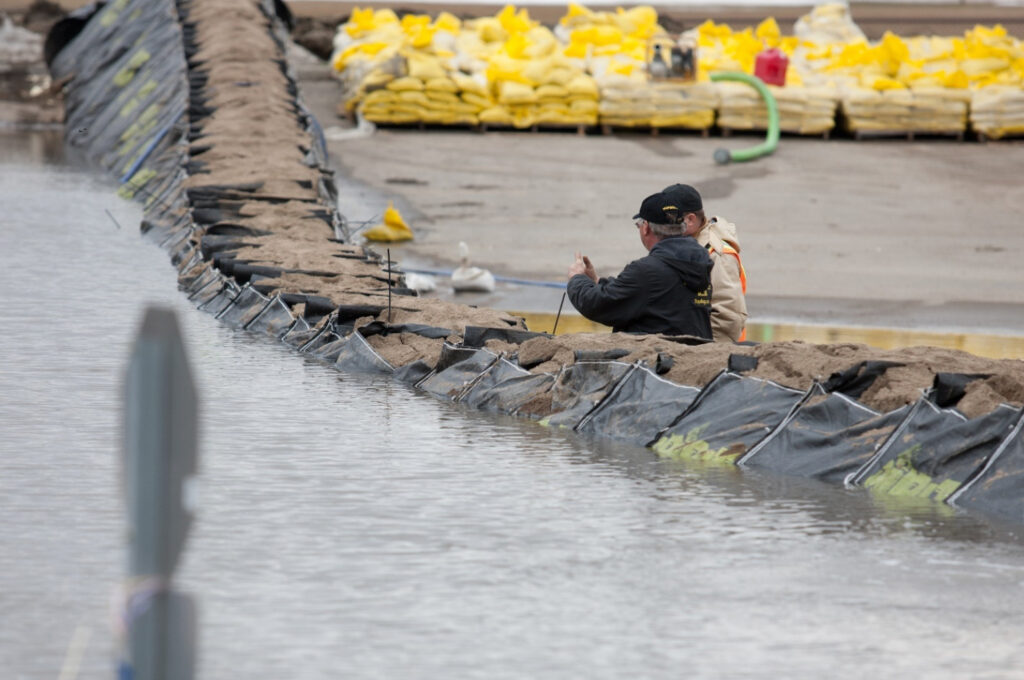
How TrapBags Are Deployed for Stormwater Containment
TrapBag goes up in a fraction of the time other stormwater systems take, and its cellular design makes it stronger than a stacked sandbag berm. The U.S. Army Corps of Engineers has tested TrapBag against catastrophic flooding, and the same barrier works as a dam or levee. Most stormwater projects follow three steps:
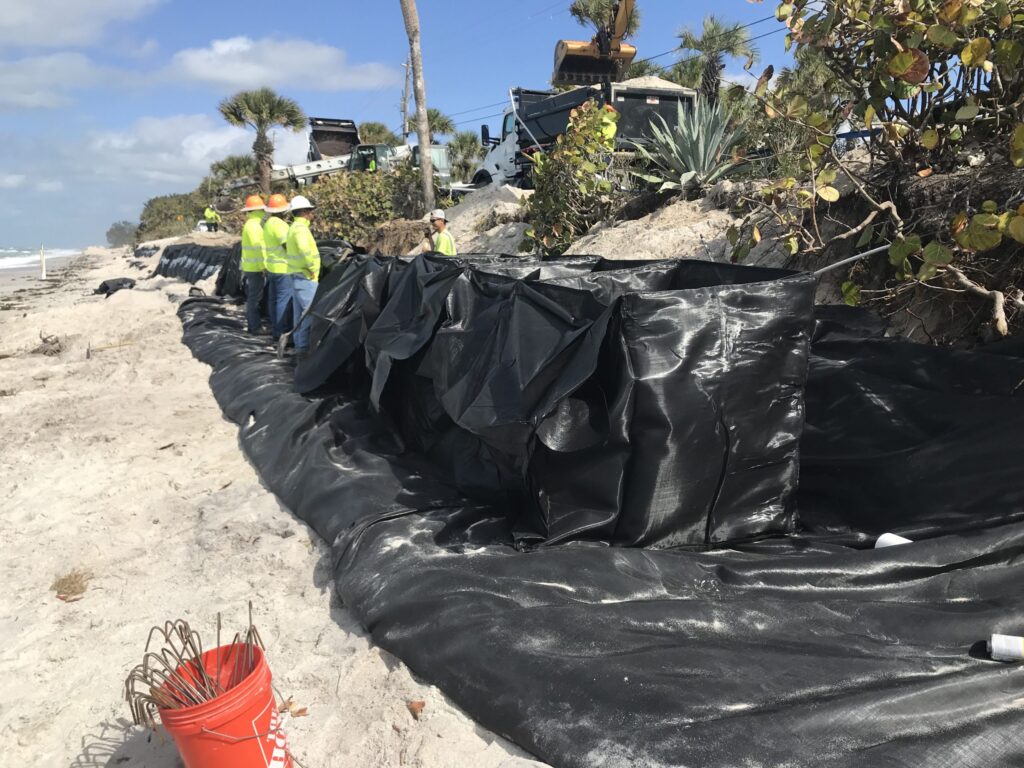
-
1
Open the packaging
TrapBag barriers arrive folded on a pallet. Pull each unit open like an accordion to its full 50-foot length, and connect sections end to end to close the basin perimeter. -
2
Place the barrier
Set the barrier around the basin footprint or along the edge of the work site, including in the water around it. -
3
Fill the cells
Two people and a third person operating an excavator or skid steer can fill a TrapBag barrier with sand or washed gravel within minutes. For permanent basin walls, crews pump concrete into the cells. Stack filled rows for more height.

Who We Serve
TrapBag supports flood control, mudslide protection, and spill containment across many industries. Stormwater buyers most often come from four groups:
Municipalities and county governments:
City water, public works, and street departments use TrapBag retention basins to keep stormwater out of the city water supply. Learn More »Construction
Contractors use TrapBag detention ponds to meet their construction stormwater plans and keep site runoff away from the water supply. Learn More »Industrial applications
Mining operations and other industrial sites use TrapBag to contain industrial wastewater and keep chemicals and waste out of nearby water. Learn More »Civil engineering
Civil engineers work with construction crews to design TrapBag detention ponds that keep untreated runoff from leaving the site. Learn More »Projects
See All Our Past Projects »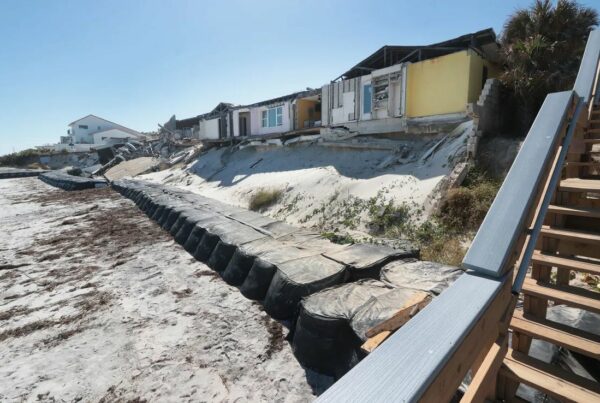
Continued Protection After Hurricane Nicole – Volusia County, FL
November 10, 2023 Read More » about Continued Protection After Hurricane Nicole – Volusia County, FL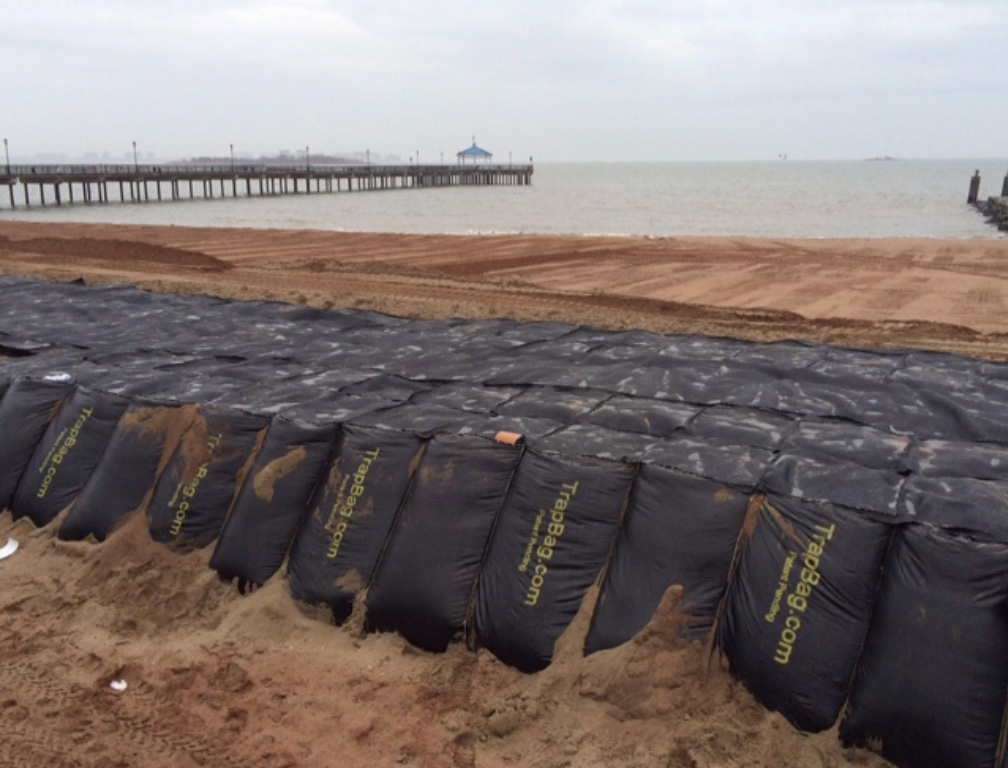
Dune Core Stabilization for Hurricane & Storm Surge Protection in Rockaway Beach, New York
May 25, 2014 Read More » about Dune Core Stabilization for Hurricane & Storm Surge Protection in Rockaway Beach, New YorkFlood Protection in Fargo, North Dakota
January 24, 2012 Read More » about Flood Protection in Fargo, North Dakota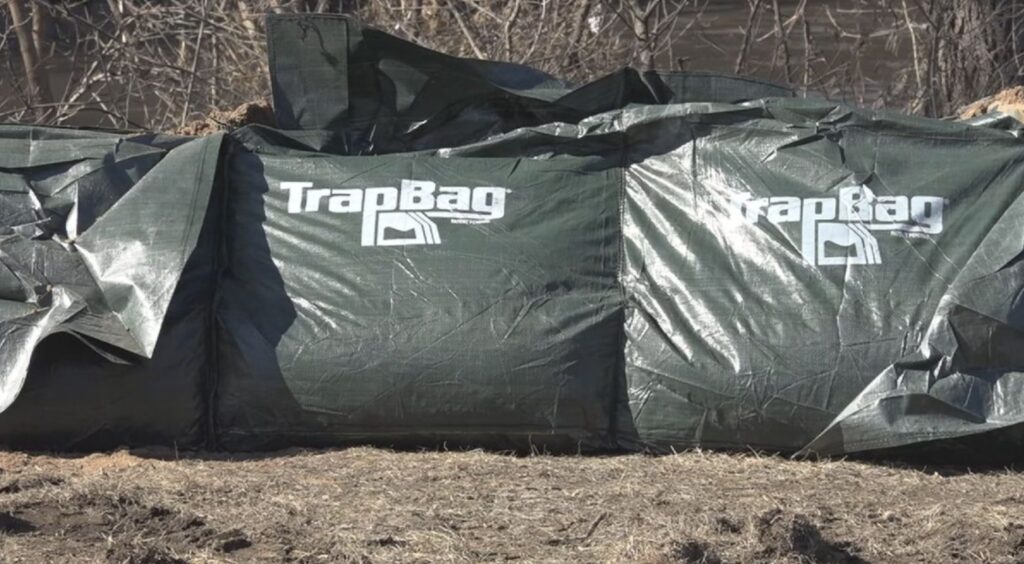
Flood Protection in Sioux Falls, SD
March 21, 2019 Read More » about Flood Protection in Sioux Falls, SD
Levee Installed for Flood Protection in Baton Rouge, Louisiana
May 7, 2020 Read More » about Levee Installed for Flood Protection in Baton Rouge, LouisianaHow TrapBags Compare to:
SandBags
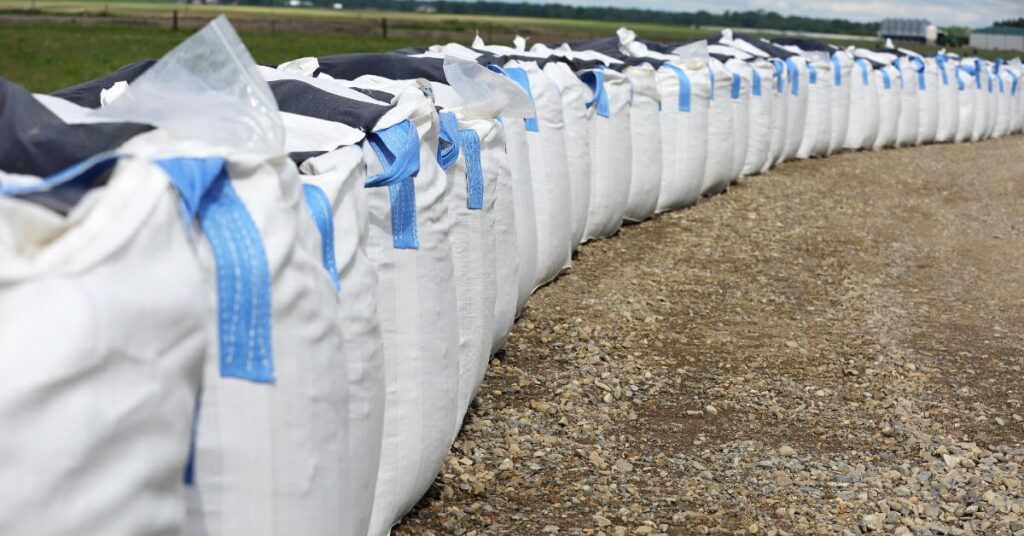
Sandbags are flexible and affordable, and crews can stack them into a makeshift detention pond for a short-term project. However, a sandbag berm is only as strong as its stacking, and it is more likely to collapse than other detention pond walls. TrapBag’s connected cells hold their shape and keep stormwater contained inside the pond.

Permanent Stormwater Detention Basins
Permanent basins keep stormwater out of nearby lakes and rivers, which makes them a good fit for municipal stormwater systems. A temporary construction project rarely justifies the cost of building one, though. TrapBag forms a temporary basin that crews can remove when the project ends.
TrapBag Specifications for Stormwater Projects
Use these figures to scope quantities, draft specifications, and compare bids. Contact TrapBag for spec sheets and submittal documents.
Request Spec Sheets| Section length | 50 linear feet per unit; ships folded on pallets and connects end to end |
|---|---|
| Heights | 2 ft and 4 ft; over 6 ft uses a three-row pyramid |
| Fabric | High-strength polypropylene geotextile |
| Fill & crew | Sand or washed gravel for temporary basins, pumped concrete for permanent basin walls; three people with an excavator or skid steer for sand and gravel |
| Sandbag equivalent | 100 ft of 4-ft TrapBag replaces about 8,000 sandbags and uses 40% less fill |
| Testing | Tested by the U.S. Army Corps of Engineers |
Why Choose TrapBag for Stormwater Management Plans?
TrapBag was first designed in 2004 by founder Everett “Buzz” Waid, who wanted a better flood barrier after a hurricane devastated his Florida community. The same barrier that keeps floodwater out also holds water in, which makes it a strong wall for stormwater retention ponds.
One 100-foot section of TrapBag replaces 8,000 sandbags and uses 40% less fill. TrapBag lasts at least five years and has held up against mudslides and mudflows, catastrophic floods, and other extreme weather.
TrapBag’s team is available 24/7 across multiple countries and continents to help your agency or firm plan, order, and install.
Procurement & Project Support
TrapBag works with public agencies, prime contractors, and engineering firms from budgeting through installation.
- Quotes by the linear foot
- Send the basin perimeter, berm height, fill material, and delivery site, along with the design storage volume if your plan has one. TrapBag returns pricing and a pallet count for budgets, bid tabs, and purchase orders.
- Submittal documents
- Spec sheets, product data, and Army Corps of Engineers testing documentation for engineer review and bid packages.
- Purchasing options
- Direct purchase orders and authorized distributors.
- Early-phase installation
- Barriers install in hours, so contractors can build a sediment or detention basin at the start of earthwork, before grading leaves the site open to rain.
- Installation guidance
- TrapBag’s team supports contractors 24/7 across multiple countries and continents, from site layout to fill methods.
Frequently Asked Questions
A detention basin holds stormwater during a storm and releases it slowly through an outlet, so it sits dry between storms. A retention basin keeps a permanent pool and lets runoff settle or soak into the ground. On construction sites, TrapBag forms temporary detention ponds and sediment basins, and concrete-filled TrapBag can form permanent basin walls.
Most do. Construction that disturbs one acre or more, or less than an acre within a larger plan of development, needs Clean Water Act stormwater permit coverage through EPA or the state. The permit holder writes a stormwater pollution prevention plan that sets erosion, sediment, and runoff controls, and a temporary detention pond is one of the controls a plan can include.
Count by perimeter. Each TrapBag unit covers 50 linear feet, so a 100-by-100-foot basin with a 400-foot perimeter needs 8 units at a single row height. Send the basin perimeter, berm height, and fill material to TrapBag for an exact count.
Yes. Sand or gravel fill works for temporary basins that come out once a site stabilizes, and the same barrier filled with pumped concrete forms permanent basin walls. Contact TrapBag for concrete fill instructions before specifying a permanent installation.