
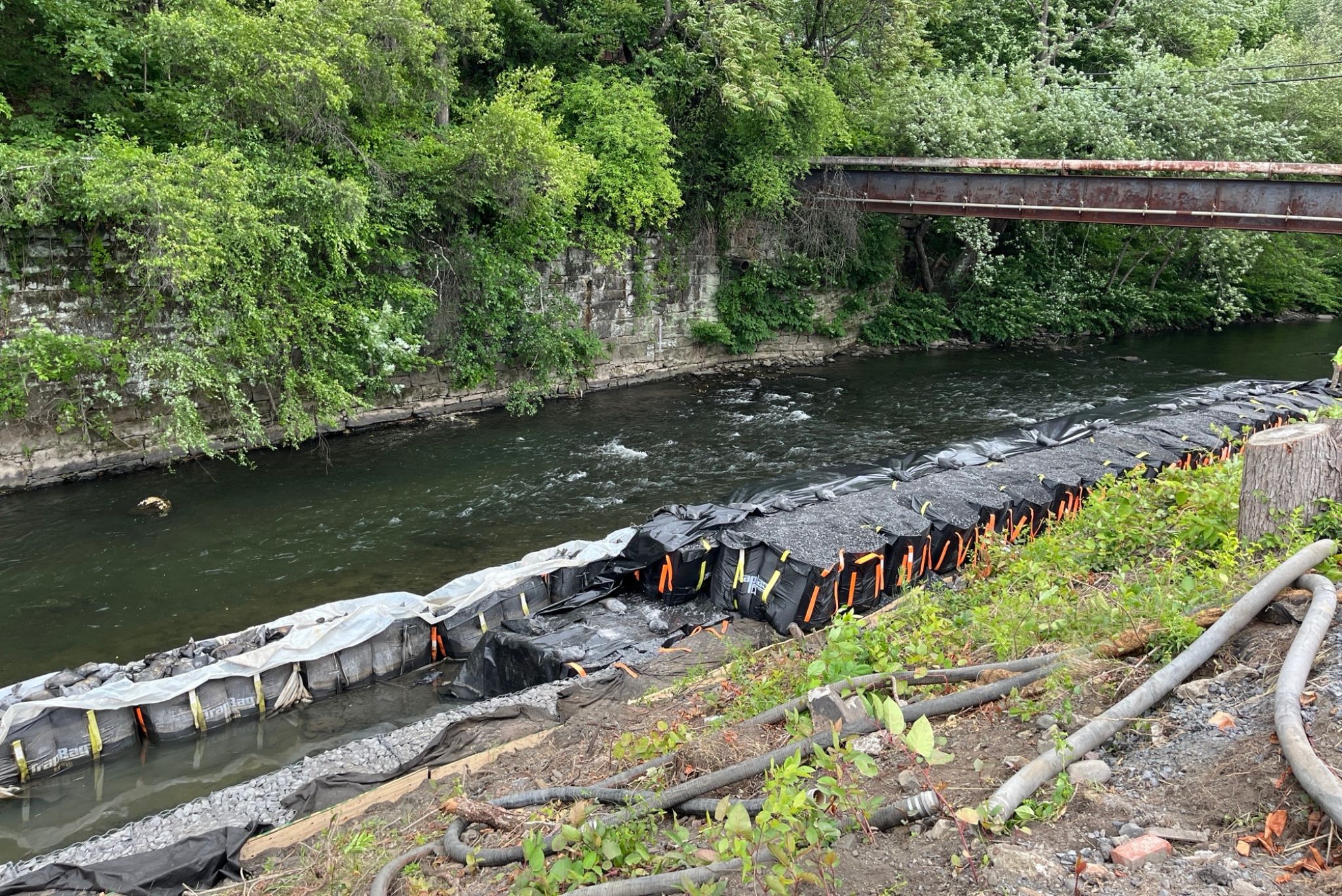
TrapBag® river bank barriers give municipalities, engineering firms, and resource agencies a cellular wall that armors eroding banks against current, floodwater, and scour. Crews set the barrier along the eroding bank, fill it with sand or gravel on site, and stack additional rows where the bank is taller. For permanent installations, crews pump concrete into the cells.
TrapBag ships in 50-foot sections folded on pallets. Procurement teams can request pricing, spec sheets, and quantity estimates by the linear foot for bid packages, capital projects, and emergency bank repair after high water.
Using TrapBag for Stabilizing River Banks
Erosion causes river banks to fail from the bottom up. Fast water scours the toe, the unsupported slope slumps into the channel, and each high-water event pulls the bank closer to the road, utility line, or building above it. TrapBag stops that sequence by placing a heavy, continuous mass at the toe. Every cell shares walls with its neighbors, and 60% of the barrier’s mass sits in its bottom half, so the wall holds its footing as water levels rise and fall.
TrapBag is a low-cost, rapid-deployment barrier bag that is similar to, yet improves upon, the design of conventional sandbags.

Prevent River Bank Erosion with TrapBag
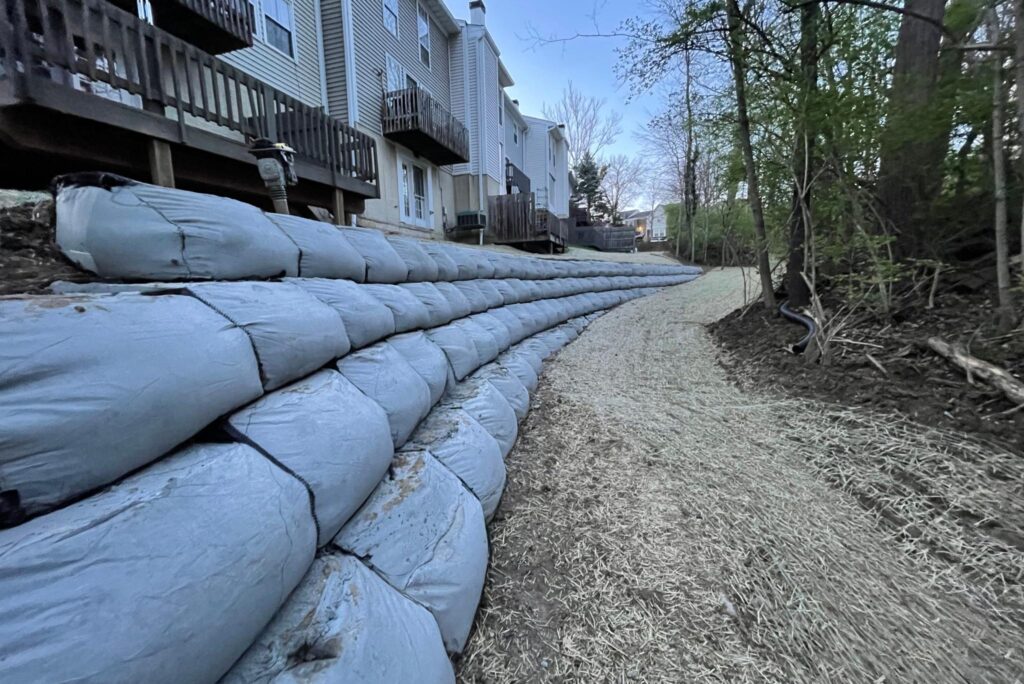
TrapBag is designed to be easier to install than other river bank stabilization methods. Each cell in a TrapBag barrier is interconnected with its neighbors, which strengthens the entire barrier and allows it to hold back even the highest floodwaters during major storms or flooding events.
The barriers are designed to be easy to set up in just a few steps:
-
1
Open the packaging
TrapBag barriers come folded up on a pallet. They are pulled out like an accordion and can be stretched up to 50 linear feet per unit at their maximum length. -
2
Place the barrier where you need it
Prop the TrapBag river bank stabilization barrier against the vulnerable river bank or anywhere else you might typically use erosion control blankets or rip rap. -
3
Fill the cells
A team of two people and an equipment operator can fill your TrapBag barrier within minutes with sand, gravel, or concrete. Once your first barrier is completely filled, you can also stack another barrier on top of it and begin the process again to create a taller barrier.
Who We Serve
We work with organizations, business owners, and agencies across the world to help them protect what matters most from the negative effects of river bank erosion. Some of the organizations we work with include:
Municipalities and county governments:
Public works and stormwater departments use TrapBag to stop bank loss that threatens roads, bridge approaches, sewer lines, and riverfront property, both as emergency repair during high water and as planned capital work. Learn More »Civil engineering
Civil and geotechnical engineering firms specify TrapBag for toe protection and bank reinforcement along roads, bridges, and utility corridors, where fewer bank failures mean fewer repairs to the infrastructure above. Learn More »Construction
Contractors working along rivers and channels use TrapBag to hold banks in place during bridge, culvert, and outfall projects. Learn More »Emergency management
Emergency managers deploy TrapBag during spring floods and high-water events to hold failing banks until permanent repairs are funded. Learn More »Environmental protection
Environmental protection agencies at the local, state, and national levels use TrapBag to protect river banks from erosion. In turn, they can protect natural habitats and local wildlife to preserve them for future generations. Learn More »Projects
See All Our Past Projects »
Riverbank Stabilization Project Carson City, Nevada
May 20, 2021 Read More » about Riverbank Stabilization Project Carson City, Nevada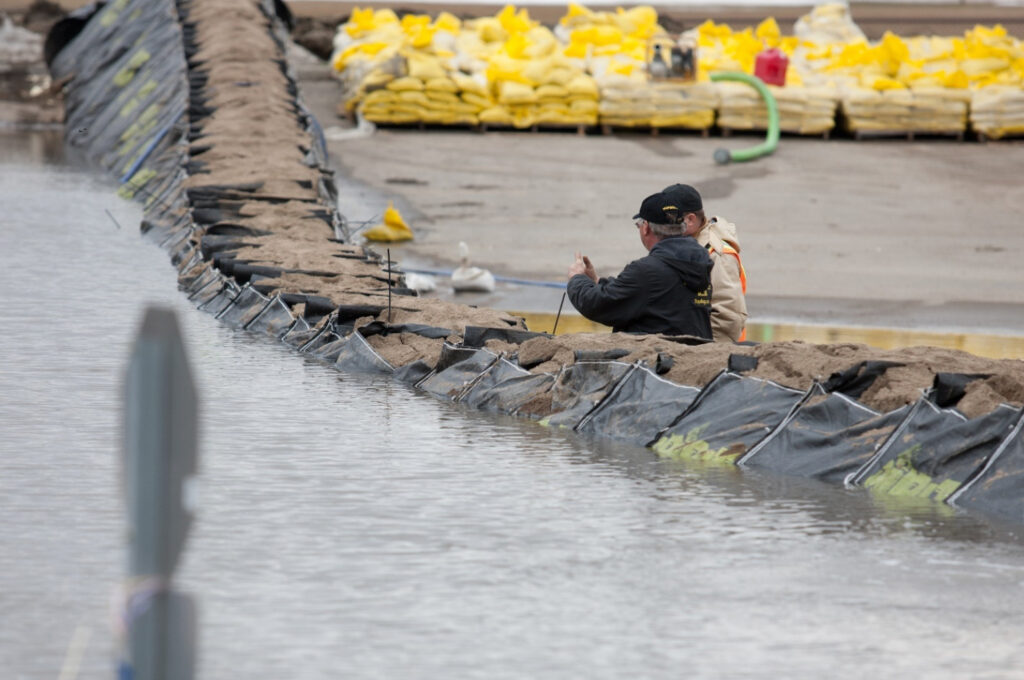
Flood Protection in Fargo, North Dakota
January 24, 2012 Read More » about Flood Protection in Fargo, North Dakota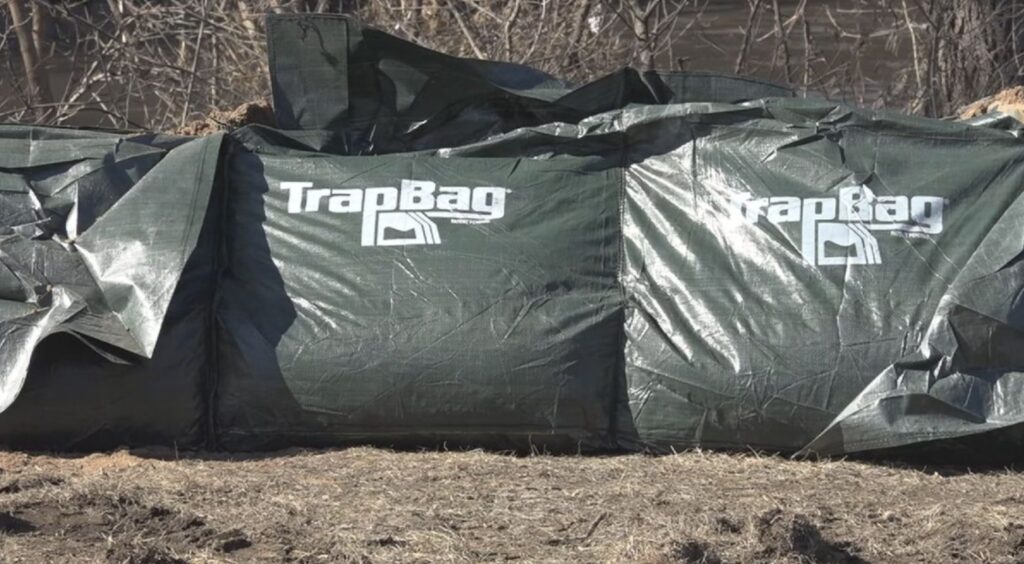
Flood Protection in Sioux Falls, SD
March 21, 2019 Read More » about Flood Protection in Sioux Falls, SD
Levee Installed for Flood Protection in Baton Rouge, Louisiana
May 7, 2020 Read More » about Levee Installed for Flood Protection in Baton Rouge, LouisianaHow TrapBags Compare to Other Solutions

Rip Rap
Rip rap is an assortment of stones, pieces of recycled concrete, or other recycled roadway material placed along river banks to prevent them from destabilizing or washing away. This is an effective long-term river bank stabilization method that municipalities favor.
However, rip rap can be very expensive to install, even for smaller projects. Conservative estimates put installing the rocks at $30 per square yard as a baseline. Prices can increase substantially depending on the size you need, where the rock is coming from, and the area you need to cover. If you need shorter-term river bank stabilization and protection or are on a restrictive budget, TrapBag is a cost-effective solution.
Sandbags
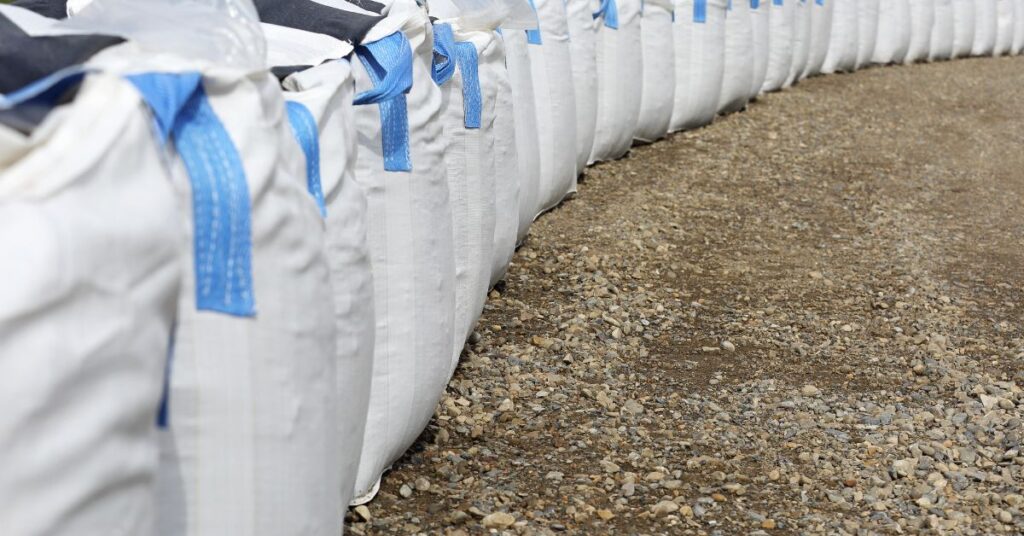
Sandbags have been the go-to solution for protecting river banks from flooding and destabilization for thousands of years. They can be used as a relatively cheap solution for river bank protection by stacking them against the banks during periods of high water.
However, you get what you pay for with sandbags. Enough water pressure or wave action from the river can shred a typical sandbag and leave the river banks vulnerable to destabilization. They can also be very labor-intensive to fill and stack where you need them. On the other hand, TrapBag can withstand wave action from rivers for years, protecting the river banks from washing away or becoming destabilized.
TrapBag Specifications for River Bank Projects
Use these figures to scope quantities, draft specifications, and compare bids. Contact TrapBag for spec sheets and submittal documents.
Request Spec Sheets| Section Length | 50 linear feet per unit; ships folded on pallets and connects end to end |
|---|---|
| Heights | 2 ft and 4 ft; over 6 ft uses a three-row pyramid |
| Fabric | High-strength polypropylene geotextile |
| Lids | Lidded units available for riverbank soil retention |
| Fill & crew | Sand or gravel for temporary walls, concrete for permanent walls; three people with an excavator or skid steer |
| Sandbag equivalent | 100 ft of 4-ft TrapBag replaces about 8,000 sandbags and uses 40% less fill |
| Testing | Tested by the U.S. Army Corps of Engineers |
Why Choose TrapBag as a River Bank Stabilization & Protection Method?
TrapBag was first designed in 2004 by our founder, Everett “Buzz” Waid, as an all-around improved alternative to traditional flood control systems after a hurricane devastated his community. Since then, we’ve installed hundreds and hundreds of miles of flood barriers around the world.
TrapBag improves on the traditional design of sandbags. One 100-foot section of TrapBags replaces 8,000 sandbags. We engineered the cells in these barriers with a pentagonal shape with one sloped side and one vertical side to ensure their structural integrity. The barrier is also less likely to give way than other traditional river bank stabilization systems.
Even more, our staff wants to ensure you can protect what matters most. Our team is here to help 24/7 across multiple countries and continents.
Procurement & Project Support
TrapBag works with public agencies, prime contractors, and engineering firms from budgeting through installation.
- Quotes by the linear foot
- Send the bank length, bank height, fill material, and delivery site, and TrapBag returns pricing and a pallet count for budgets, bid tabs, and purchase orders.
- Submittal documents
- Spec sheets, product data, and Army Corps of Engineers testing documentation for engineer review and bid packages.
- Purchasing options
- Direct purchase orders and authorized distributors.
- Flood-season stockpiling
- Folded barriers take far less warehouse space than equivalent sandbags, so agencies can hold inventory before spring high water and deploy the day a bank starts to fail.
- Installation guidance
- TrapBag's team supports contractors 24/7 across multiple countries and continents, from site layout to fill methods.
Frequently Asked Questions
TrapBag barriers provide a connected cellular structure that helps reinforce vulnerable banks and resist erosion. For riverbank applications, TrapBags with lids are used to help maintain soil retention and improve long-term stability.
TrapBag systems add mass and shape to unstable banks, helping slow water velocity and prevent soil loss. In areas exposed to stronger flows, agencies often place multiple rows to create added stability and reduce scouring.
Traditional approaches such as loose riprap or stacked sandbags can shift over time. TrapBag units connect to form a uniform, continuous barrier that reduces weak points and helps maintain bank structure during changing water levels.
Yes. TrapBag barriers are frequently used for emergency stabilization during high-water events and for planned reinforcement projects along rivers, channels, and drainage corridors. They help prevent undercutting, bank collapse, and loss of adjacent infrastructure.
Yes. Municipalities and agencies use TrapBag to help protect roadways, utilities, bridges, and other assets where erosion threatens service continuity or public safety.
Most do. Work below a river’s ordinary high water mark usually needs U.S. Army Corps of Engineers review under Section 404 of the Clean Water Act or Section 10 of the Rivers and Harbors Act, and most states add their own stream or floodplain permit. Some states also restrict in-stream work during fish spawning windows, so check with your state environmental agency before setting a schedule.
Each TrapBag unit covers 50 linear feet, so 750 feet of eroding bank at a single row height needs 15 units. Taller banks need stacked rows, and walls over 6 feet use a three-row pyramid. Send your bank length, bank height, and fill material to TrapBag for an exact count.