
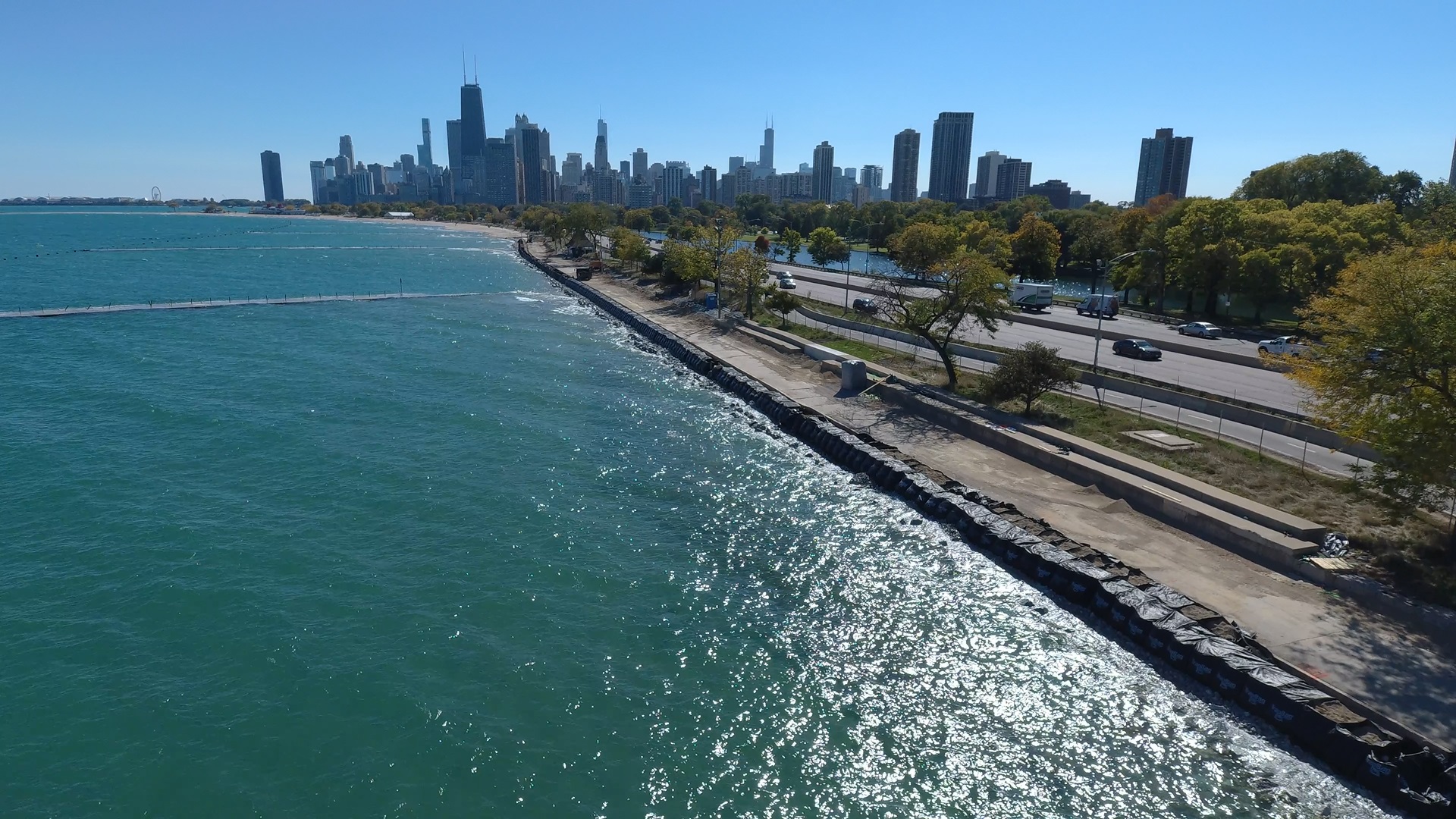
TrapBag® is an ideal coastal protection barrier for preventing everything from the slow deterioration of erosion to sudden, damaging hurricanes or coastal floods. Discover how using TrapBag helps with coastal defense efforts of all types.
Coastal Protection Capabilities with TrapBag®
TrapBag® is an interconnected barrier system engineered to withstand intense wave impact and either repel or redirect water. Each cell is linked to its neighboring units, creating a reinforced structure that absorbs and disperses the force of incoming waves.
- Constructed from durable geotextile material
- Withstands thousands of pounds of wave energy and impact
- Minimizes the effects of wave action and coastal erosion on infrastructure and natural landscapes

How to Deploy TrapBag for Coastal Management
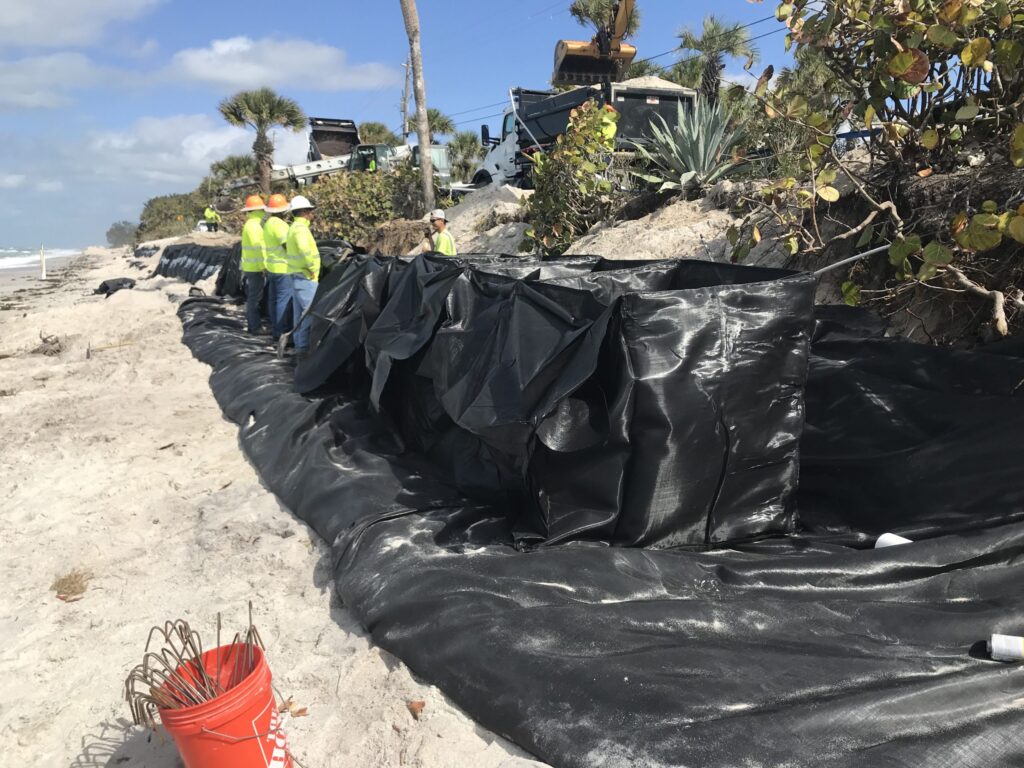
A team of three people can set up TrapBag barriers for coastal flood protection in just a few simple steps:
-
1
Open the packaging
TrapBag® barriers arrive folded accordion-style in 50-foot bundles, neatly stacked on a pallet for efficient handling and deployment. -
2
Place the barrier
Set the barrier against vulnerable coastal areas, beaches, wetlands, or highways to prevent beach erosion, contamination, or shoreline flood damage. -
3
Fill the cells
With a skid steer or excavator, you can fill your TrapBag barrier with sand, washed gravel, or concrete in minutes. After you’ve filled the first barrier, you can also stack them or chain them with other TrapBag barriers to make a taller or longer structure as needed.
Industries Using TrapBag
Organizations and agencies worldwide like yours rely on TrapBag to protect coastal infrastructure and natural areas from shoreline erosion and flooding. Some of the industries that use these barriers include:
Coastal engineering
TrapBag helps coastal engineers protect and reinforce shoreline infrastructure like highways, revetments, bulkheads, and breakwaters from the effects of coastal erosion, flooding, and storm surges. Learn More »Environmental services
Protection agencies use TrapBag to protect sensitive habitats and environments from coastal flood damage and erosion that can lead to species loss and affect entire ecosystems. Learn More »Emergency management
Public and private organizations use TrapBag barriers to protect residential areas and infrastructure near coastlines, such as highways, electrical substations, or water treatment plants. Learn More »Projects
See All Our Past Projects »
Levee Installed for Flood Protection in Baton Rouge, Louisiana
May 7, 2020 Read More » about Levee Installed for Flood Protection in Baton Rouge, Louisiana
Protection at Northwestern University – Evanston, IL
July 27, 2023 Read More » about Protection at Northwestern University – Evanston, IL
Riverbank Stabilization Project Carson City, Nevada
May 20, 2021 Read More » about Riverbank Stabilization Project Carson City, NevadaCompare Coastal Management Barriers
Not all coastal flood protection structures have the same purpose, nor are they all equally appropriate for every situation.
Seawalls
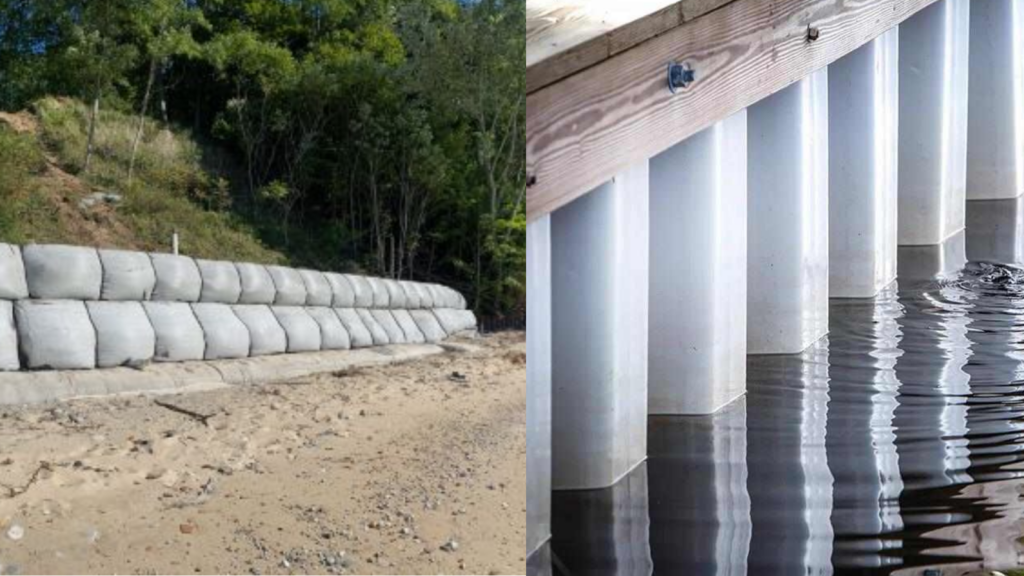
Seawalls provide essential shoreline flood protection by putting a physical barrier between the ocean and vulnerable coastlines. However, they can also be quite expensive to install and cause damage to shorelines in adjacent areas, so they’re rarely ideal for long-term use.
You can use TrapBag as a temporary seawall for coastal protection while minimizing disruptions to the water’s natural currents and distribution of sand or silt.

Planting Native Plants
Habitat restoration with native plants is the ideal long-term solution for coastal protection and restoration because it maximizes coastal flood protection while minimizing disruptions. However, it’s a long-term process that can take years to properly implement. TrapBag can temporarily protect areas undergoing restoration so the environment can continue to replenish itself uninterrupted.
Stabilizing Dune Cores
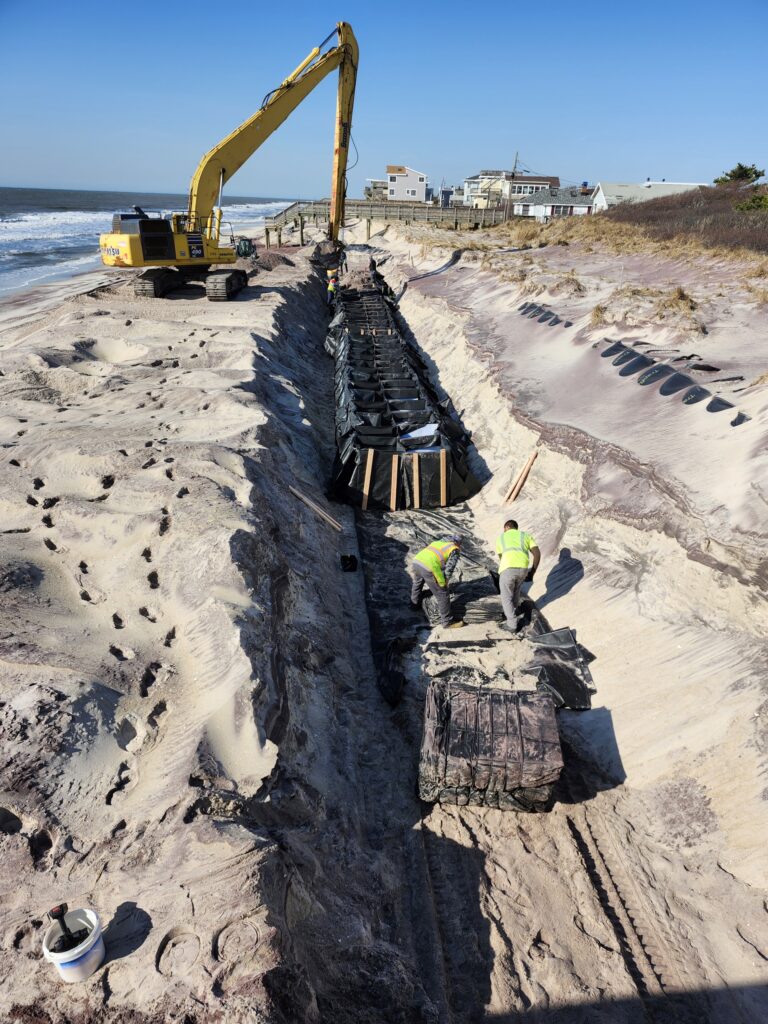
Sand dunes are a coastal area’s first line of protection. In coastal areas with beaches or dunes, stabilizing dune cores can prevent them from eroding or blowing away.
TrapBag barriers are ideal for these coastal engineering projects because they anchor the dune to the beach from within. This allows the dunes to potentially restore themselves and reduce their deterioration, which in turn allows for other protection efforts like planting native vegetation.
TrapBag Specifications for Coastal Protection Projects
Use these figures to scope quantities, draft specifications, and compare bids. Contact TrapBag for spec sheets and submittal documents.
Request Spec Sheets| Section length | 50 linear feet per unit; ships folded on pallets and connects end to end |
|---|---|
| Heights | 2 ft and 4 ft; over 6 ft uses a three-row pyramid |
| Coastal configuration | At least two rows placed back to back to handle wave energy |
| Fabric | High-strength polypropylene geotextile |
| UV exposure | Withstands at least five years of UV exposure |
| Fill & crew | Temporary flood walls; three people with an excavator or skid steer, permanent structures with concrete |
| Sandbag equivalent | 100 ft of 4-ft TrapBag replaces about 8,000 sandbags and uses 40% less fill |
| Testing | Tested by the U.S. Army Corps of Engineers |
Why Choose TrapBag?
TrapBag and its team of flood protection experts are here to help you protect some of the most vulnerable coastal areas and structures. One 100-foot barrier replaces roughly 8,000 sandbags.
Since they have a pentagonal design with one sloped side and one vertical side, these barriers have more structural integrity than traditional sandbags and are less likely to give way than other barriers.
Led by our founder, Everett “Buzz” Waid, our staff is here to help you protect the coasts in your community. You can connect with us for help 24/7 across multiple countries and continents to address your coastal protection needs.
Procurement & Project Support
TrapBag works with public agencies, prime contractors, and engineering firms from budgeting through installation.
- Quotes by the linear foot
- Send the shoreline length, target height, number of rows, and delivery site, including equipment access to the beach, and TrapBag returns pricing and a pallet count for budgets, bid tabs, and purchase orders.
- Submittal documents
- Spec sheets, product data, the installation manual, and Army Corps of Engineers testing documentation for engineer review and bid packages.
- Purchasing options
- Direct purchase orders and authorized distributors.
- Storm-season stockpiling
- Folded barriers take far less warehouse space than equivalent sandbags, so agencies can hold inventory before hurricane or winter storm season and repair a breached shoreline within days of a storm.
- Installation guidance
- TrapBag's team supports contractors 24/7 across multiple countries and continents, from site layout to fill methods.
Frequently Asked Questions
Coastal protection covers the structures and methods that keep shorelines from eroding and coastal areas from flooding. Hard structures include seawalls, revetments, bulkheads, and breakwaters; soft methods include beach nourishment, dune restoration, and native vegetation; and hybrid approaches combine the two, such as a restored dune with a buried TrapBag core.
Yes. TrapBag filled with sand or gravel works as a temporary seawall or an interim barrier while a restoration or construction project is underway, and the same barrier filled with pumped concrete becomes a permanent shoreline wall. Buried inside a dune, TrapBag serves as a long-term core that holds the dune’s shape between storms.
Yes. TrapBag protects freshwater shorelines as well as ocean coasts, including the lakefill at Northwestern University in Evanston, Illinois, on Lake Michigan. Great Lakes shorelines face the same wave erosion and storm damage as ocean coasts, especially during high-water years.
Each TrapBag unit covers 50 linear feet, and coastal installations use at least two rows placed back to back, so 1,000 feet of shoreline needs at least 40 units. Taller barriers need additional stacked rows. Send your shoreline length, target height, and fill material to TrapBag for an exact count.
Most do. State coastal management agencies regulate shoreline work along most U.S. coasts and the Great Lakes, and projects in or near navigable waters or wetlands usually need U.S. Army Corps of Engineers review. Many Atlantic and Gulf Coast states also restrict beach construction during sea turtle nesting season, so check with your state coastal agency before setting a schedule.