
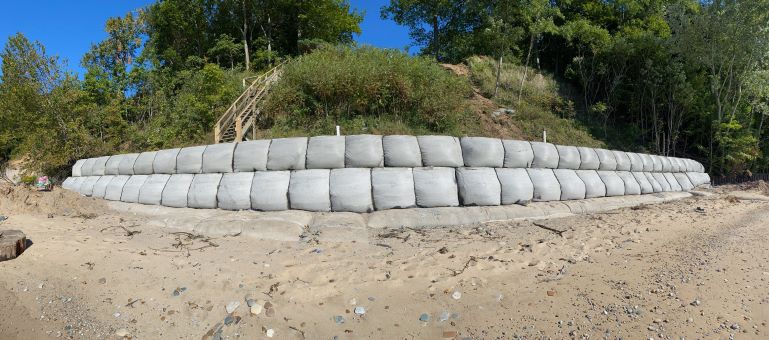
TrapBag® seawall barriers give municipalities, coastal engineers, and marine contractors a cellular wall that stops wave action at the shoreline and installs in hours rather than days. Crews fill the barrier with sand or gravel for a temporary seawall, or with concrete for a permanent one, using the same 50-foot sections.
TrapBag ships folded on pallets and fills with a standard excavator or skid steer. Procurement teams can request pricing, spec sheets, and quantity estimates by the linear foot for bid packages, capital projects, and emergency shoreline repair. Waves are constantly pounding coastal beaches, cliffs, and shorelines, and their power intensifies during coastal storms or hurricanes.
Using TrapBag for an Affordable Seawall Solution
Shoreline erosion usually starts at the toe of a bank or bluff. Each storm undercuts the slope, the face collapses, and the next high-water event reaches the roads, utilities, and buildings behind it. A seawall breaks that cycle by absorbing wave energy before it reaches the bank. TrapBag does this with a chain of interlocking cells that behaves as one heavy mass, with 60% of its weight in the bottom half of the barrier so the wall resists tipping.
While traditional forms of seawalls are extremely expensive and difficult to install, TrapBag barriers are a reliable, rapidly deployable, and affordable seawall alternative. TrapBag works to protect both the environment and neighboring communities.
Seawall Construction & Development Options with TrapBag
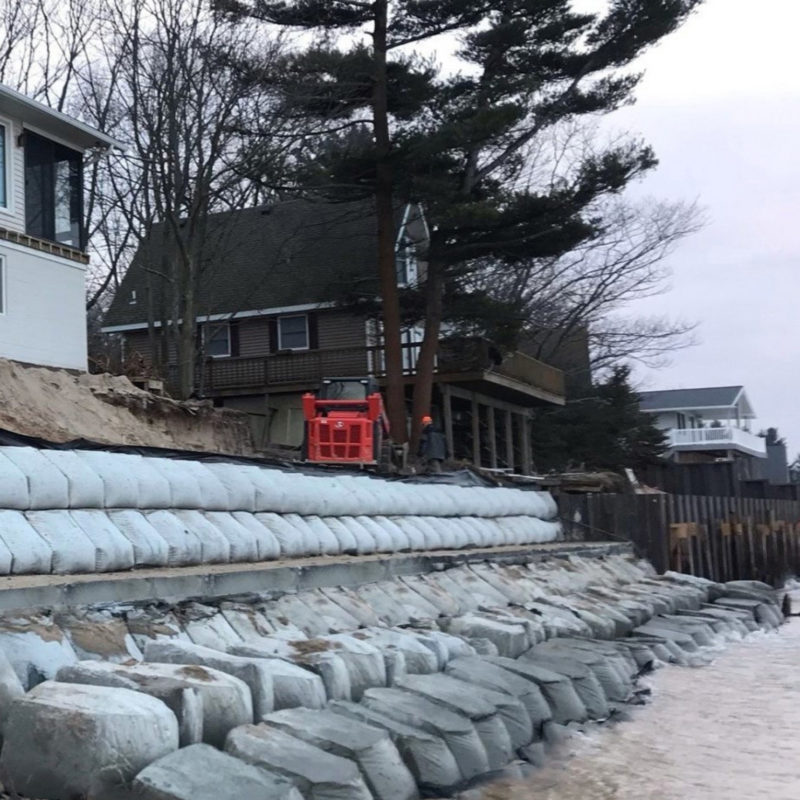
By design, TrapBag is easy to install and can protect shorefront property and structures from damage due to rising sea levels. Each cell in the barrier lends its strength to its neighbors, making it an effective option for keeping out thousands of gallons of water. They’ve even been successfully tested by the US Army Corps of Engineers.
TrapBag is easy to set up and deploy as a seawall in a matter of hours, rather than days, with just a few simple steps:

-
1
Open the packaging
Your TrapBag barrier comes folded up on a pallet. Pull it out like an accordion and it can be stretched out up to 50 linear feet per unit. -
2
Place or stack the barrier where needed
Place the TrapBag barrier where you need it along the shoreline to protect properties from wave action. Once the base rows are filled, you can stack an additional row on top to add more height to your barrier. -
3
Fill the cells
A team of two people can quickly fill your TrapBag barriers in a matter of minutes by pumping concrete into the bags.
Who We Serve
TrapBag works with organizations and agencies all over the world to help them protect properties and lives from the catastrophic effects of the ocean. Some of the organizations and groups we work with include:
Construction sites
Contractors building near the shoreline use TrapBag to hold back waves and tidal flooding so excavation and foundation work stay dry and on schedule. Learn More »Municipalities & county governments
Public works and coastal management departments install TrapBag seawalls before hurricane season and after named storms to protect beachfront roads, utilities, and neighborhoods from surge and wave erosion. Learn More »Civil & coastal engineers
Engineering firms specify TrapBag for shoreline armoring along coastal highways, bluffs, and utility corridors, with sand fill for interim protection and concrete fill where the design calls for a permanent wall. Learn More »Environmental protection
State resource agencies and conservation groups use TrapBag to protect coastal habitat from wave erosion, including projects scheduled around sea turtle nesting season. Learn More »Marine services
Marinas, port operators, and waterfront property managers on the coasts and the Great Lakes use TrapBag to protect bulkheads, parking, and access roads from wave erosion. Learn More »Projects
See All Our Past Projects »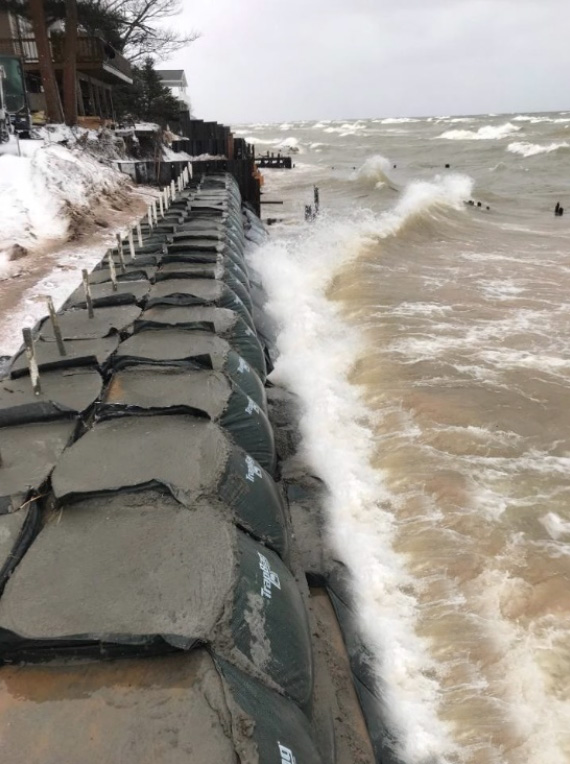
TrapBag® used to Save Lake Michigan Cottage from Erosion
December 12, 2019 Read More » about TrapBag® used to Save Lake Michigan Cottage from Erosion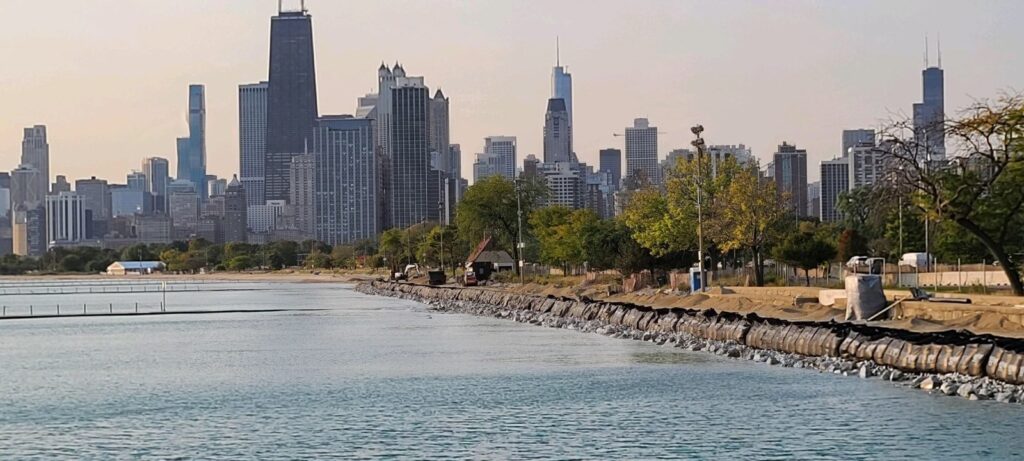
Shoreline Erosion on Lake Michigan – Chicago, IL
January 25, 2021 Read More » about Shoreline Erosion on Lake Michigan – Chicago, IL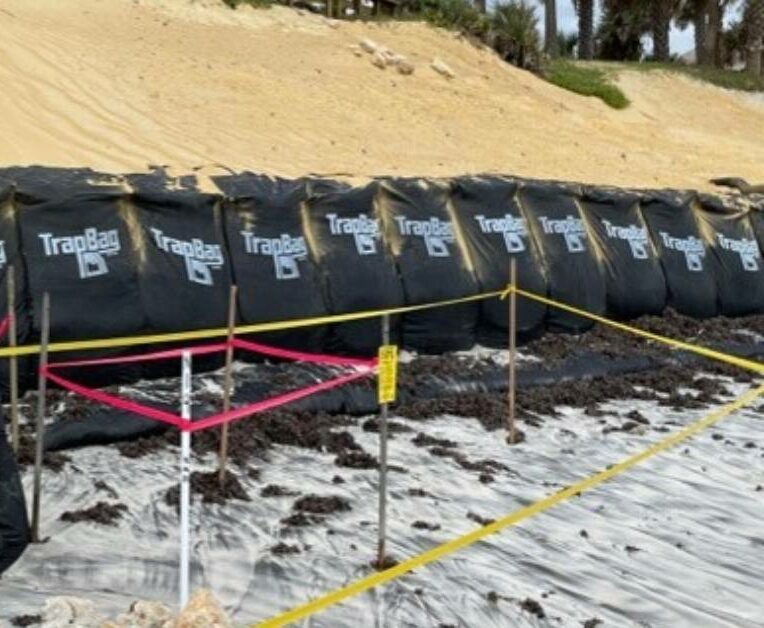
Erosion Mitigation During Sea Turtle Season – Volusia County, Florida
May 9, 2023 Read More » about Erosion Mitigation During Sea Turtle Season – Volusia County, Florida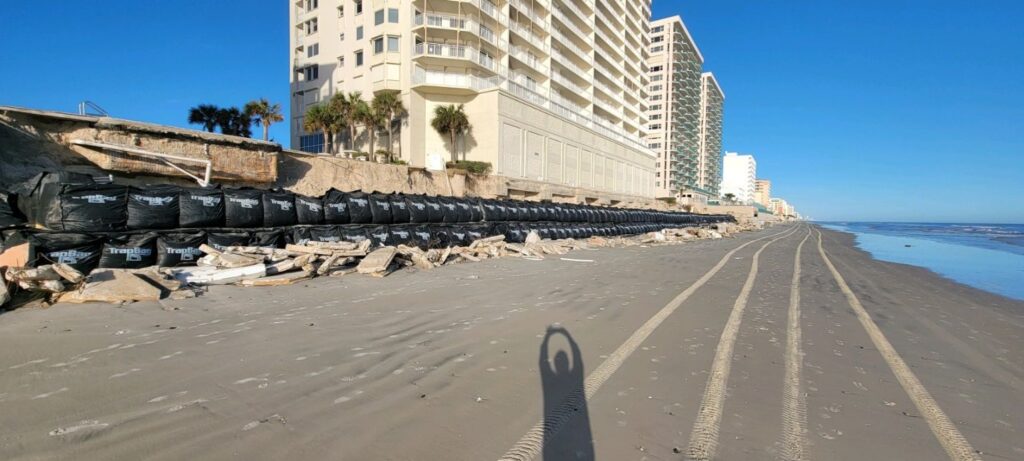
Shoreline Restoration – Volusia County, Florida
June 5, 2023 Read More » about Shoreline Restoration – Volusia County, Florida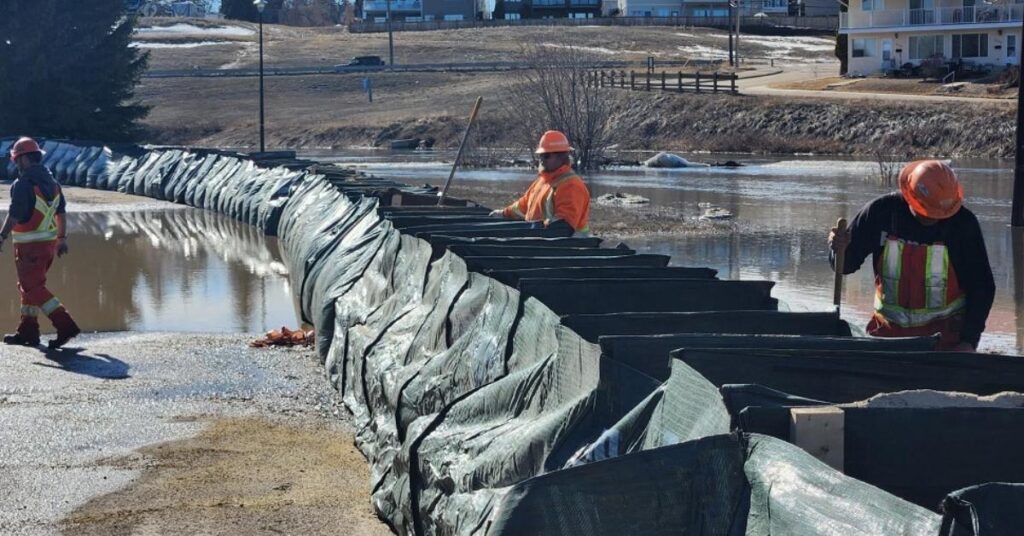
Springtime Flooding Caused by Snowmelt in Saskatchewan
April 11, 2023 Read More » about Springtime Flooding Caused by Snowmelt in SaskatchewanTypes of Seawalls & How TrapBag Compares:
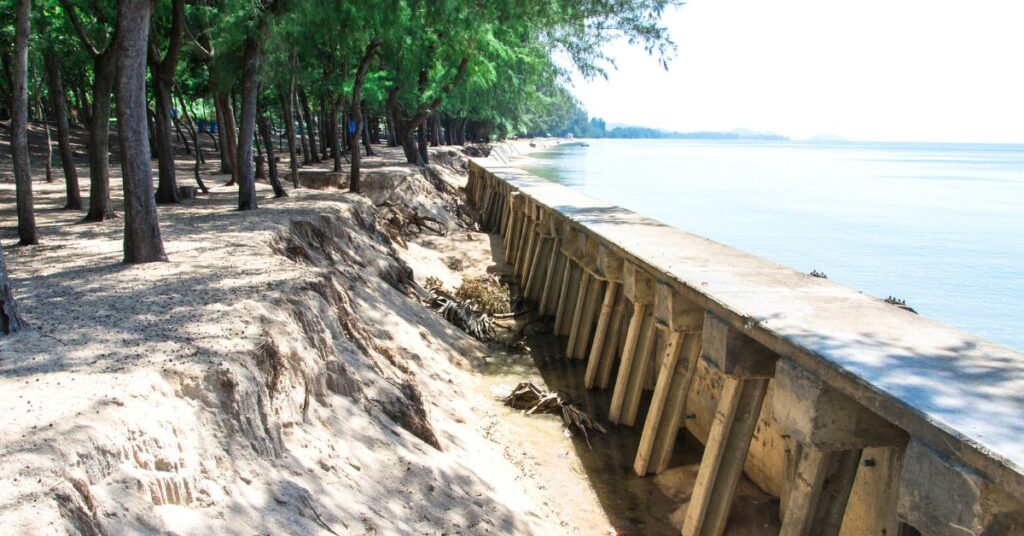
Concrete Seawalls
Concrete is a popular choice for long-term or permanent seawalls, especially because it can withstand harsh, corrosive conditions. However, creating a concrete seawall is challenging and expensive, and the walls are still at risk of failure, especially if they aren’t properly maintained. They also aren’t ideal for solving short-term issues ahead of things like hurricanes or other storms.
Fortunately, concrete can be used as a filler material for TrapBag. Because of this, you can use TrapBag to get the same level of strength that concrete provides with a lower risk of failure.
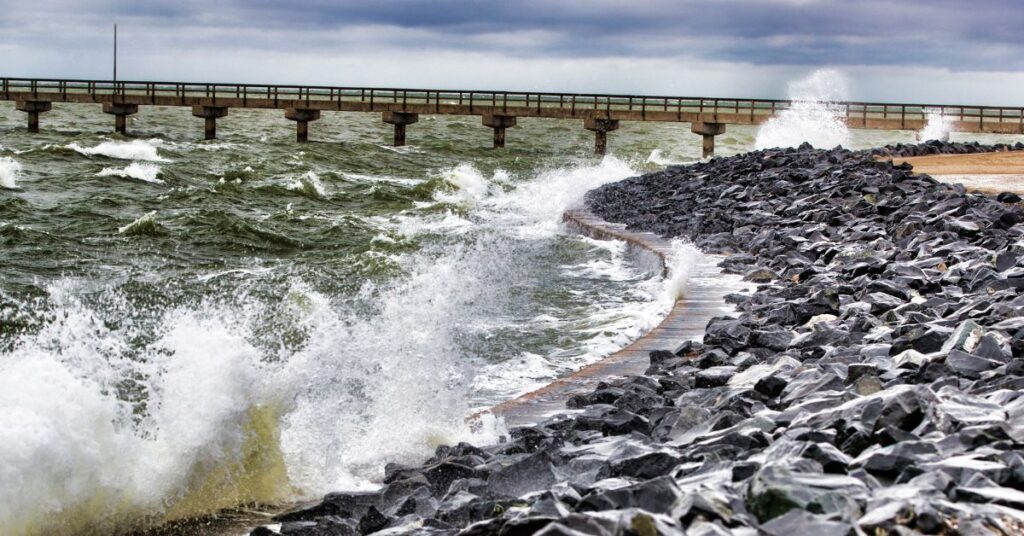
Natural Stone Seawalls
Functioning similarly to rip rap, natural stone seawalls use large natural stones and boulders to protect shorelines from erosion. Since stone takes more than a lifetime to erode from wave action, it’s an excellent choice as a seawall material.
However, natural stone can be prohibitively expensive to install. It can cost thousands of dollars for just a few yards, excluding the price of transport and labor. If you need to protect your shoreline in the short term or on a budget, TrapBag can serve as a cost-effective seawall solution.
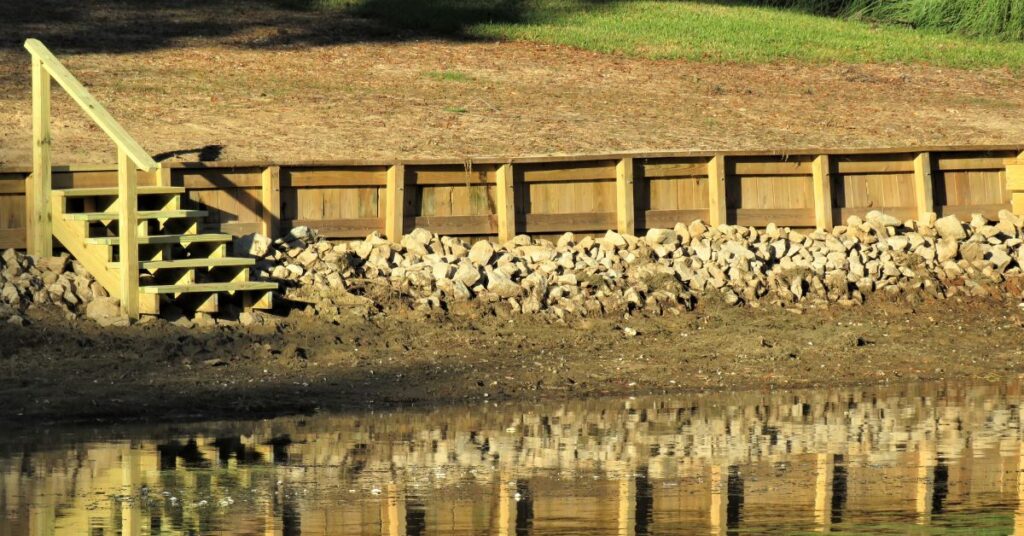
Wood Seawalls
Wood seawalls and bulkheads can be a great solution for preventing erosion along freshwater channels and rivers.
However, using wood isn’t typically conducive to the seawall construction process. This is especially true for seawalls constructed along saltwater bodies like the ocean or inland seas, where the salinity of the water can cause the wood to deteriorate relatively quickly, especially with high waves. By contrast, TrapBag can last for years as a seawall or bulkhead for both fresh and saltwater bodies.
TrapBag Specifications for Seawall Projects
Use these figures to scope quantities, draft specifications, and compare bids. Contact TrapBag for spec sheets and submittal documents.
Request Spec Sheets| Section length | 50 linear feet per unit; ships folded on pallets and connects end to end |
|---|---|
| Heights | 2 ft and 4 ft; over 6 ft uses a three-row pyramid |
| Fabric | High-strength polypropylene geotextile |
| Fill & crew | Sand or gravel for temporary walls, concrete for permanent walls; three people with an excavator or skid steer |
| Sandbag equivalent | 100 ft of 4-ft TrapBag replaces about 8,000 sandbags and uses 40% less fill |
| Testing | Tested by the U.S. Army Corps of Engineers |
Why Choose TrapBag as a Seawall Construction Method?
TrapBag is similar to, but improves upon, the traditional design of sandbags. We engineered these erosion control barriers with a pentagonal shape to ensure their structural integrity. The barrier is sloped on one side and upright on the other for additional structural stability, so they can withstand wave action with ease. They give you the option of creating a temporary or permanent seawall depending on the type of fill material that you choose to use. Plus, unlike traditional sandbags or concrete seawalls, TrapBag barriers have much lower margins of error, meaning the barrier is less likely to give way than less innovative alternatives.
Even more, our staff is here to ensure our clients successfully protect their property from erosion control. We’re here to help 24/7, across multiple countries and continents.
Procurement & Project Support
TrapBag works with public agencies, prime contractors, and engineering firms from budgeting through installation.
- Quotes by the linear foot
- Send the shoreline length, wall height, fill material, and delivery site, and TrapBag returns pricing and a pallet count for budgets, bid tabs, and purchase orders.
- Submittal documents
- Spec sheets, product data, and Army Corps of Engineers testing documentation for engineer review and bid packages.
- Purchasing options
- Direct purchase orders and authorized distributors.
- Storm-season stockpiling
- Folded barriers take far less warehouse space than equivalent sandbags, so agencies can hold inventory before hurricane season and deploy after a storm without waiting on production.
- Installation guidance
- TrapBag's team supports contractors 24/7 across multiple countries and continents, from site layout to fill methods.
Frequently Asked Questions
A seawall is a vertical or sloped structure placed along a shoreline to stop waves from eroding the land behind it. Seawalls are made of concrete, stone, steel or vinyl sheet pile, wood, or cellular barriers like TrapBag, and they protect roads, buildings, bluffs, and utilities from storm surge and wave action.
Yes. TrapBag filled with sand or gravel works as a temporary or interim seawall, and the same barrier filled with concrete becomes a permanent wall. Contact TrapBag for concrete fill instructions before specifying a permanent installation.
Most do. Coastal and Great Lakes states regulate shoreline armoring, and seawalls placed in or near navigable waters or wetlands usually need U.S. Army Corps of Engineers review. Some jurisdictions restrict new hard armoring or limit beach construction during sea turtle nesting season, so check with your state coastal agency and local permitting office before setting a schedule.
Each TrapBag unit covers 50 linear feet, so a 500-foot shoreline at a single row height needs 10 units. Walls taller than one barrier need stacked rows, and walls over 6 feet use a three-row pyramid. Send your shoreline length, target wall height, and fill material to TrapBag for an exact count.