
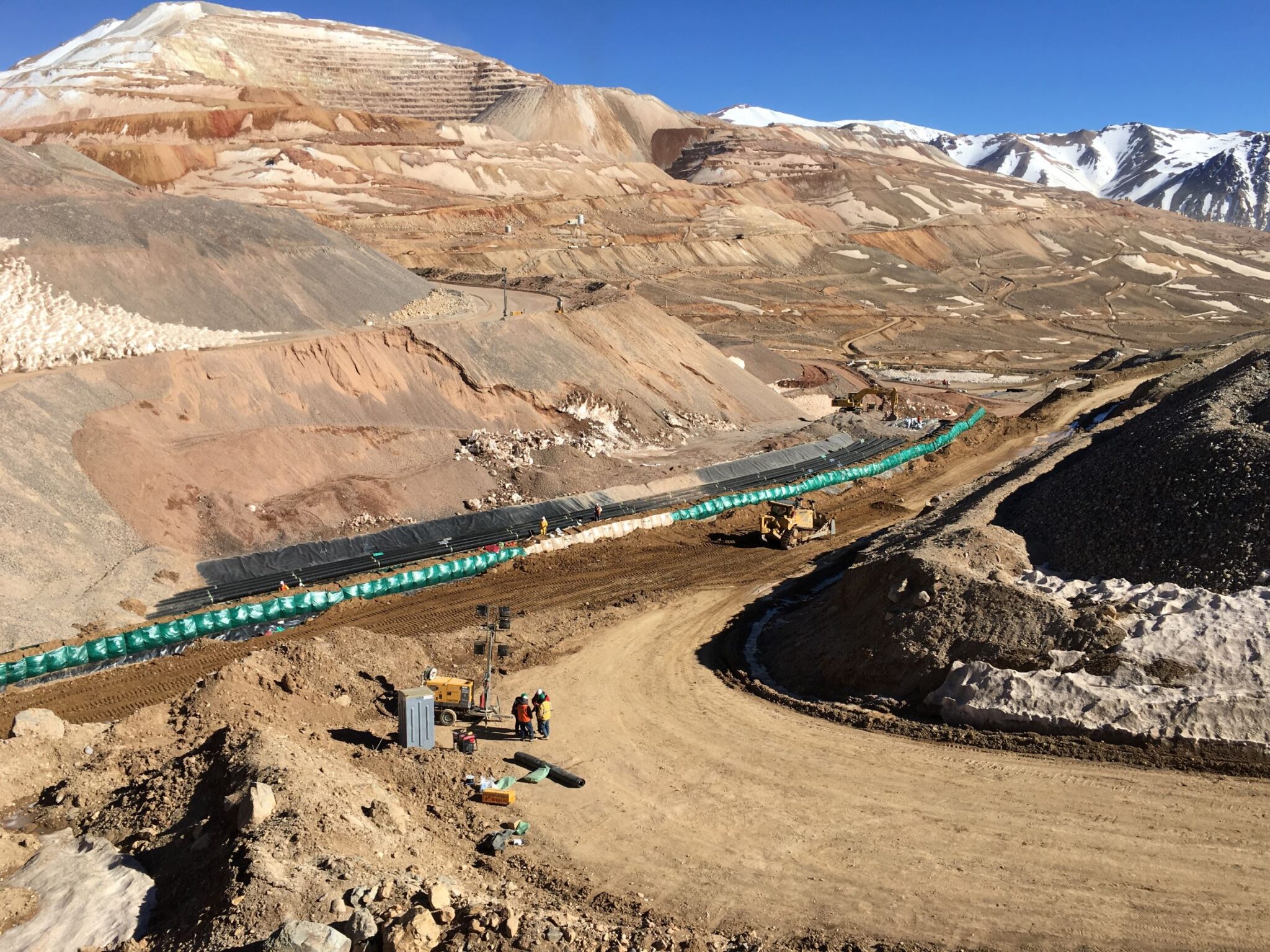
During chemical or oil spills, TrapBags® can act as spill containment barriers that allow crews additional time to stop or clean up the contamination. This can be essential for protecting local water supplies, wildlife, and other resources.
Using TrapBag as Spill Containment & Control Systems
TrapBags are a cost-effective, rapidly deployable solution for containing chemical or oil spills on land and minimizing the environmental impact of spills. They’re a strong, engineered form of spill control that can lock hazardous liquid materials in while you put your chemical cleanup or extraction plan into action.
They provide a 3:1 (mass to hydraulic load) safety factor that makes them effective for holding back hundreds or thousands of gallons of spilled materials. TrapBag can handle virtually any chemical containment requirement you have when you need it most.

How to Deploy TrapBags in Your Chemical & Oil Spill Control Kits
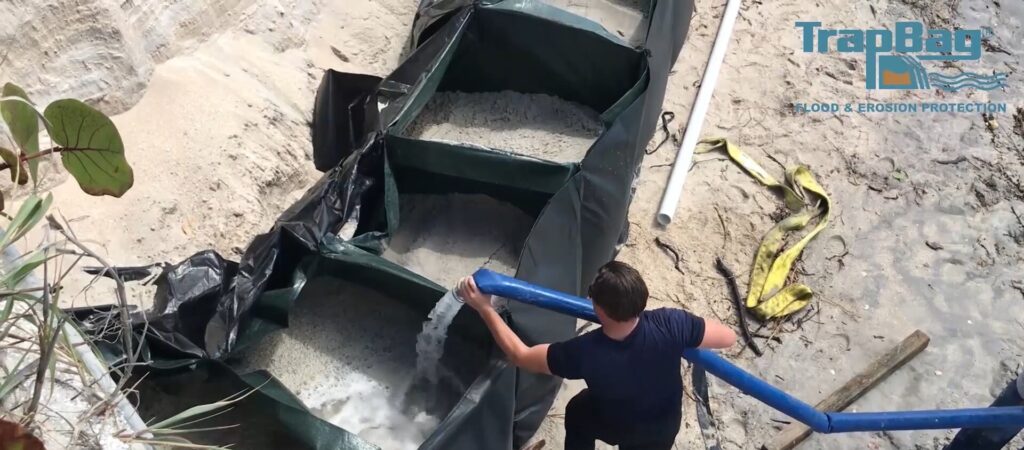
TrapBag is easy to install as a chemical containment pond and is less likely to give way thanks to its interconnected cellular design. The barriers can be set up easily in just a few simple steps:
-
1
Open the packaging
TrapBag barriers come folded up on a pallet. Pull them out like an accordion and stretch them up to 50 linear feet per unit. -
2
Place the barrier where you need it
Set the barrier around the spill, the storage area, or across the path the liquid will take. -
3
Fill the cells
A team of three people with an excavator or skid steer can fill a TrapBag barrier within minutes with sand or washed gravel. For permanent containment walls, crews pump concrete into the cells.

Who We Serve
Multiple industries use TrapBags as oil and chemical spill control products to keep incidents or accidents from becoming large-scale disasters. Some of the organizations and industries that use TrapBag as a spill containment solution include:
Mining sites
Every mining company needs to have spill containment solutions at the ready to prevent mine drainage and other sources of contamination from harming the environment around their sites. TrapBag can confine liquid pollutants to make the industrial spill control process easier. Learn More »Construction sites
In addition to preventing stormwater from reentering local water supplies without treatment, construction firms can use TrapBag as a spill control system to mitigate leaks and spills of fuel or other contaminants. Learn More »Chemical plants
Chemical plants need to have extensive chemical spill containment systems in place to prevent on-site issues from becoming local disasters. TrapBag can contain multiple types of liquid chemical spills to allow crews more time to clean up.Oil and gas refineries
On-shore oil and gas refineries can use TrapBag as a spill containment pool to prevent petroleum leaks from being introduced to the environment beyond the plant.Farming and agriculture
Farmers and agricultural organizations use a variety of liquid chemicals to fertilize crops and make them immune to insects and other pests. The farming industry can use TrapBag as an easy alternative for spill containment for liquid fertilizers and pesticides, as well as agricultural runoff that can harm both local wildlife and livestock.Projects
See All Our Past Projects »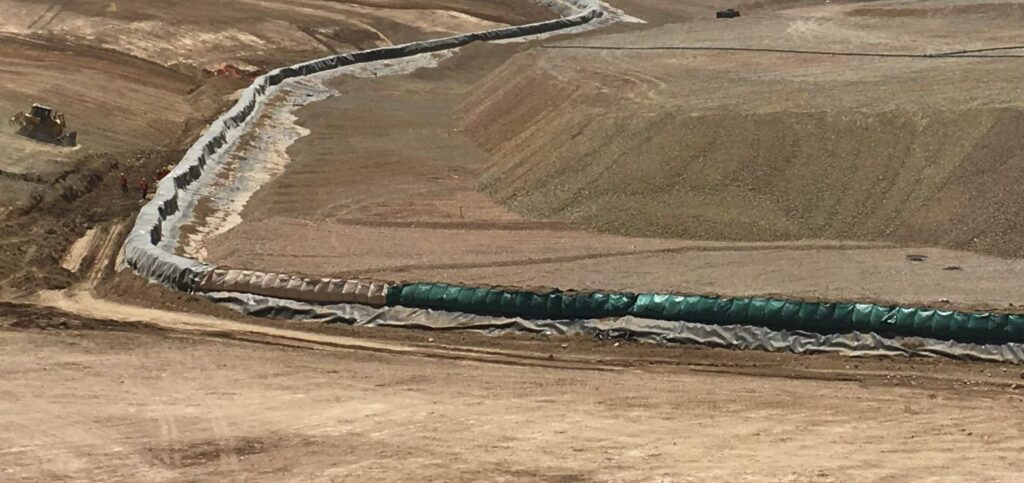
Chemical Spill Containment – San Juan, Argentina
September 27, 2016 Read More » about Chemical Spill Containment – San Juan, ArgentinaHow TrapBags Compare to:
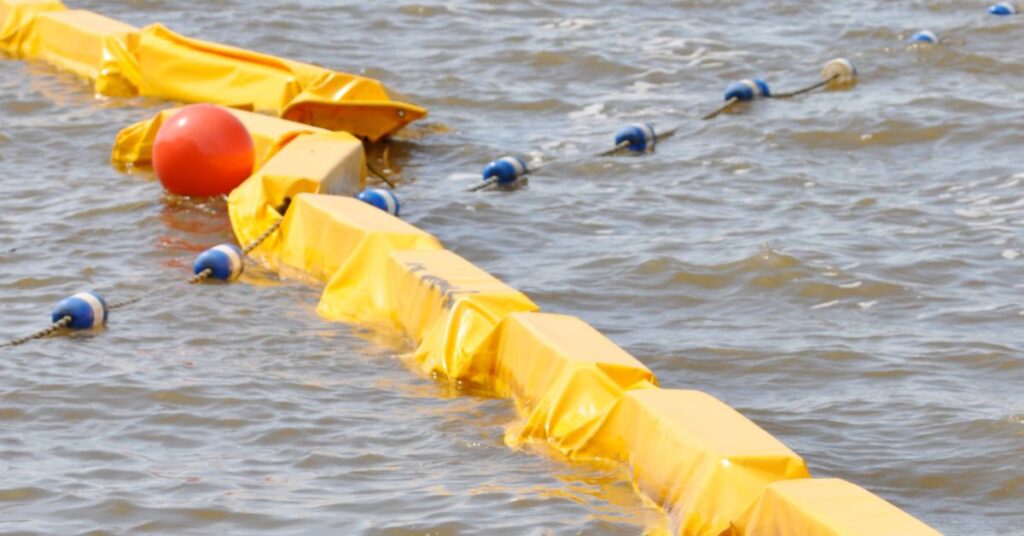
Inflatable Booms
Oil spill containment booms are a common sight on fuel tankers and other types of boats, ships, and rigs to contain spills in open water. They’re one of the most effective ways to contain waterborne oil spills and other chemicals that can float on top of the water.
However, for land-based spills and those in shallow water, TrapBag is a better option for containing spills and leaks. The barriers are made of high-strength geotextile that resists leaks from many different types of liquids.
Pallets and Trays
Spill control pallets and trays are most often used in refinery or storage settings. They can prevent drums filled with oil or chemicals from leaking and seeping into the open. However, for large-scale spills, TrapBag is the better choice because it can confine massive quantities of spilled contaminants quickly to allow crews more time to act.
TrapBag Specifications for Spill Containment Projects
Use these figures to scope quantities, draft specifications, and compare bids. Contact TrapBag for spec sheets and submittal documents.
Request Spec Sheets| Section length | 50 linear feet per unit; ships folded on pallets and connects end to end |
|---|---|
| Heights | 2 ft and 4 ft; over 6 ft uses a three-row pyramid |
| Safety factor | 3:1 mass to hydraulic load |
| Fabric | High-strength polypropylene geotextile |
| UV exposure | Withstands at least five years of UV exposure |
| Fill & crew | Temporary flood walls; three people with an excavator or skid steer, permanent structures with concrete |
| Sandbag equivalent | 100 ft of 4-ft TrapBag replaces about 8,000 sandbags and uses 40% less fill |
| Testing | Tested by the U.S. Army Corps of Engineers |
Why Choose TrapBag for Spill Containment & Control Solutions?
TrapBag got its start as a flood control solution that improves on the design of traditional sandbag barriers. However, it has since been used for everything from stormwater containment to mudslide diversion and oil spill control.
One 100-foot section of TrapBag barriers replaces roughly 8,000 sandbags, all while using 40% less material than their traditional counterparts. The cells in these flood protection barriers have a pentagonal shape with one sloped side, one vertical side, and a flat top for structural integrity.
Furthermore, our dedicated staff wants to help you keep your community and its environment safe. That’s why our team is here to help 24/7 across multiple countries and continents.
Procurement & Project Support
TrapBag works with facility operators, prime contractors, and engineering firms from budgeting through installation.
- Quotes by the linear foot
- Send the perimeter of the area you need to contain, the berm height, the volume of liquid stored on site, and the delivery location, and TrapBag returns pricing and a pallet count for budgets, bid tabs, and purchase orders.
- Submittal documents
- Spec sheets, product data, the installation manual, and Army Corps of Engineers testing documentation for engineer review and spill plan documentation.
- Purchasing options
- Direct purchase orders and authorized distributors.
- On-site spill response inventory
- Folded barriers take far less space than equivalent sandbags, so facilities can keep pallets on site and build a berm before a spill reaches a drain, ditch, or waterway.
- Installation guidance
- TrapBag's team supports contractors 24/7 across multiple countries and continents, from site layout to fill methods.
Frequently Asked Questions
Crews build a berm of filled TrapBag units around the spill or across its path, which holds the liquid in place while cleanup crews pump, absorb, or treat it. For hazardous chemicals, confirm liner and fill material options with TrapBag before deployment.
Capacity depends on the enclosed area and the depth of liquid the berm holds back. For example, four TrapBag units form a 50-by-50-foot square berm, and 2 feet of liquid inside that square equals about 37,400 gallons. Send your stored volume and site dimensions to TrapBag for a berm layout and unit count.
The EPA’s Spill Prevention, Control, and Countermeasure (SPCC) rule allows oil storage facilities to use passive containment, such as permanent berms, or active measures deployed once a discharge begins. The Professional Engineer who certifies the facility’s SPCC plan decides which methods fit the site, so share TrapBag spec sheets with your engineer during plan review.
Yes. TrapBag ships folded flat on pallets and takes far less storage space than the sandbags it replaces, so facilities can keep inventory near tanks, loading areas, and drainage paths and build a berm as soon as a spill starts.
Fill material and fabric that contact spilled oil or chemicals must be handled according to federal, state, and local waste rules, which depend on what spilled. Your spill response contractor or environmental consultant can determine whether the used barrier and fill need disposal as hazardous waste.